
TWO DAY FDP ON “POWER SYSTEM ANALYSIS – USING ETAP”
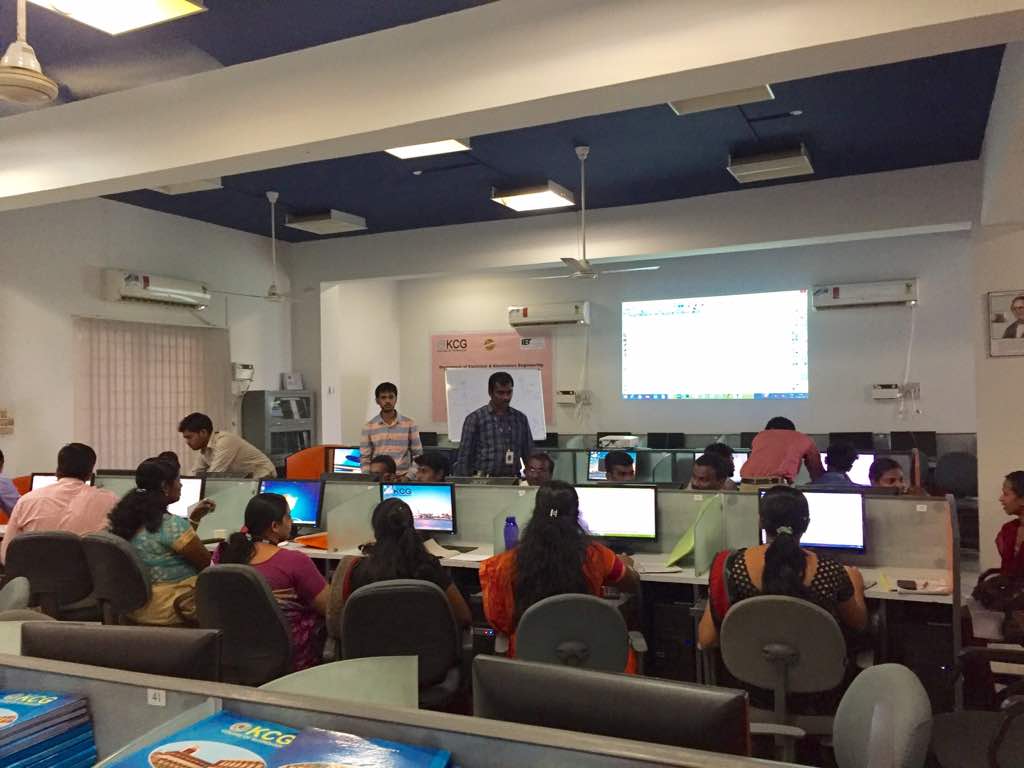
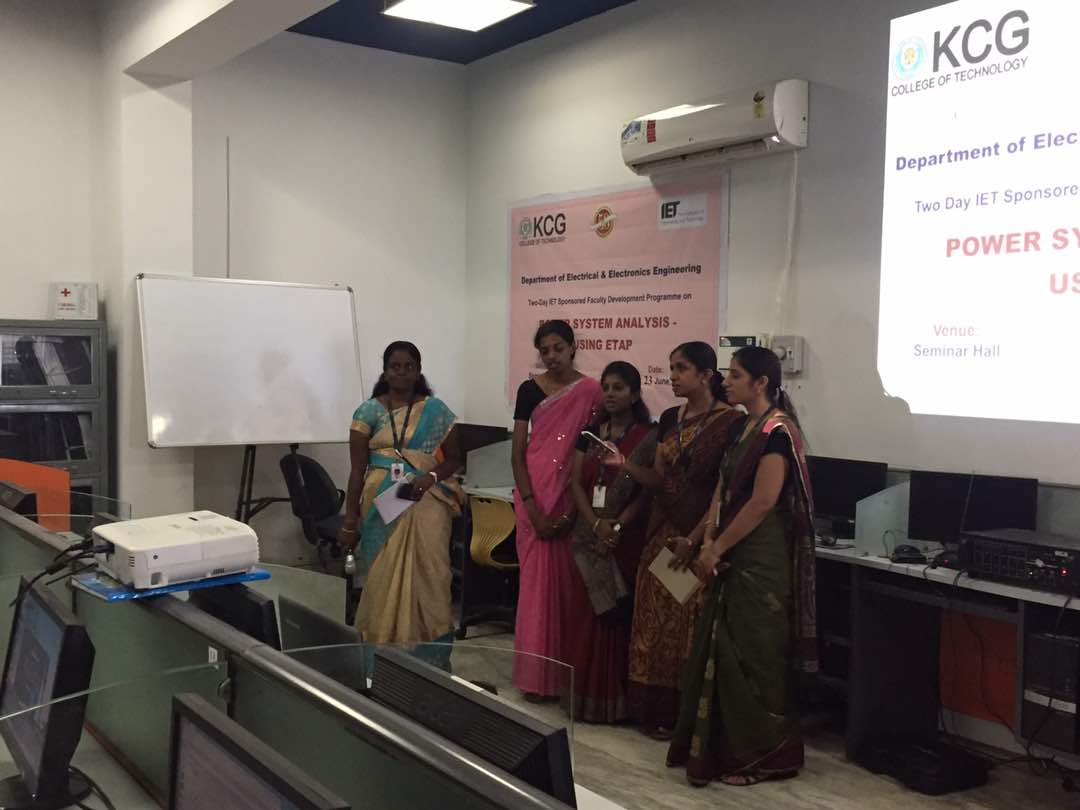
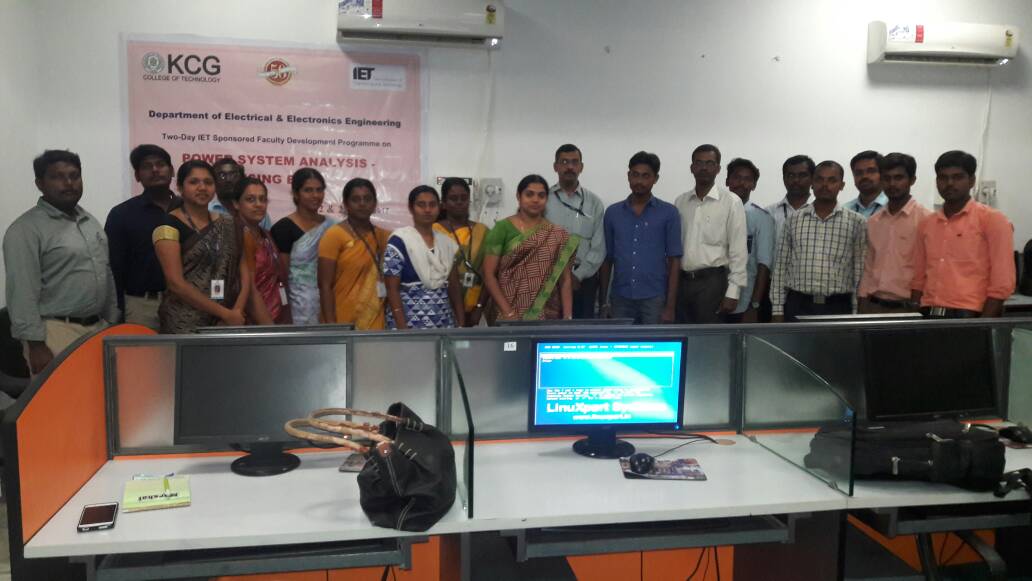
The Department of Electrical and Electronics, KCG College of Technology organized an IET sponsored TWO-DAY FACULTY DEVELOPMENT PROGRAMME ON “POWER SYSTEM ANALYSIS – USING ETAP” on June 22nd & 23rd, 2017. The inaugural function commenced at 9.30 am in MCA LAB. The meeting was formally begun with an invocation and the invited guests were welcomed by Dr. P.Deiva Sundari, Head of the Department/EEE. Around 42 participants registered for the programme.
Day 1 – Session 1
Mr.Gandhirajan, Petro6Engineering & Construction Pvt. Ltd, Chennai
Topic: Load Flow Analysis – Case Study & Hands-on for Industrial System
He started the session saying about the (Electrical Transient Analyzer Programme) ETAP software and its purpose. He elaborated how ETAP is used to perform load flow analysis, short circuits, transient instabilities, harmonics, relay coordination, arc flash, optimal power flow and battery sizing. He explained the load flow analysis using ETAP with a case study.
Day 1 – Session 2
Mr.Prasanth, PowerProjects, Chennai
Topic: Case Study & Hands-on – Utility System – Ferranti Effect, Shunt & Series Compensation, Power Factor Correction
He introduced the concepts of Ferranti effect and skin effect. He also explained how the receiving end voltage is greater than sending end voltage in long, High Voltage and Extra High Voltage transmission lines, during light loads or no load condition, because of the presence of shunt capacitance. He also explained how to prepare the reports using ETAP Software.
Day 1 – Session 3
Mr.Emmanuel, Voltech Engineers Pvt ltd, Chennai
Topic: Generator Modeling, Control Mode, Emergency Diesel Generator
He explained about dependent machine and network models using full frequency, cold-state starting of generators under normal and emergency conditions. The entire generator start-up process includes automatic control relay simulation and dynamic behaviors of exciters-AVR, governor, turbine /engine, and Power System Stabilizers (PSS). He showed how ETAP can be utilized to simulate detailed dynamic responses of the starting generator, test emergency loads including motors, MOV and others connected to the generator before it reaches the synchronous speed and rated voltage.
Day 2 – Session 1
Mr.Gandhirajan, Petro6Engineering & Construction Pvt. Ltd, Chennai
Topic: Short Circuit Studies – Balanced and Unbalanced Faults, Modeling of Circuit Breakers, Transformers
He explained about the concept of short circuit studies due to balanced and unbalanced faults. He also explained with a sample model using ETAP software.
Day 2 – Session 2
Mr.Prasanth, PowerProjects, Chennai
Topic: X/R Ratio, Case Study & Hands-on for Power Plant, Selection of Transformer Impedance
He gave an insight about the X/R ratio. The major points discussed were:
In short circuit studies, the X/R ratio should not be ignored because it determines the peak asymmetrical fault current. When comparing the short circuit current from the studies against circuit breaker name plate, one should know at what X/R ratio the circuit breaker was tested. The following rule of thumb can be used to determine if circuit breaker is properly rated:
- Symmetrical short circuit current is less than symmetrical rating of the circuit breaker, and
- X/R of the circuit is less than circuit breaker test X/R ratio
If the first item is met but the second is not, then the process of circuit breaker evaluation requires further calculation.
Day 2 – Session 3
Mr.Berwin, PowerProjects, Chennai
Topic: Introduction to Transient Stability Studies, Generator Relative Angle Generator outage Modeling of AVR & Governor
He explained about the transient stability studies for a sample system shown below. Transient stability studies include identifying critical fault clearing time, checking generator rotor angle stability, assessing system stability margin, evaluating motor dynamic acceleration and re-acceleration impact, preparing and testing load shedding schedule, computing fast bus transfer timing, calibrating and evaluating relay setting and simulating generator start-up.
Day 2 – Session 4
Mr.Tamil, PowerProjects, Chennai
Topic: Harmonic Analysis – IEEE519, Modeling of Non-linear Loads, Filter Sizing Relay Coordination with examples
He explained about transient stability studies for a sample system with the harmonic analysis module and the following points were discussed:
- Simulate harmonic current and voltage sources, identify harmonic problems, reduce nuisance trips, design and test filters, and report harmonic voltage and current distortion limit violations.
- Comprehensive load flow and frequency scan calculations and power system component frequency models.
- Results were shown graphically, including harmonic order, harmonic spectrum plots, and harmonic waveform plots.
The programme concluded with feedback from the participants and certificate distribution by the Dr. P. Deiva Sundari, HOD/EEE, KCG College of Technology.
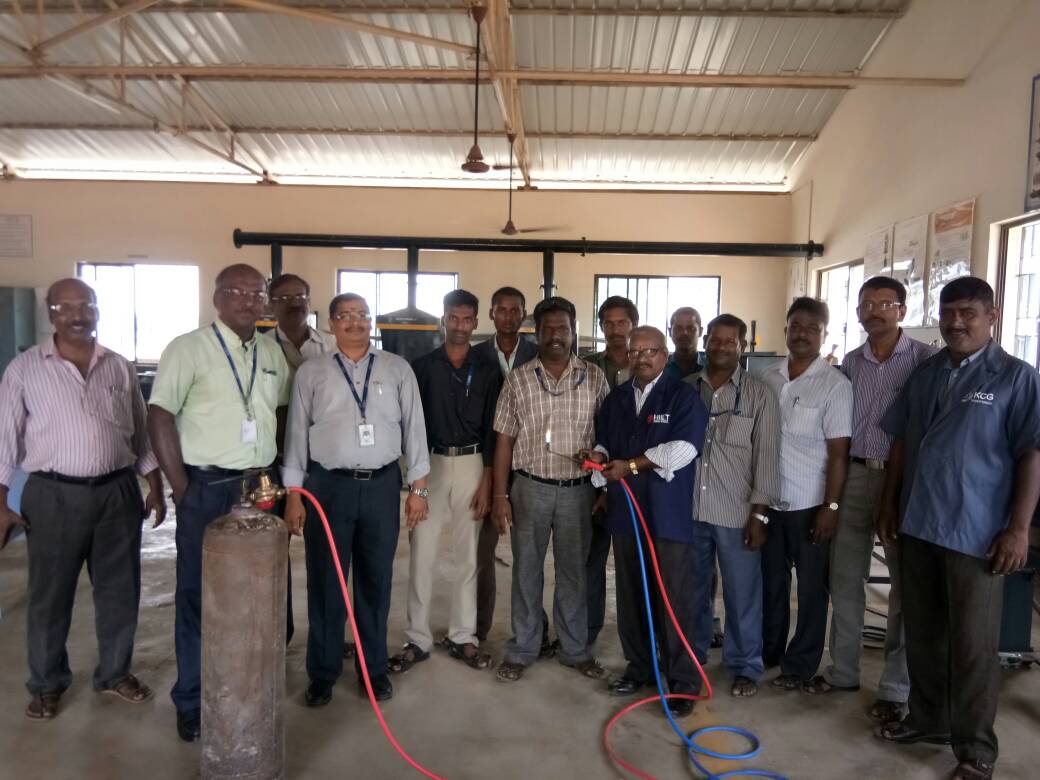
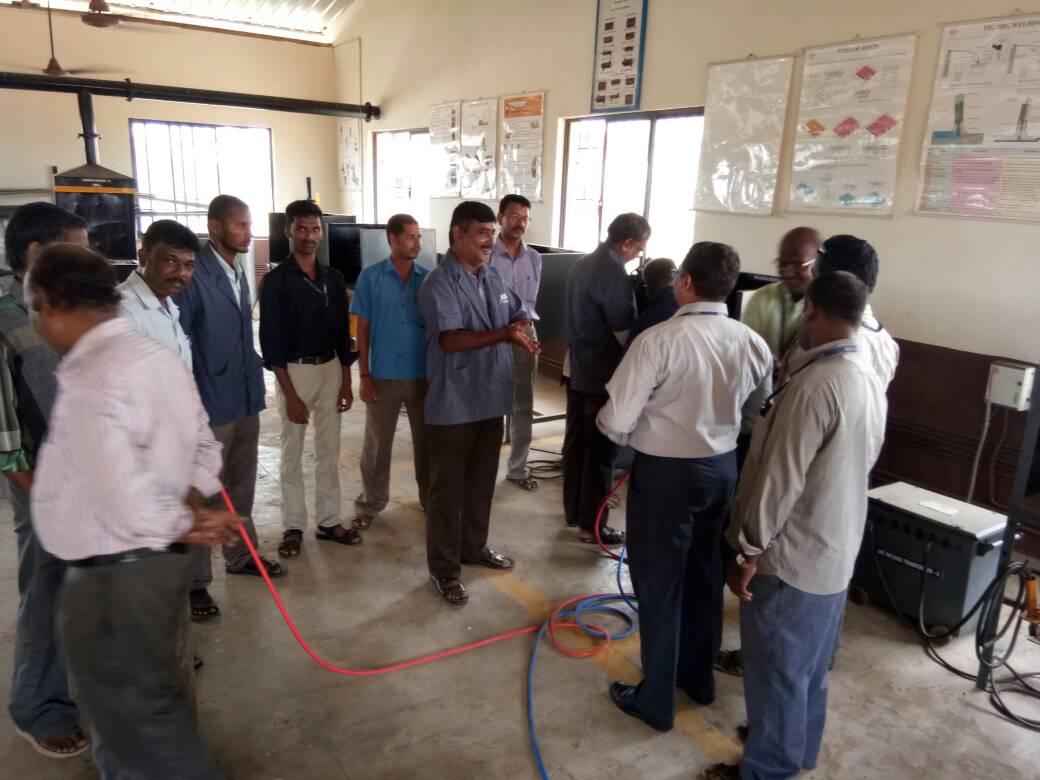
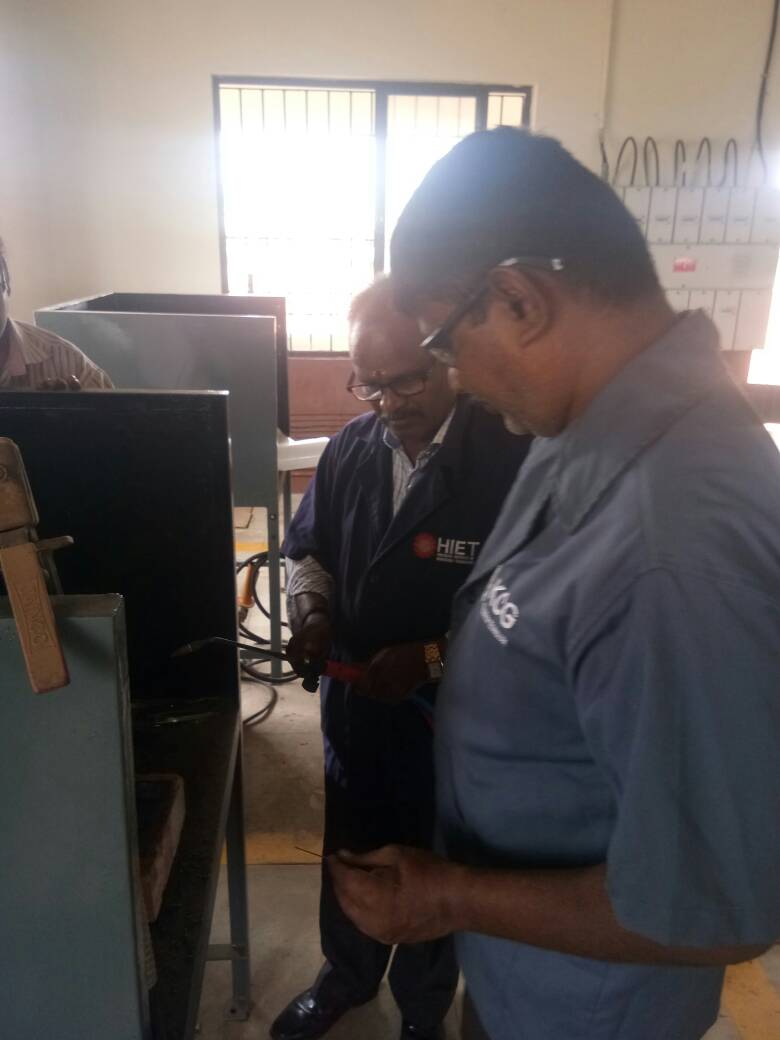
The following Non-Teaching Staffs were given Training to develop their skill in Gas Welding by Mr.Yoganathan, Welding Instructor deputed from HIET Polytechnic College for 4 days from 23/05/2017 to 26/05/2017 at our Basic Workshop Laboratory.
- Mr. Sajji .V. Kuriakose, Workshop Supdt.
- Mr.Santhosh Kumar, Instructor
- Mr.Y. Anand, Instructor
- Mr. M.Sivaji, Instructor
- Mr.Karthikeyan, Instructor
- Mr.V.Sabu, Instructor
- Mr. A.Jayakumar, Instructor
- Mr A.Charles, Instructor
- Mr.H. Balaraman, Instructor
- Mr.S. Nagaraj, Instructor
- Mr.D.Arul, Instructor
- Mr. Ganesh, Instructor
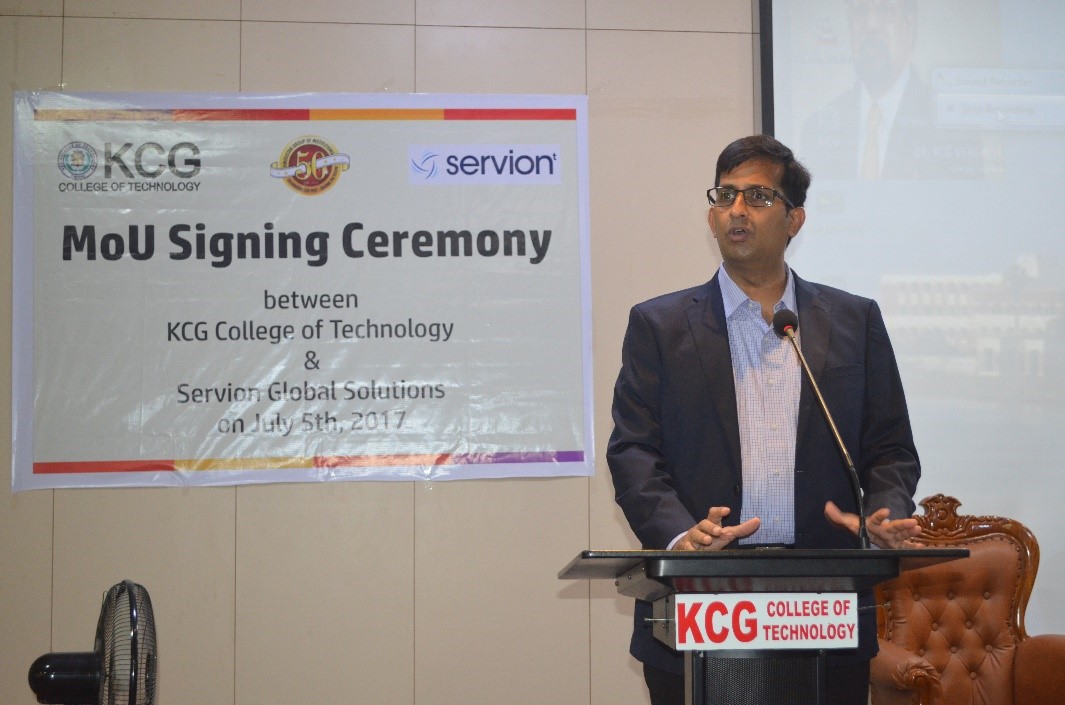
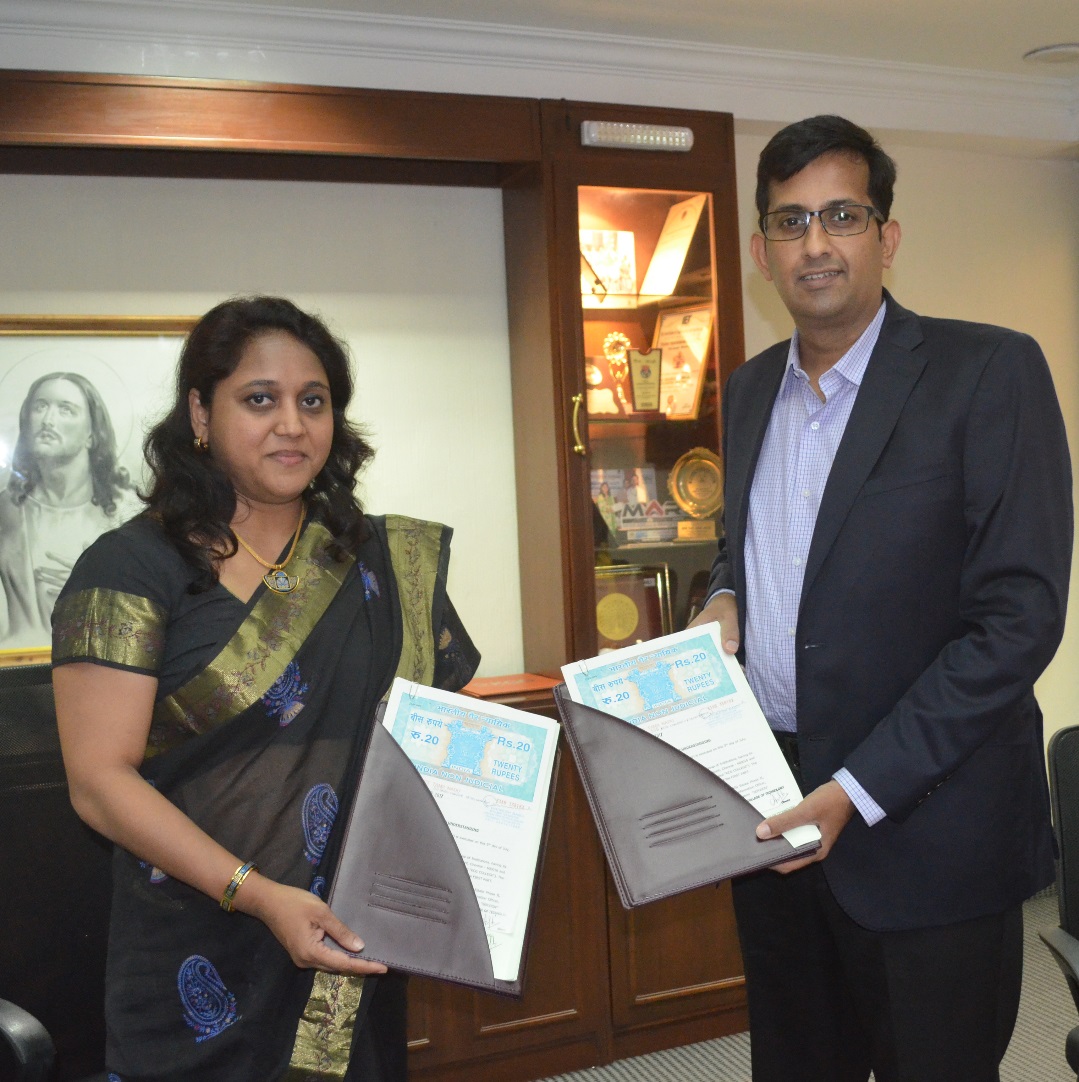
KCG College of Technology, Chennai understands the value of empowering its student community with technological innovations that augment vital skills and this has led to the establishment of synergetic relationships with multinational giants, international universities, research centres and industries worldwide. In accordance with this, KCG College of Technology has signed a MoU with Servion Global Solutions on 5th July 2017. The MoU was signed by Dr.Annie Jacob, Director, KCG College of Technology and Mr. Prakash Arunachalam, Chief Information Officer, Servion Global Solutions. The objective of the MoU is to increase the employability of the students by setting up an AI & Machine Learning Centre of Excellence at KCG College of Technology.
About Servion
Servion enables business transformation for enterprises in the area of customer experience management (CEM). Servion manages over 10 billion customer interactions annually across 60 countries in 6 continents. Three out of the top 5 banks, 2 out of top 5 insurance firms & 5 out of the top 10 telcos work with Servion to improve their customer experience
.
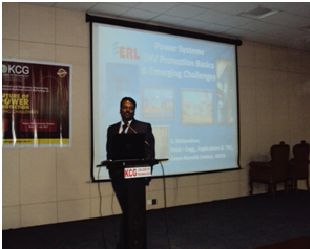
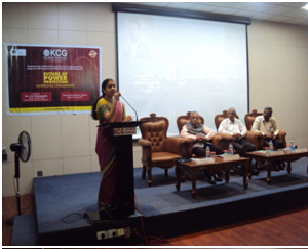
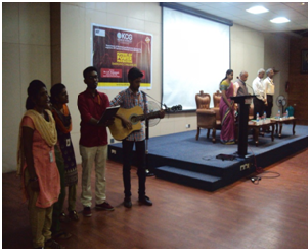
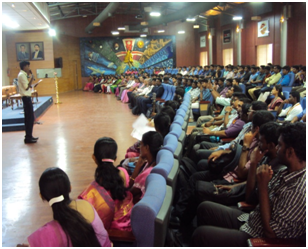
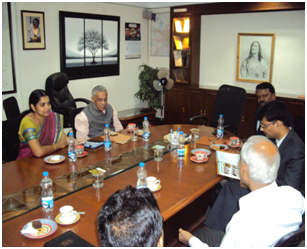
The Department of Electrical and Electronics, KCG College of Technology organized an IET sponsored ONE-DAY NATIONAL LEVEL WORKSHOP ON “FUTURE OF POWER PROTECTION – EMERGING CHALLENGES” on July 7th, 2017. The inaugural function commenced at 9.30 am in Mirza Seminar Theatre. The meeting was presided by Dr.G.Prabhakaran – Principal, Dr.P.DeivaSundari – Head of the Department/EEE, Dr.G.Sambandan – Advisor/Electrical Sciences. The workshop formally began with an invocation and the invited guests were welcomed by Head of the Department/EEE. The Principal and the Advisor gave the felicitation address. Around 196 participants registered for the programme. The Guest speakers were from industries like Easun ReyRolle Pvt Ltd, ABB, Megger, and a Professor from VIT, Vellore. The participants from other institutions also attended the workshop along with our final year and pre-final year students. The programme was inaugurated by the Chief Guest, Dr L R Rajagopal, Chief Executive Officer (CEO), Signals and Systems Private Limited, Chennai. He shared his views regarding concepts on power protection and its importance in future. He also enlightened the gathering with information regarding HVDC systems, condition monitoring and asset management system, and overview of electric power scenario in Indian power sector.
Session 1
Mr. G. Mahendiran, Head Engineering (Testing & Commissioning), Easun Reyrolle Limited (ERL), Chennai.
He introduced us to the concepts of emerging innovative technology in EHVAC systems and its classifications. Also he delivered, components of EHVAC system and zones of protection like single and multifunction protection such as differential protection, impedance protection, busbar protection, reactor protection etc. He made us aware of modern power transmission systems and its ongoing research in harmonics, fault currents and wave trapping in power system protection. However, whenever fault develops in any or combination of equipment of generation, transmission, distribution and utilization, there is sudden disturbance of these forces resulting in an inrush of current and voltages build up in microseconds which may result in fire in generators and damage of many power plants equipment. He stressed on the importance of protection against phase-to-phase fault and phase to earth faults. He created an awareness for electrical engineers and also who work in the field of power generation, transmission, distribution, protection, relay coordination and planning of new and/or expansion of existing system etc. His experience also educated the students by providing both practical and theoretical exposure.
Session II
Dr. Mahendra V Chilukuri, Professor, Power System and Smart Grid, School of Electrical Engineering, VIT University, Vellore.
He spoke on evolution of protection relays and High Voltage Direct Current (HVDC) transmission & protection. He explained about power electronics converter and inverter, harmonic mitigation, DC link voltage, thyristor switches etc. He also pointed out the communication protocols used in substation/power networks such as IEC 60870 – 5 -101, IEC 60870 – 5 -102, IEC 60870 – 5 -103, IEC 60870 – 5 -104, IEEE C37.118 – PMU/synchrophasor measurements for power systems. He also gave an insight about synchronized phasor (synchrophasor) measurements for power systems and requirements for compliance with the standard under both steady-state and dynamic conditions.
He explained the various types of relay and its evolution in power engineering. He gave a brief role of electromechanical relay, static relay and numerical relay. He enlightened the future goals in online monitoring (Data monitoring, storage and visualization) and Intelligent diagnostic system (DGA based diagnostic, AI technique, partial discharge monitoring) based condition monitoring. He pointed out the recent electricity scenario, demand, generation and applications in Indian power sector.
Session III
Mr. K. R. Sasikumar, Technology Lead Engineer, ABB, Chennai.
He introduced the development history of HVDC for power transmission purpose and commercial HVDC links in India. He gave an overview of the methodology and different opportunities for reducing loss while transmitting power from the power stations. He explained the various fault clearance mechanisms for faults occurring in the converter & inverter stations. He also demonstrated various case study on HVDC link, voltage stability and reliability of power. He also stressed that severe impact will be brought to hybrid AC/DC system when three-phase faults occur and single-phase breaker refuse to act, especially when disturbances are near DC converter. The session was very interactive.
Session IV
Mr. K. N. K. Srinivas, Megger (India) Pvt Ltd, Chennai.
He explained the concepts of Diagnostic Insulation Testing / Protection Relay Testing. Also he gave the information related to electronic design and household wiring for generators and power transmission systems and all different kinds of insulation safe minimum value. Various types of DC diagnostic insulation testing such as S1-1068 10 kV insulation resistance testers, 5 kV insulation resistance testers were also demonstrated by his team during the session. The protection system tools and relay software were also demonstrated.
Formal closure
The programme concluded with feedback from the participants and certificate distribution. We would like to thank the Institution of Engineering Technology (IET) for sponsoring this one day national level workshop.
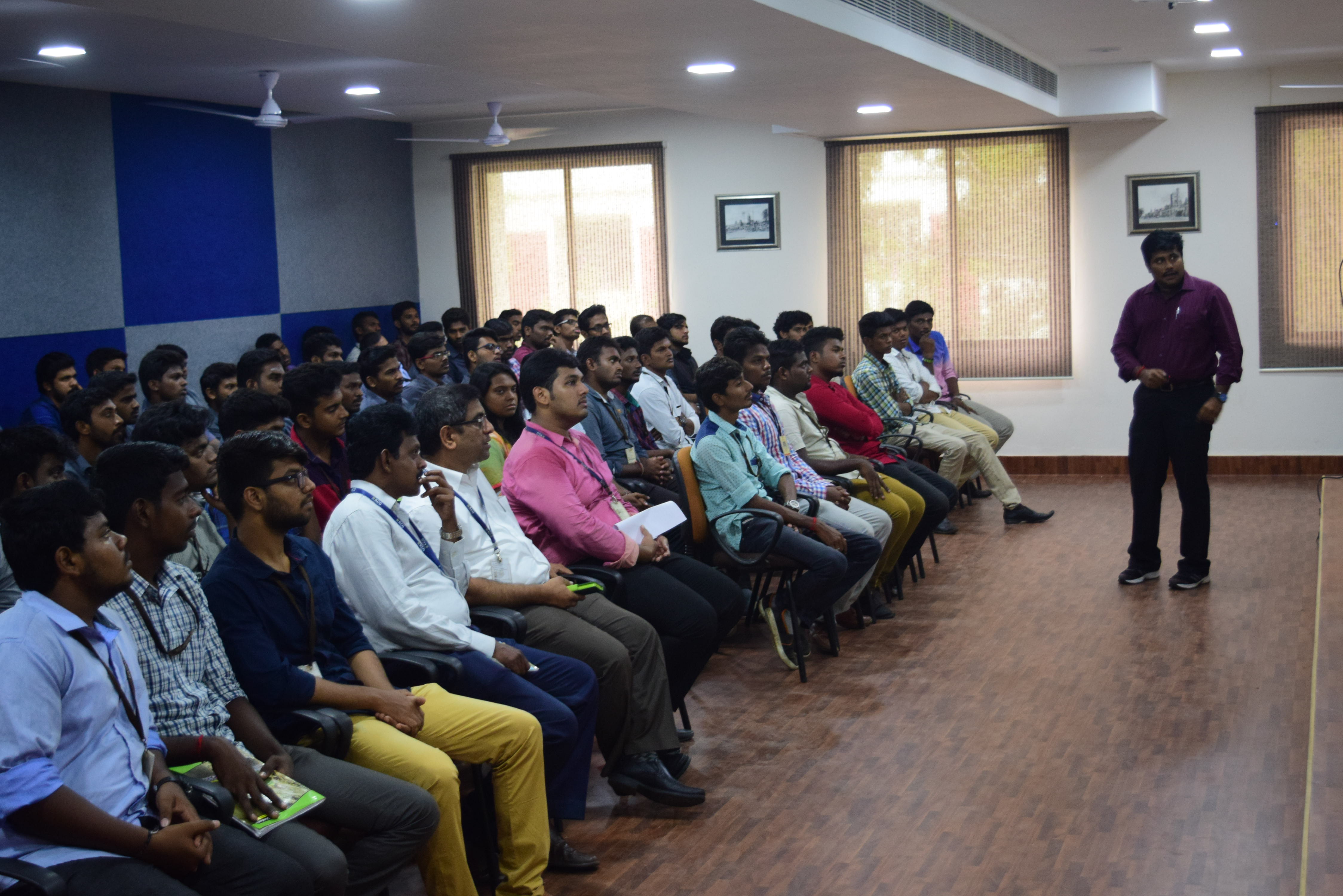
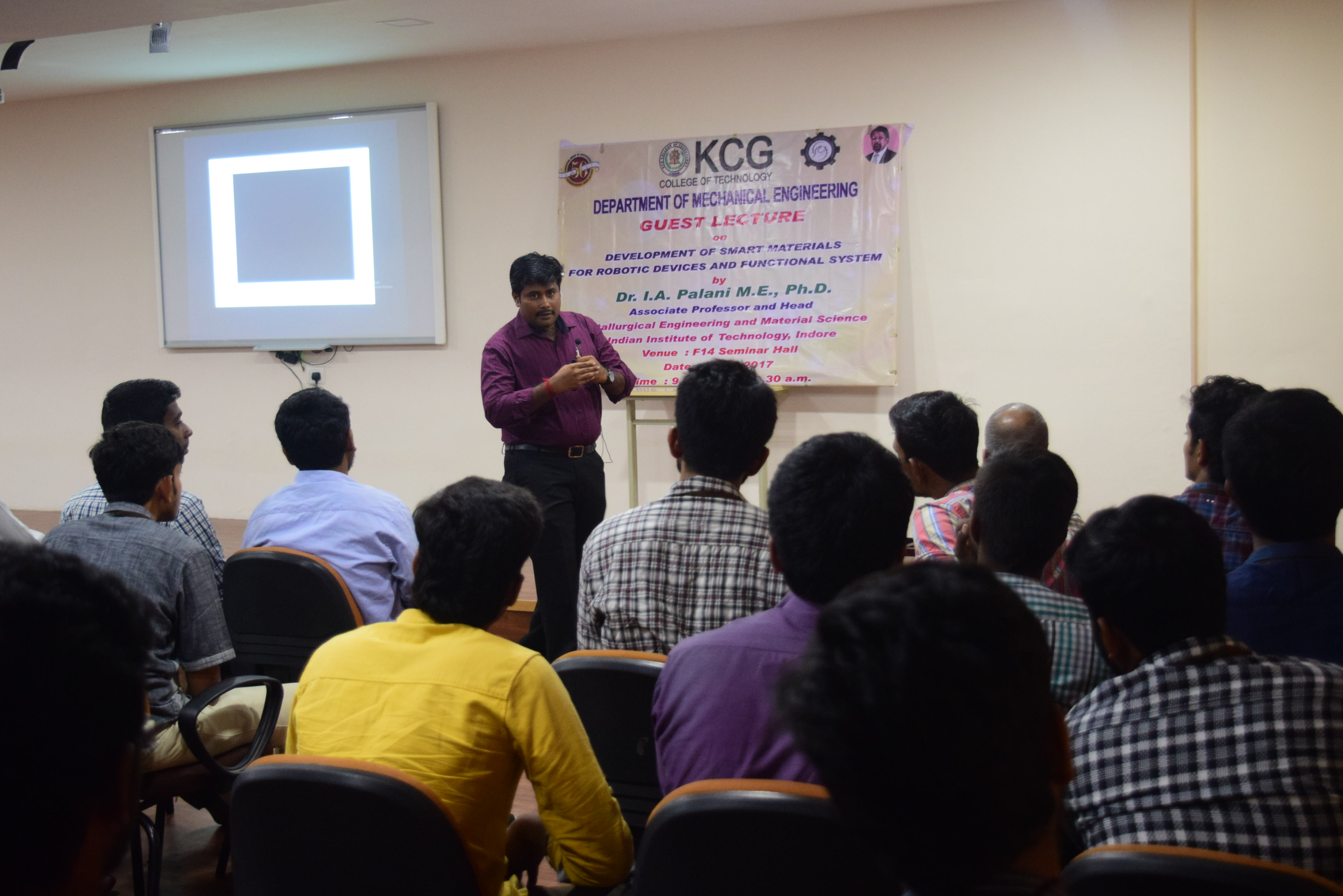
The department of Mechanical Engineering organized the guest lecture on “Development of Smart Materials for Robotics and Functional System “ at F14 – Seminar Hall on 07.07.17.
The lecture was extremely useful and packed with practical knowledge and was enriching, as to how a Shape memory alloys actually works, its principles and advantages.
A shape-memory alloy (SMA) also known as wire alloy or shape changer is an alloy that “remembers” its original shape and that when deformed returns to its pre-deformed shape when heated. This material is a lightweight, solid-state alternative to conventional actuators such as hydraulic, pneumatic, and motor-based systems.
Shape memory alloy effect is tested on a flower made up of strips of metal it gets straightened on the effect of heating. We also got the idea of how SMA is used in various fields such as aerospace, automobile etc.
Then we came to know about MEMS and robots working with shape memory alloys. He also shared the different concepts and projects which are tested in their lab.
The speaker did keep us excited with his efficacy of language and spontaneous interactive approach. The students were then allowed to ask questions which were well answered by the speaker. It was an overall enriching experience and we look further for other such opportunites where both the staff and the students can be benefitted.
TOPIC : Development of Smart Materials for Robotics and Functional System
Date : 07.07.17
Venue : F14 – Seminar Hall
Resource person : Dr. I.A.Palani
Associate Professor,
Metallurgical and Material Science,
Indian Institute of Technology, Indore
Solar Rooftop Grid Engineer
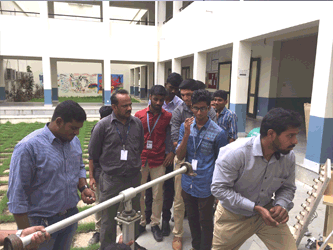
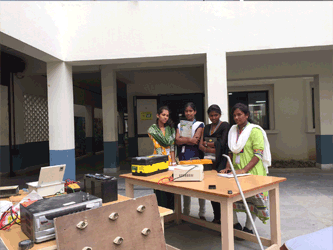
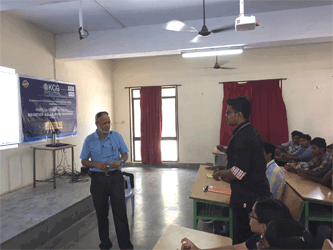
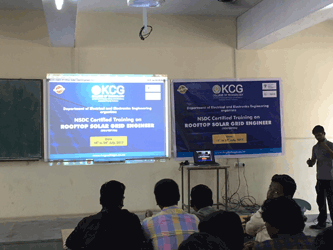
The Department of Electrical and Electronic Engineering of KCG College of Technology has organized a NSDC certified Five Day Training on “Solar Rooftop Grid Engineer” during 10-24, July 2017 for the Second year students at EEE Conference Hall. The training was conducted in two batches. The training for first batch (II-A) and second batch (II-B) was conducted from 10-14th July and 19-22nd July 2017 respectively. The training is aimed to create awareness on the Solar energy in India. Being a Certified NSDC-SCGJ partner this training helped students to familiarise with Solar PV system installation.
Dr. P. Deiva Sundari , HOD/EEE welcomed and inaugurated the workshop at 9.30 am. Dr. P.S. Mayurappriyan, Prof/EEE highlighted the importance of NSDC solar training and the availability of green jobs in future.
Mr. Vijay Venugopal in his first day (10.072017) after stating the objectives and significance of the programme discussed the following topics
- Fundamentals of course & knowledge.
- Solar PV systems and application.
- Solar array/Modules in series(parallel)
In day 2(11.072017) he gave an outline about the solar PV design for standalone system and gave tutorials in sizing of PV system
The following topics were also discussed in Day 2,
- Single line diagram of PV system.
- Sizing of PV balance of systems (BOS).
- Sizing of cables
- Grounding and protection system
- In day 3 (12.07.2017) the students were taught with installation of solar PV system. Class room discussion, Q & A sessions and video demos helped students to gain more knowledge in installation of solar PV systems.
The following topics were also discussed:
- Civil, Structural and mechanical installations.
- Electrical connections.
- Electrical safety.
- Inverters and charge controllers installation.
The fourth day (13.05.2017) started with hands on practical sessions in Solar PV installations. The students were split into batches with 9 per batch and asked to install rooftop PV system. They were guided by the trainers from FIST .The post lunch session of Day 4 was discussed with government policies and programs. The trainer gave an insight to various solar programs by MNRE, SECI, NSDC-SCGJ and NISE. Her also explained the job opportunities available in Solar industry.
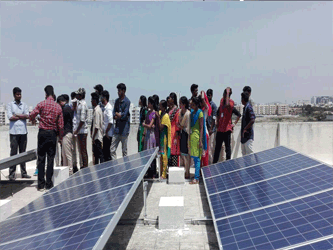
The day 5(14.05.2017) students were briefed about the various solar thermal system products available. Solar water heater and cooker working principle was discussed in detail. After morning session the students visited the 100kW plant located in terrace of aero building. The students were explained with the string connections, inverter and ACDB connections. In last session the students were evaluated by oral/ written test. Similarly for batch 2 (II-B) the training was conducted from 19-22nd July by same trainers.
The NSDC training was ended with a discussion and feedback session by the students. The student gave a very good feedback about the master trainer. They also stated that this Workshop gave them the basic knowledge and confidence in Solar PV systems. Dr. S. Solai manohar thanked the FIST team for organising such a good solar training.
THE HINDU
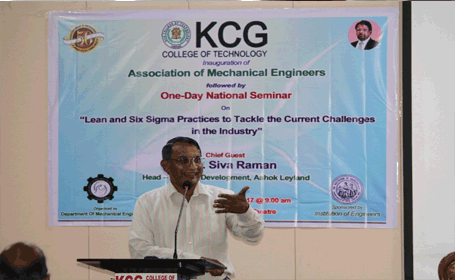
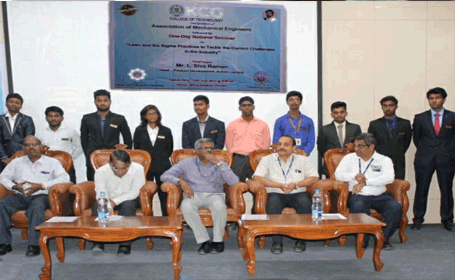
Department of Mechanical Engineering (NBA Accrediated) of KCG College of Technology held its Investiture ceremony followed by National Seminar on 14/07/2017.
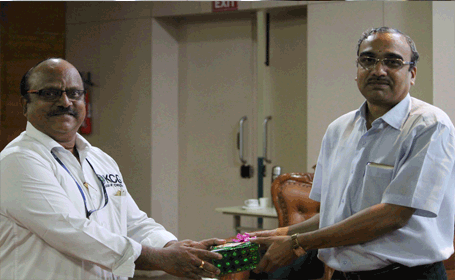
The newly appointed councils of the “Association of Mechanical Engineers” were adorned with Badges by the chief Guests Dr. L. Sivaraman, Head – Product Development, Ashok Leyland, Mr. Ananda Kumar, Schwing Stetter, Dr.S Rajkumar, Rane Engine Valves Vice President (Operations), Dr. G. Prabhakaran and Dr.S. Ramesh HoD/Mechanical.
Speaking on the occasion Dr.L. Sivaraman urged the ‘Young Leaders’ to uphold the values of the Mechanical Engineering and discharge the duties honestly and impartially. It was followed by an address on Lean and Six Sigma Practices in Industry, which helped the understudy to pick the information about their administration and its significance over the enterprise.
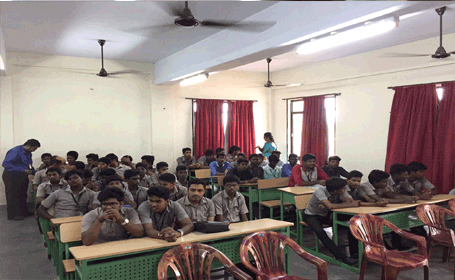
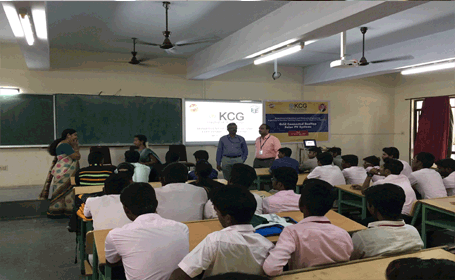
The Department of Electrical and Electronics, KCG College of Technology organized TWO DAY TRAINING PROGRAMME ON “GRID CONNECTED SOLAR PV SYSTEMS” on July 14 & 15, 2017 for diploma students. The inaugural function commenced at 10.30 am in G01 hall. The meeting was formally begun with an invocation and the invited guests were welcomed by Dr.P.Deiva Sundari, Head of the Department/EEE. Dr.G.Prabhakaran, Principal addressed the participants and emphasised the importance of green energy and its associated job market. Around 108 participants registered from various diploma colleges for the programme.
Day 1 – Session 1 (14.07.2017)
Dr. S. Solai Manohar, Professor, EEE Department
Topic: Introduction to Solar energy
Prof. Solai Manohar explained the introduction to solar energy. He explained the penetration of renewable energy in India. He also highlighted the Jawaharlal Nehru National Mission in solar PV system, which targets about 100GW of solar power.
Day 1 – Session 2 (14.07.2017)
Mr. S. Balaji , Assistant Professor, EEE Department
Topic: Solar PV and Thermal Systems, Basics of Solar PV
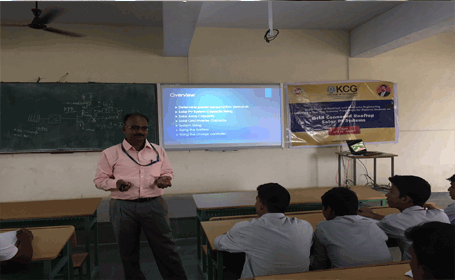
He explained the basics of electrical parameters; the participants interacted very well for this topic. Next he explained the basic concepts of solar PV system, types of solar cell and Balance of Systems (BOS) for solar grid connected system. He also discussed the solar thermal products like solar cooker, water heater and solar cremation.
Day 1- Session 3 (14.07.2017) – Field Visit to 100kW Solar power plant @ KCG
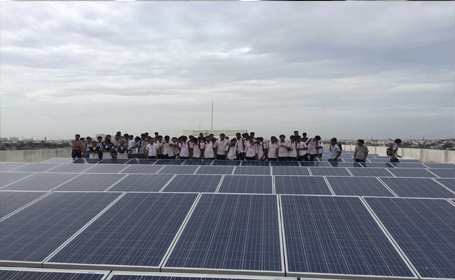
Students were taken to the 100kW plant located at the terrace of Aero building. The students were explained the Single line diagram of the plant, no. of panels, strings, inverter, ACDB and the protection systems installed for the solar plant.
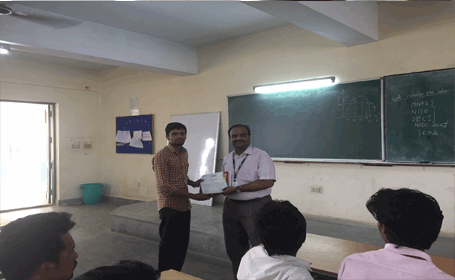
Day 2- Session 1 (15.07.2017)
Mr. K. Karthikeyan, Associate Professor, EEE Department.
Topic: Solar PV sizing and Design of standalone PV system
Mr.K.Karthikeyan recollected the PV concepts which helped students to do PV sizing. He explained the PV system sizing, which includes panel sizing, inverter sizing, charge controller sizing etc. This session was hands on session where students themselves calculated the parameter for PV sizing. He also explained about the policies available in various central Government agencies like NSDC, MNRE, NISE, SECI etc
The programme concluded with feedback from the participants and certificate distribution by the Dr. S.Solai Manohar, Professor /EEE, KCG College of Technology.
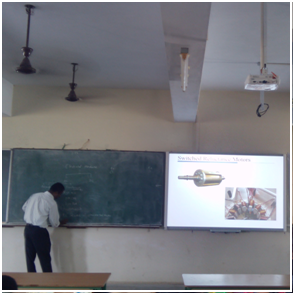
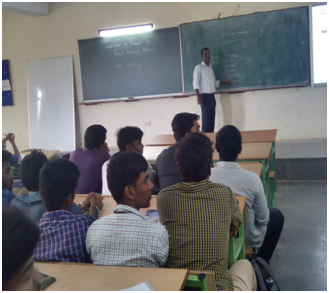
One day Guest Lecture on Advancements in Special Electrical Machines was conducted by the Department of Electrical and Electronics Engineering for the final year students (2014 -2018 batch) on 18.07.2017. The resource person was Mr. Azhagar Raj from Hybrise Technologies. He briefly introduced the advancements made in Special Electrical Machines especially the switched reluctance motor.
The insight of this lecture was about
- Basics of special electrical machines
- Concept of Switched Reluctance Motor
- Design of SRM
- Torque production in SRM
- Real time applications of SRM in industries
The guest lecture was delivered both with chalk and talk explanations and effective video presentation. The students had an effective interaction with the resource person and where asked to solve some problems related to the design of switched reluctance motor. The lecture concluded with a thanking note by Dr. S. Solai Manohar.
Faculty In – Charge
Dr. S. Solai Manohar, Prof., EEE
Ms. M. Ammal Dhanalakshmi, AP, EEE