
Department of Aeronautical Engineering
Our beloved former president Dr. APJ Abdul Kalam86th birthday has been celebrated on 16th October 2016. Two eminent personalities from Aerospace industry were invited as chief guests for the function. Group Captain A. Arunachaleshwaran, commanding officer, MTI from IAF, Tambaram and Mr.S. Ganesan, DRDO Scientist, RIC-IIT Madras were the chief guests.
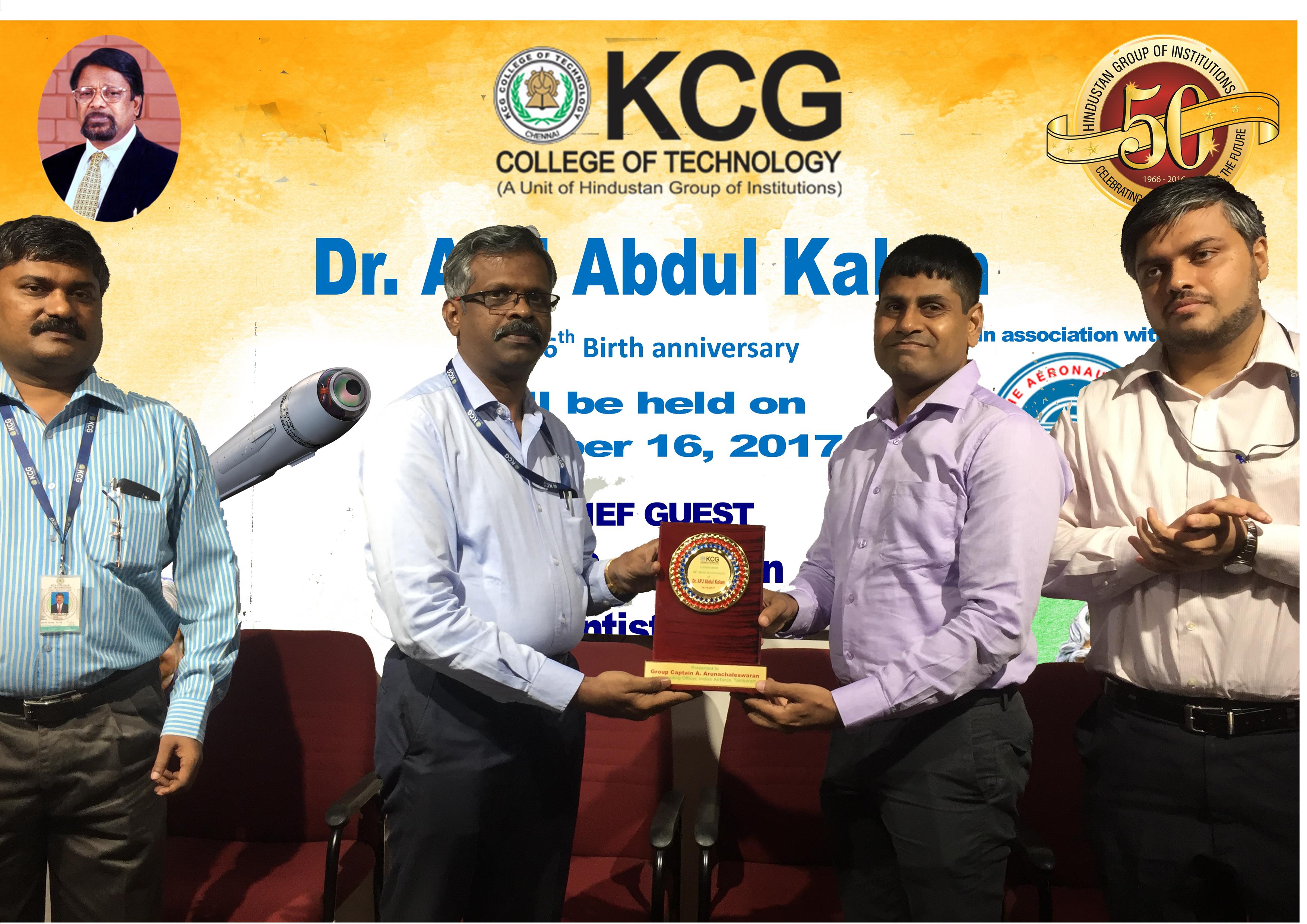
Welcome address was delivered by HoDDr.Asad Ahmed and rhePresidential address wasdelivered by our principal Dr. G. Prabakaran. Group CaptainArunachaleshwaran gave a lecture on “Design Consideration for Aircraft Brake Parachutes”.It was an interactive lecture and he quoted that developing indigenous technologies was thekey mantra of Dr.Kalam.
Mr.S. Ganesan gave a lecture on “Solid rocket motors and combustion instabilities”. He discussed about the current research activities and detailed the research outcomes on combustion instability. After the guest lectures, Vote of Thanks Given by Professor Dr K.Vijayaraja.Students interacted with the guests and posed various questions on current aeronautical challenges, which were enthusiastically answered by the guests.
TOPIC : WORKSHOP ON VIRTUAL LAB
Date : 20.10.17
Venue : F14
Resource Persons
Dr. K.V. Gangadharan, Professor Mechanical Engineering and Head of the Center for System Design, National Institute of Technology Karnataka, Surathkal, (NITK Surathkal), India
Dr. Pruthviraj U, Applied Mechanics And Hydraulics, Assistant Professor, National Institute of Technology Karnataka, Surathkal, (NITK Surathkal), India
First speaker Dr. K.V.Gangadharan emphasis about the virtual lab and its importance of future.
| Virtual Labs will be made more effective and realistic by providing additional inputs to the students like accompanying audio and video streaming of an actual lab experiment and equipment |
Physical distances and the lack of resources make us unable to perform experiments, especially when they involve sophisticated instruments. Also, good teachers are always a scarce resource. Web-based and video-based courses address the issue of teaching to some extent. Conducting joint experiments by two participating institutions and also sharing costly resources has always been a challenge. With the present day internet and computer technologies the above limitations can no more hamper students and researchers in enhancing their skills and knowledge. Also, in a country such as ours, costly instruments and equipment need to be shared with fellow researchers to the extent possible. Web enabled experiments can be designed for remote operation and viewing so as to enthuse the curiosity and innovation into students. This would help in learning basic and advanced concepts through remote experimentation.
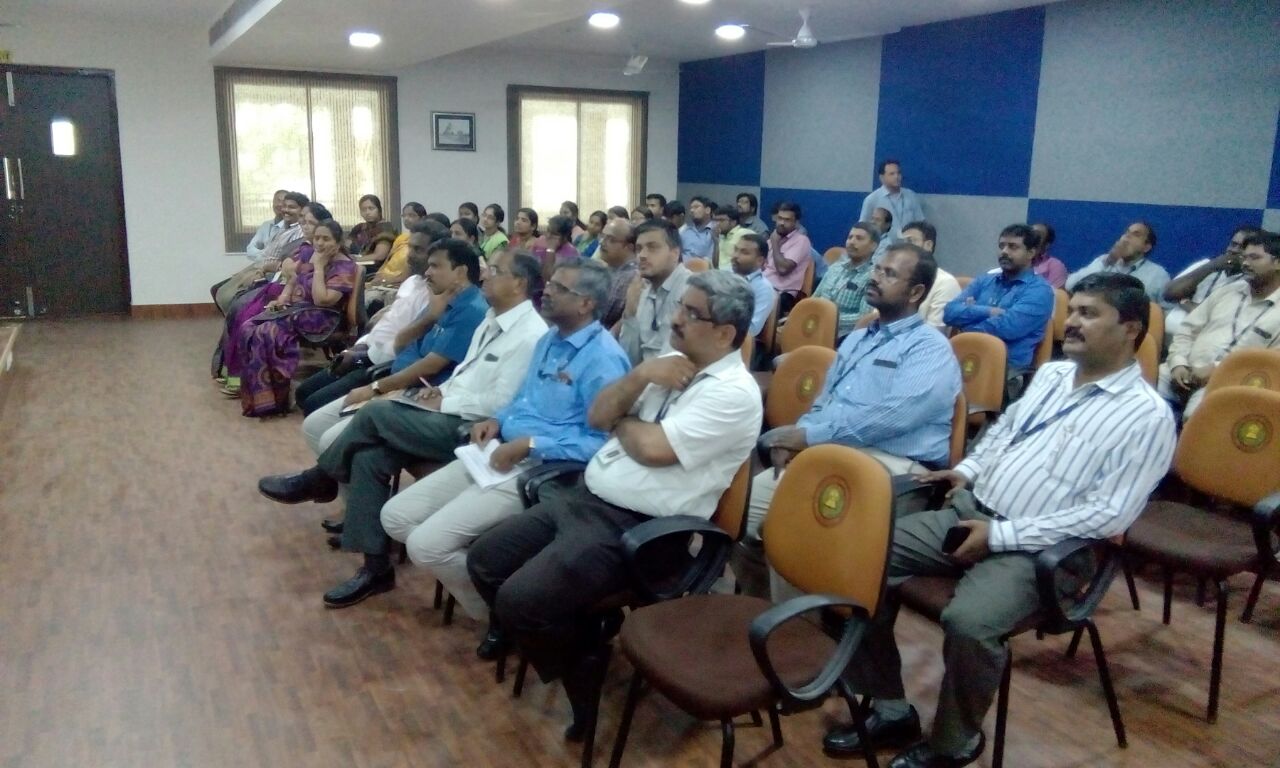
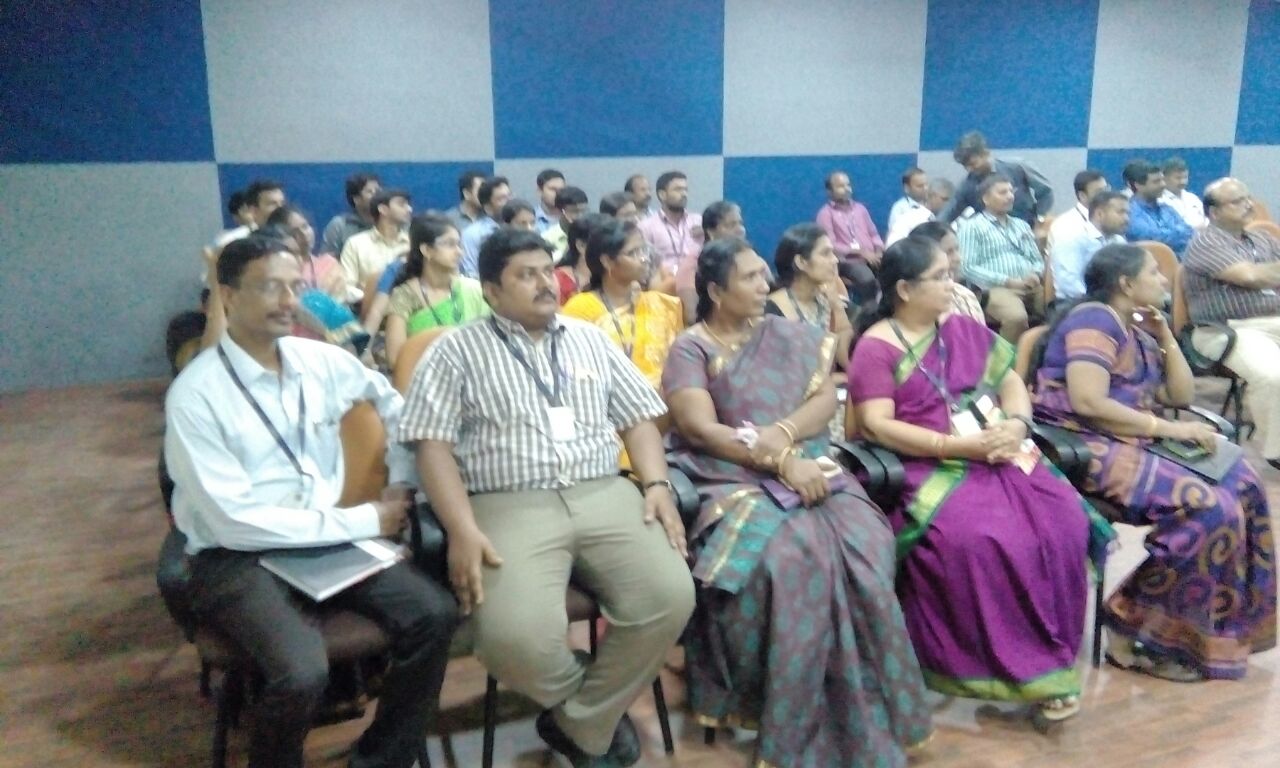
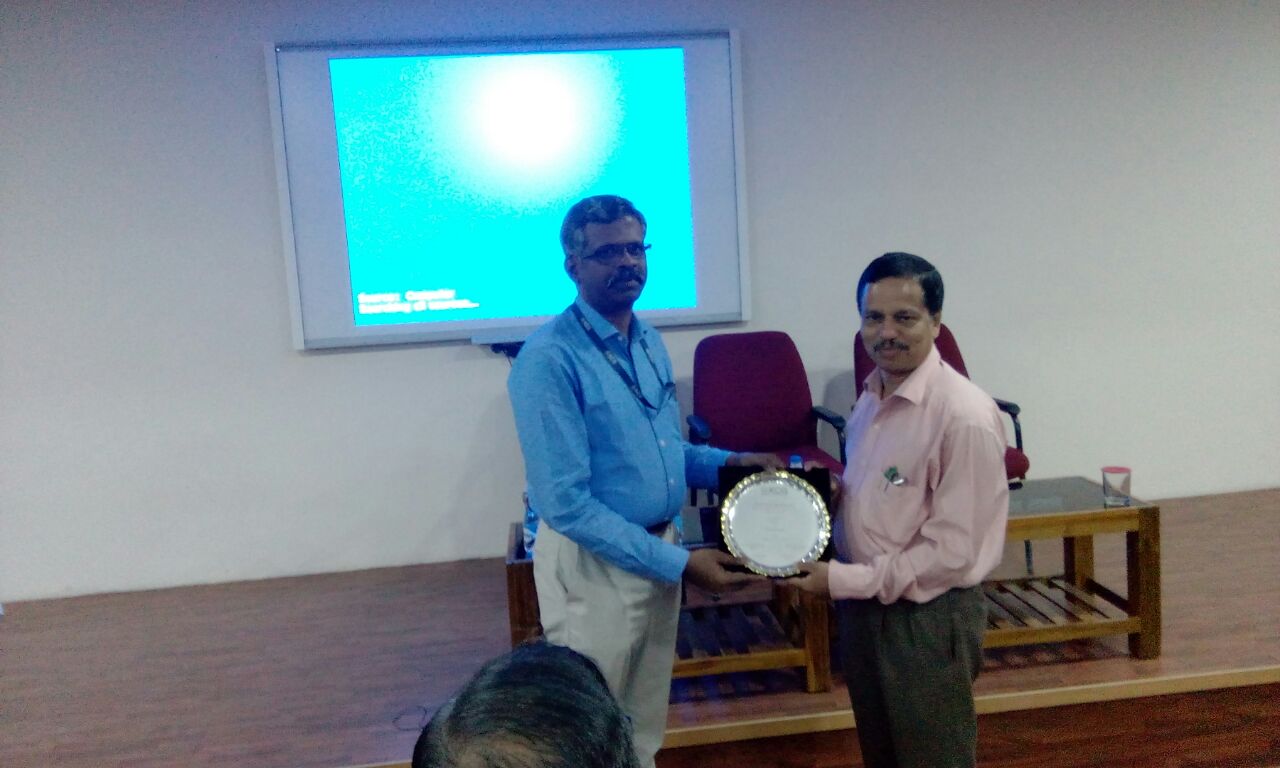
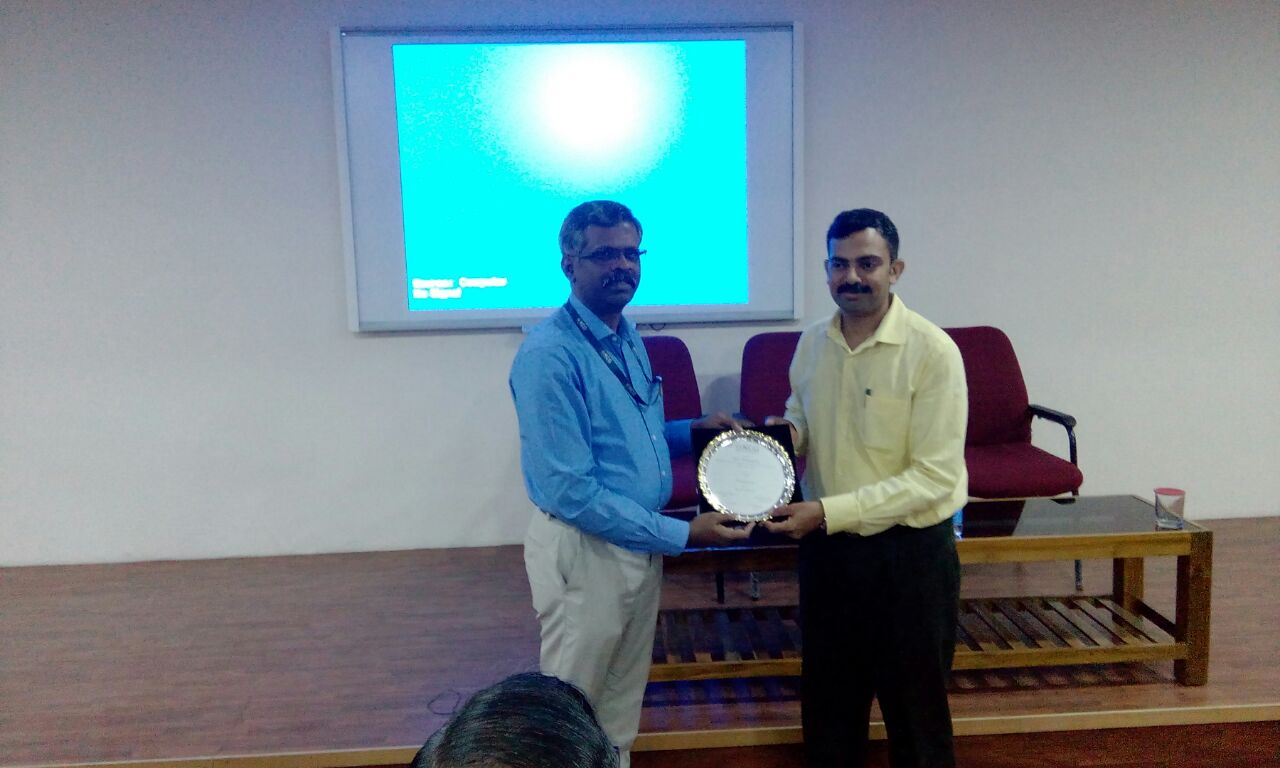
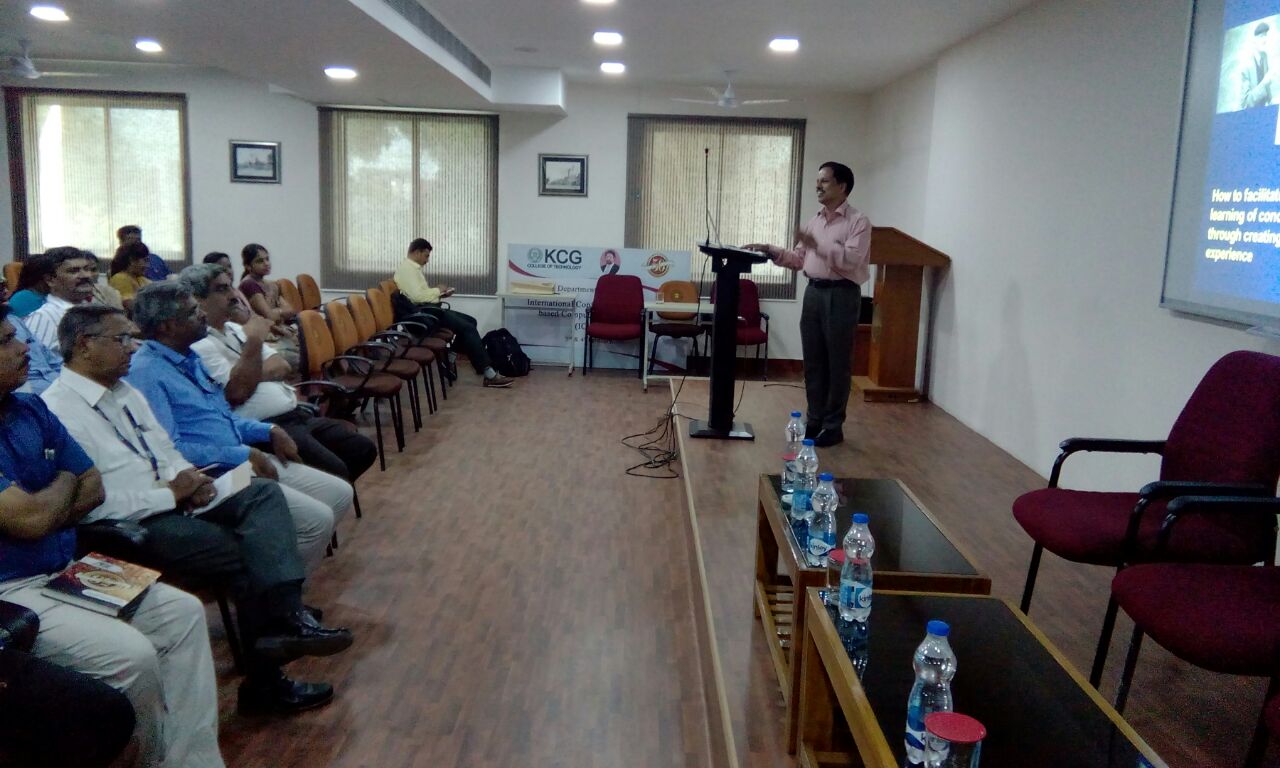
Second speaker Dr. Pruthviraj emphasis about the student internet based experimentation with natural phenomena
Today most equipment has a computer interface for control and data storage. It is possible to design good experiments around some of this equipment which would enhance the learning of a student. Internet-based experimentation further permits use of resources knowledge, software, and data available on the web, apart from encouraging skillful experiments being simultaneously performed at points separated in space (and possibly, time)
For the ‘touch and feel’ part, the students can possibly visit an actual laboratory for a short duration
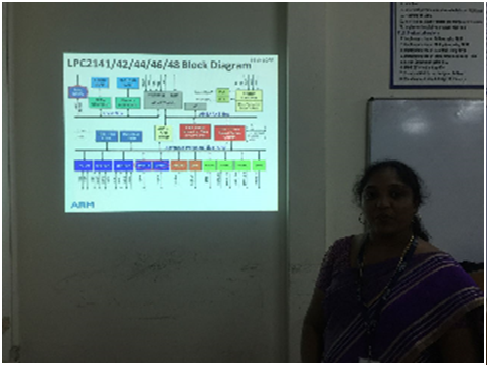
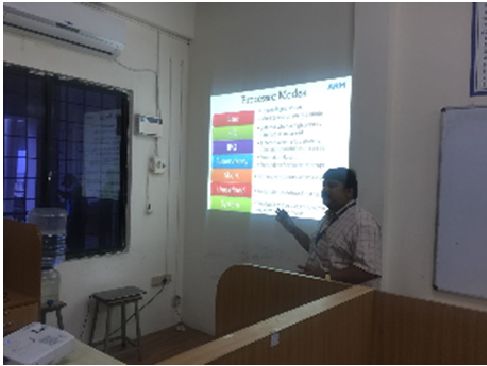
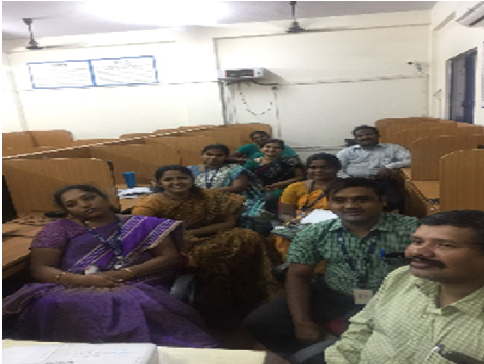
One day workshop on ARM Processor was conducted by the core team of EFY KCG Tech center exclusively for the faculties of ECE department on Tuesday 7 Nov 2017.The program commenced at 9.00 am at the CADENCE Lab. The Chief Resource Person was Dr.V.Subbaroyan, Professor, ECE Department and he was well supported by the core team members of EFY KCG Tech Center, Ms.B.Thyla and Mr.T.Thomas Leonid.12 faculties of the ECE Department attended the Program.
First session was introduction to the ARM Processor. With a basics understanding of Embedded System and C programming it will be easy to work on ARM processing kit. ARM Processor is and inexpensive, cross platform, simple and clear programming environment. After the Tea break at 10.40 am the next sessions on ARM CORTEX-M for control system applications, ARM CORTEX-M for robotic applications, ARM CORTEX-M in low power design operations were discussed. Participants found few programs like LCD display, RTC module very interesting and got involved in doing further programs. Many other fun filled projects were done by the participants in the afternoon session.
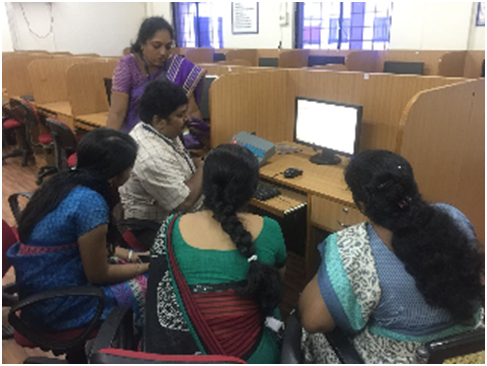
This workshop was organized to facilitate the faculties to effectively use ARM Processor software to guide projects and research work. The sessions were completely hands on, increasing the confidence of the participants in using the tools and the trainers were adept at clarifying the questions that arose during the session relating theory concepts studied to practical issues.
For EFY KCG Tech center
Dr.V.Subbaroyan
Head
Resource Persons
Mr. T. Jayanandan-CEO- Tesla Minds
Dr. Esther Florence-Associate Professor-SSN College of Engineering
Dr. M. A .Bhagyaveni-Professor- Anna University
Ms. Kavitha Balamurugan-Associate Professor- KCG College of Technology
Dr. S.S.Karthikeyan-Assistant Professor- IIITDM Kancheepuram
Participants
Anna University
Veltech University
Velammal Engineering College
Panimalar Engineering College
St. Joseph’s Institute of Technology
Jeppiaar SRR Engineering College
Dhirajlal Gandhi College of Technology
TJS Engineering College
The seminar grant of Rs.1, 00,000 for conducting “Latest Trends and Advances in UWB Antenna Design” was sanctioned by AICTE (F.No.7-44/RIFD/SG/POL-1/2016-17 8th June 2017). The seminar was conducted by ECE department on 9-10 November 2017 at F14-Seminar Hall KCG college of Technology. 31 (26 External and 5 Internal) participants from various Engineering colleges around Tamilnadu attended the Seminar. The seminar was convened by Dr. Thulasi Bai, Coordinator as per the sanction and Dr. V.Subbaroyan, Head of the Department. The seminar was coordinated by Mr.Sadasivam S and Ms.B.Thyla, Assistant professor(s).
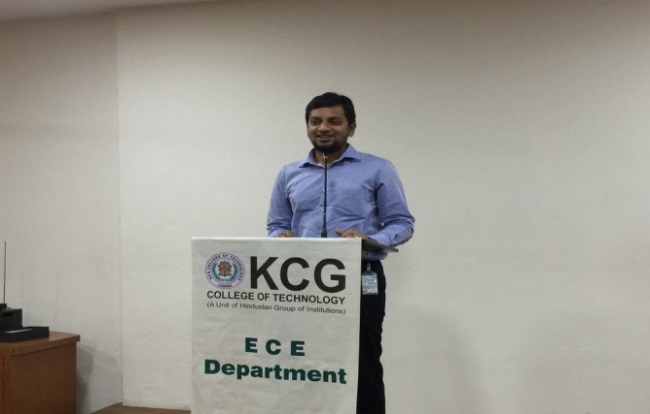
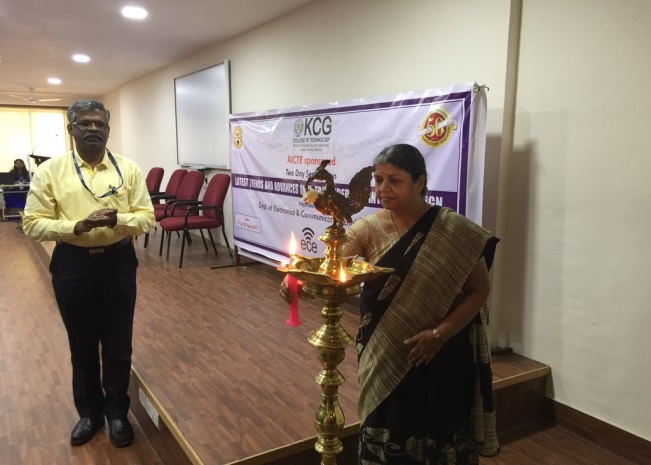
The Seminar was inaugurated by Principal Dr. G.Prabhakaran at 9 AM on 9 November 2017. Dr. Subbaroyan welcomed the gathering and Dr. Sumathi Poobal, Vice Principal felicitated the inauguration. Mr.T.Jayanandan, CEO-Tesla Minds, the young Entrepreneur was the chief guest and Ms.B.Thyla introduced the chief guest. Mr. T.Jayanandan gave an introductory speech about Ultra-Wide Band antennas. Mr. Sadasivam S thanked the gathering and the Inauguration was closed.
The next session was started at 10.30 AM by Dr. Esther Florence, Associate professor, SSN college of Engineering. She gave a mind blowing talk on designing Ultra-Wide Band antennas especially on wearable and textile antennas. After the Lunch Dr. M.A Bhagyaveni, Professor Anna University, gave a brief talk on Ultra-Wideband communication. The closing session of the day was
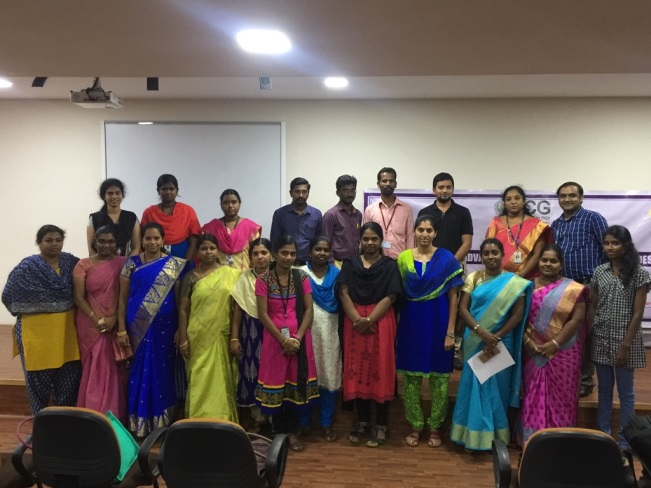
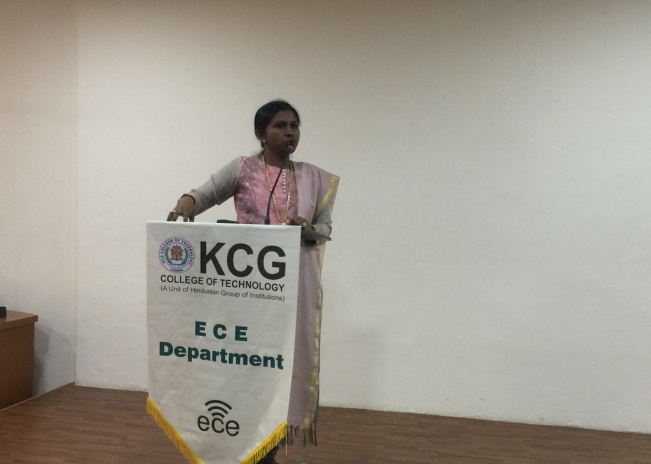
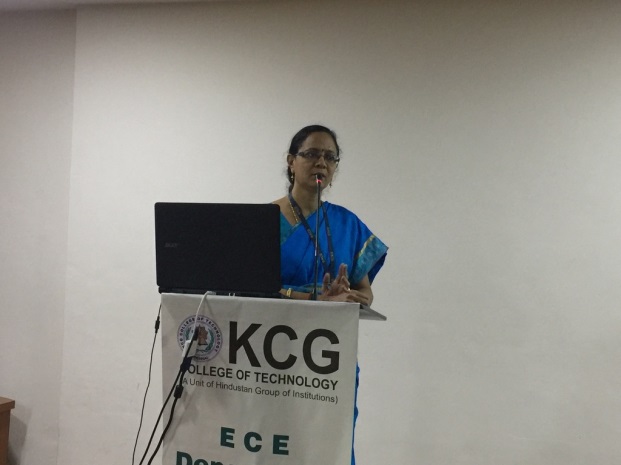
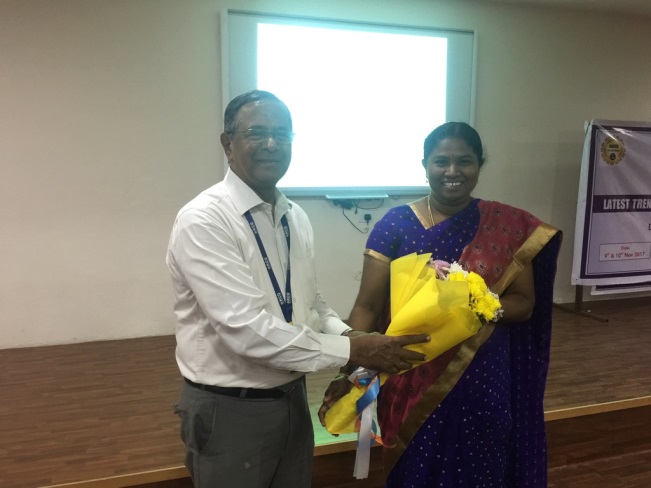
given by Ms.Kavitha Balamurgan, Associate professor, KCG College of Technology. She gave excellent talk about the Various Applications and Challenges in designing Ultra-Wide Band antennas. The Day 1 was closed by 4.15PM. The participants can able acquire knowledge on Ultra-Wide band communication and antennas.
The first session of day 2 (10.11.17) was by Dr. S.S.Karthikeyan, Assistant Professor, IIITDM-Kancheepuram. His talk focused on Ultra-Wide band communication and various passive devices involved in designing the Ultra-Wideband antennas.
After the tea break, the next session, a fully hands on session of designing an Ultra-Wide band antenna using CST software was started by 10.30 AM. Mr. Jayanandan explained Ultra-Wide band concepts related to antenna with real time examples followed by CST tool introduction. The tool was installed in computers well in advance and the team installed it in the laptops of the participants also. A handout with step by step explanation for designing a Horn antenna was given. Then the session was closed by 12.30 PM for Lunch.
After Lunch, the session started by 1.30 PM. The afternoon session was fully a Hands on one. All the participants eagerly designed a Horn antenna which was facilitated by the team. They designed the two slot antenna and simulated it. Return loss and radiation pattern was generated and analyzed. Then the participants were taught to fabricate the antenna and to solder the SMA connector. The Simulation session was closed by 3.30 PM.
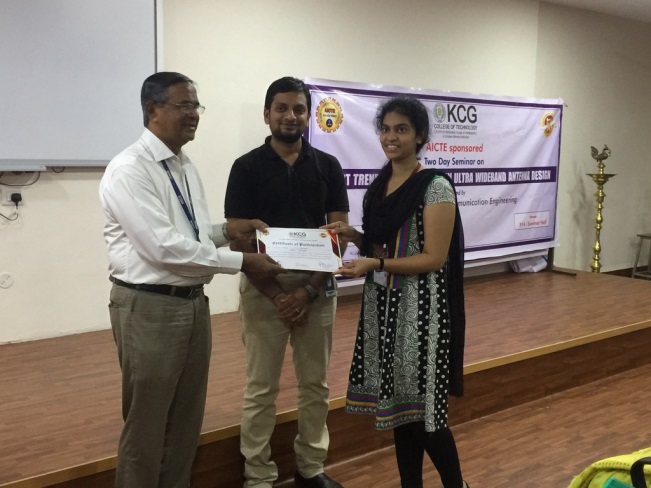
Certificate and Attendance were given to all the participants. The seminar was closed officially by 4.15 PM
Apart from Feedback forms, Ms Florence Silvia from Jeppiaar SRR Engg College Chennai, and Ms. Nirmala Devi from Dhirajlal Gandhi college of Engineering, Salem talked about the seminar and they told the seminar was very informative and useful. The Feedback forms were also consolidated and the overall feedback was good.
Resource Persons
Swarna Ravindra Babu,
Founder & CEO of Coovam smart systems and Services private limited
-
- Uppu Ramachandraiah,
Professor and Head,EIE Department,Hindustan University
-
- Bhagyaraj,
Associate Professor,SSN College of Engineering, Chennai
-
- Deepa Jose,
Associate Professor,KCG College of Technology,Chennai
-
- Emylin Shiny
Professor, KCG College of Technology
- Hari Krishnan Ramchandran,
Research Services-Medical Devices, HCL Technologies, Chennai
-
- Participants from the following institutions attended:
- VIT Campus, Chennai
- Velammal College of Engineering
- Gojan School of Business and Technology
- S R M University
- Meenakshi College of Engineering
- Hindustan University
- RMKCET
- S A Engineering College
- Sri Venkateswara College of Engineering
- KCG College Of Technology
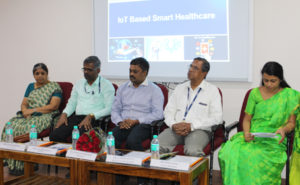
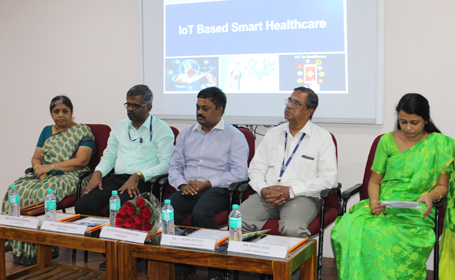
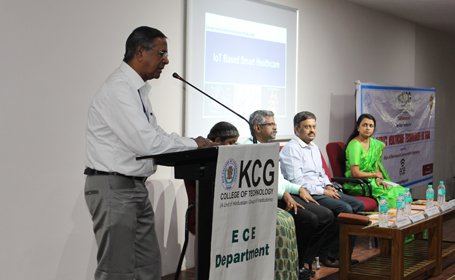
The Faculty Development Programme was attended by 30 participants from various technical institutes. Dr. Swarna Ravindra Babu, Founder & CEO of Coovam smart systems and Services Private Limited was the Chief Guest for the inaugural function. The proceedings of the event were distributed to the participants. Resource persons from industry and academia were invited to deliver sessions for the Two Day Seminar. Dr, Swarna Ravindra Babu emphasized on the latest trends in this field and the importance of IOT for E-health. The goal of the Seminar on IoT for E-Health Initiatives in India is to bring researchers and faculty from the IoT field and E-Health field together, to foster a better common understanding, to exchange visions and latest research results addressing IoT specialization for E-Health, to discuss promising new technologies and to highlight open research challenges. This seminar will result in more innovations, research and product development in the above mentioned topic which is of huge benefit to the society. If “smart” is defined by the confluence of access to information and the ability to utilize that information in meaningful and appropriate ways, then the
promise of the Internet of Things is, simply, a much “smarter” planet that keeps us safer, balances the personal good with the greater good, and improves humankind’s chances at providing a more sustainable legacy for future generations. This seminar covered various aspects of application of IOT such as critical care to the elderly, smarter transport, smarter homes and hospitals, smart and intelligent health monitoring systems, intelligent assistive aids etc.
Through this seminar the faculty will be able to develop smarter elders and healthy society. Through the faculty, the knowledge can be further disseminated to the students in an effective way and innovations, research and products can be developed by these teams. The institution can come up with novel projects and innovations in this field and collaborate with the industry to serve the society through these innovations.
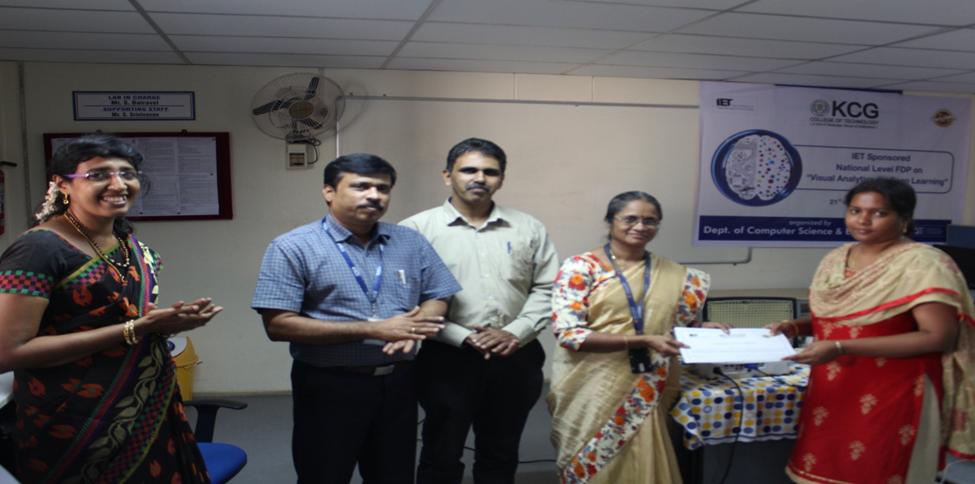
During valedictory the feedback from participants were collected and certificates were distributed by Dr.Hari Krishnan Ramchandran, Research Services-Medical Devices, HCL Technologies, Chennai. The participants expressed the desire to attend more similar events in furture. The co-ordinator Dr. Deepa Jose, Associate Professor -ECE Department thanked ICMR for sponsoring the FDP. The function concluded with the National Anthem.
- Participants from the following institutions attended:
“The higher education system in the US is different from that of India and Indian students who seek admission in highly-competitive programs in American universities should prepare themselves well in order to achieve their goal,” said Shanthi Charath Mohan, Coordinator, EducationUSA, Unites States India Education Foundation (USIEF), at a day-long boot camp on higher education in the US, held at KCG College of Technology, Chennai. “Plagiarism will not be tolerated by American universities and therefore students learn to write everything, including their Statement of Purpose (SOP), on their own,” she added.
In his address, Principal Dr G Prabhakaran highlighted the need for pursuing higher studies and encouraged the students to prepare for competitive exams such as GRE, GATE, TOEFL and IELTS.
The boot camp focused on the five steps to US education: researching options and shortlisting universities, financing studies, completing the application, applying for a US student visa and preparing for departure to the US. The participants also had a workshop on how to write statement of purpose.
The Higher Education and the International Affairs cells of the college jointly organized the boot camp. Fifty students from various departments attended the program.

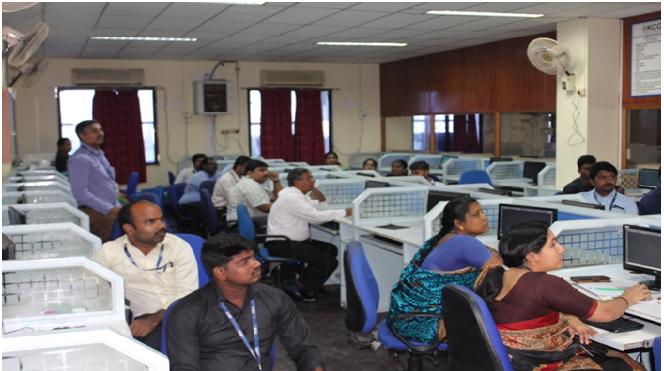
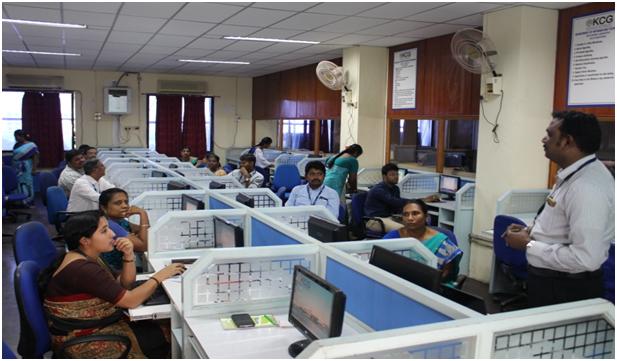
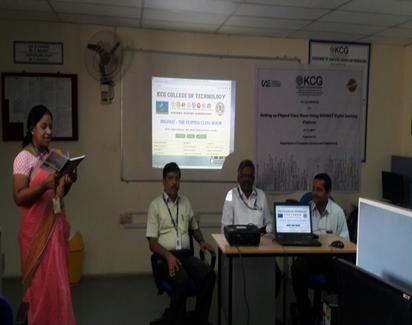
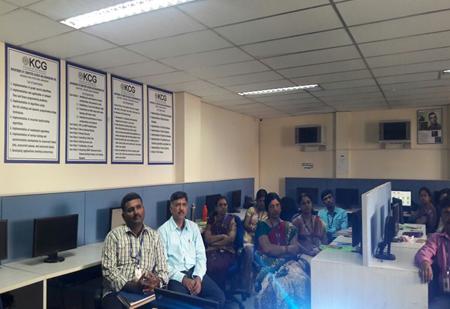
A Workshop on Setting up Flipped Class Room Using DIGIMAT –Digital Learning Platform was organized by the computer Science and Engineering, on November 17th, 2017 at M.E Lab. Twenty faculties of various disciplines, attended the workshop. The workshop was led by key resource person: Mr.Baskar Selavaraj,CEO of LinuXpert System,Chennai. The aim of the workshop was to enable the participants to familiar and work on the Digital resources and NPTEL videos on subjects in all the engineering disciplines.
The workshop began with a welcome address by Dr. M Krishnamurthy, HOD,Dept. of CSE, Principal Dr.G.Prabhakaran delivered the presidential address.Dr.P.Selvi Rajendran,Professor ,Dept.of CSE introduced the speaker. Then the speaker started the session. The complete sessions were organized as a Hands-on session and lecture
Feedback from Evaluation forms was extremely positive. The presentation and the inputs given by the resource persons were highly valued. Participants appreciated for being able to clarify doubts with the experts.
Day 1 (21.11.2017):
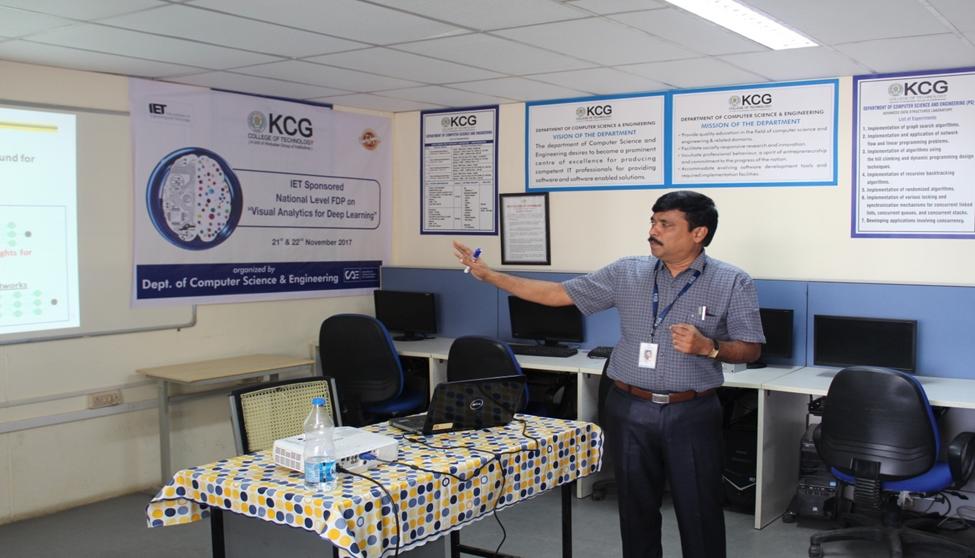
The FDP started with an inauguration by Dr.Angelina Geetha-Professor, Crescent University. She shared her academic experience in a wide variety of domains. Dr. Krishnamurthy, HOD of CSE delivered welcome address and Principal Dr.G.Prabhakaran gave presidential address and session was started for the day.
Session 1 : Deep Learning and Big Data Analytics
Speaker: Dr.Angelina Geetha, Professor – CSE Crescent University
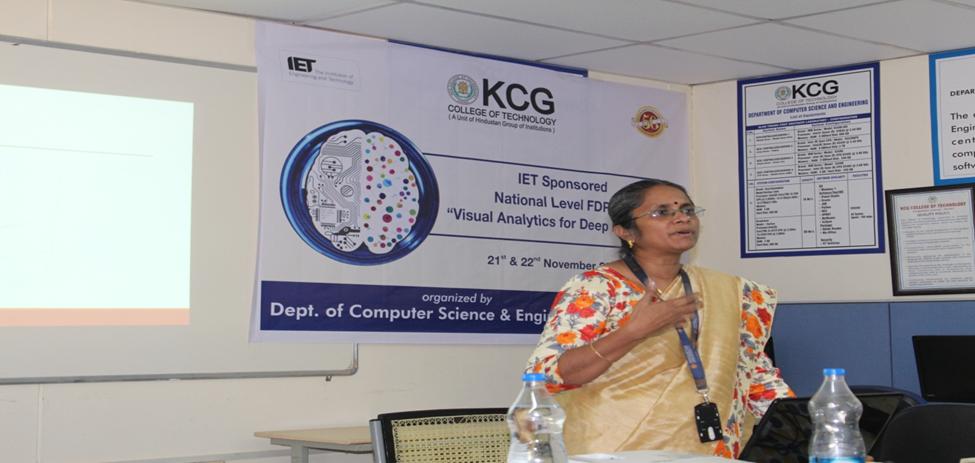
Dr.Angelina Geetha gave a detailed introduction to what is data, information, knowledge and understanding. She also explained how analytics is different from analysis. She briefly introduced what Wisdom of things is and introduced data mining. She explained different machine learning methods like classification, clustering, association rule discovery, sequential rule discovery, regression and deviation detection. Her insight on Hadoop framework and Map reduce technique was very useful. She also explained the 4 types of analytics – descriptive, diagnostic, predictive and prescriptive. Her real time applications and examples made the session very interesting and concepts easy to understand. She introduced deep learning and how neural networks help in achieving deep learning. She explained multi-layer perceptron, training set data and testing set data in detail. She gave a quick overview of an open source tool called H2O for deep learning. The first session gave an awesome start for the 2 day workshop.
Session 2 : Machine Learning Algorithms and Commercial Applications.
Speakers: Mr Madhan U Srinivasan & Raghavan Subramanian, TechArtus Solutions
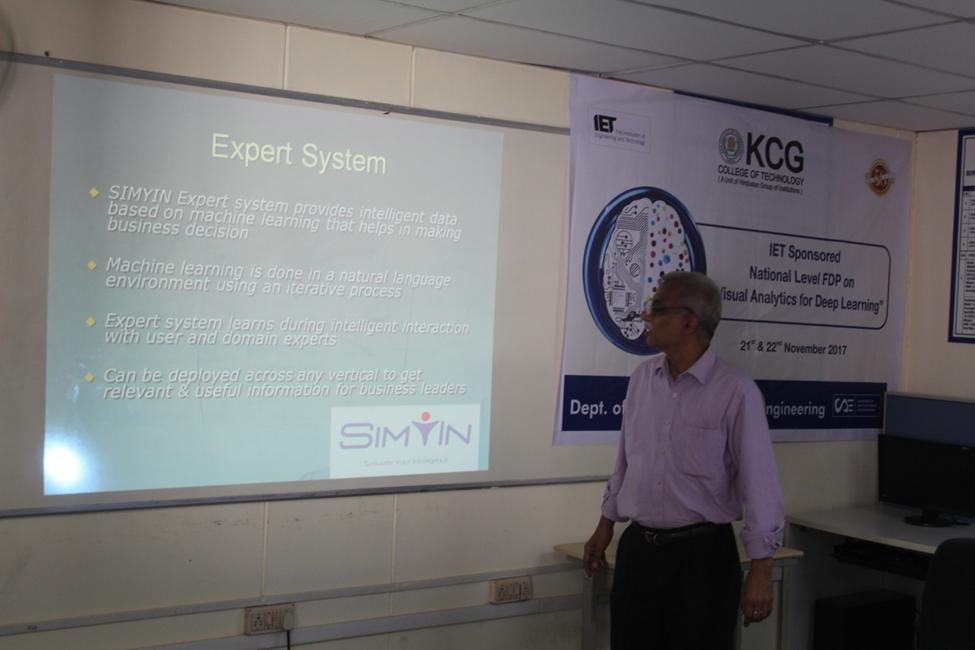
Mr.Madhan gave an insight on the difference between with programming and machine learning. He explained classification in detail with examples. Explained how neural networks. He explained the machine learning need in the healthcare domain and the practical challenges in developing solutions in this domain. He showed lot of videos to emphasis of machine learning for the current scenario. He opened up a lot of areas where we could start research work on. He gave an quick introduction to Tessarach a HP tool and other open source tool for machine learning. The second part of the session was handled by Mr.Raghavan, founder of TechArtus Solutions, Chennai. He gave a detail insight on Simiyin their proprietary tool for machine learning. A Live demo regarding prediction of stock market was very useful.
Day 2(22.11.2017):
Session 1: Visualisation in Deep Learning
Speaker: Mr.Dhanasekar Paneerselva-Senior Lead, HCL technologies
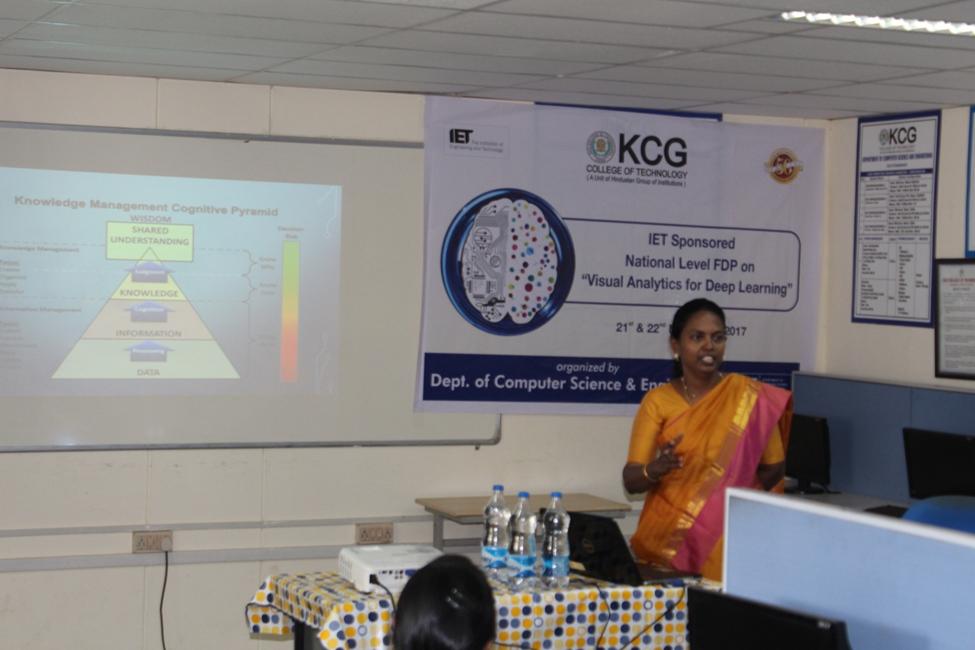
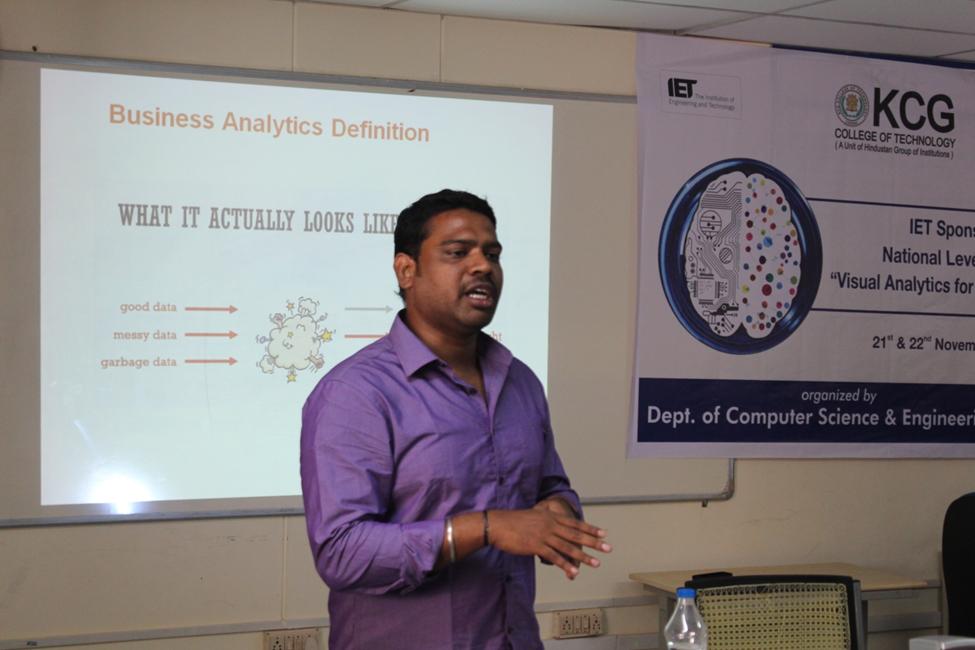
Mr.Dhanasekar Paneerselvam was the keynote speaker on the Topic. He gave a detailed insight on Business Analytics, Data Analytics and its types. He explained the Analytic process, Analytical examples and challenges. He also gave a detailed insight on the topic through a case study on Google Analytics. He guided us with the tools that will help in data analytics. Then he focused on what is visualization and what is visual analytics. He explained visual analytics model and detailed the importance of data visualization. This session was indeed very useful and informative on how data analytics is used practically used in so many areas.
Session 2: Deep Learning in Neural Networks
Speaker: Dr.Krishnamurthy, HOD of CSE department, KCG College of Technology
Dr.Krishnamurthy gave introduction on Neural Network and how multilayered architecture helps in deep learning. He had a very interactive and interesting talk about single,2 and 3 tier architecture and explained in detail how multilayer architecture helps in refining data. He also explained about feed forward and back propagation. He explained how the hidden layers satisfy the unsupervised learning of deep learning. He explained the difference and significance of training data and test data. He also gave a example problem to understand how weights of the edges influence in the output calculation. Overall this was the most interactive session.
Session 3: Deep Learning with Tensorflow
Speaker: Mr.Robert Jean, Senior Embedded Engineer, Vistronics Design Solutions
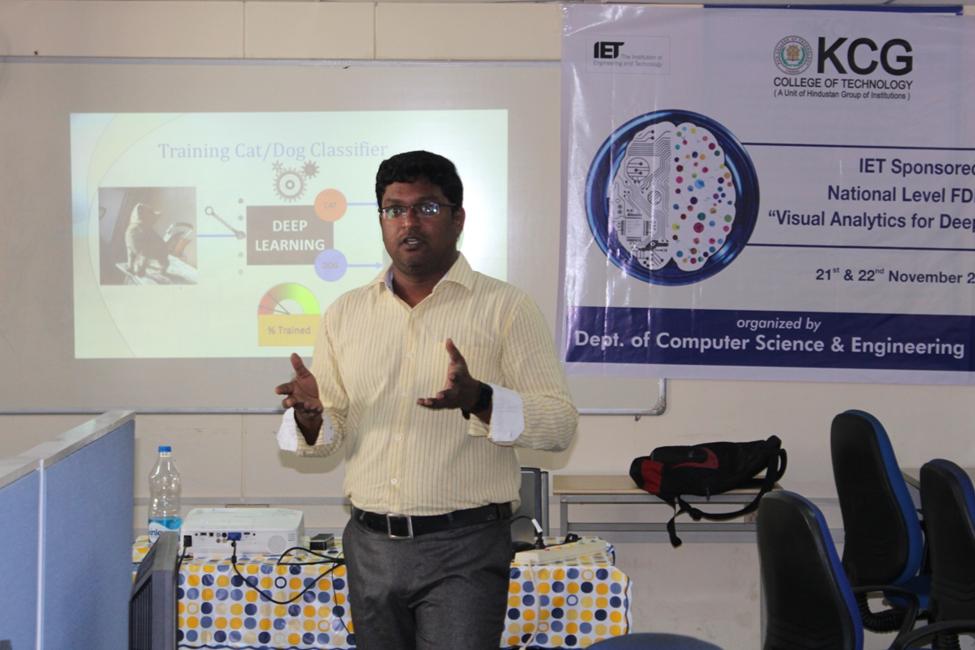
Mr.Robert Jean gave quick technical theory introduction to deep learning through the usual Cat/Dog Classifier. He explained about back propagation and how training data is important for better results. Tensorflow is an ope source tool developed by Google to write our own deep learning algorithms. Mr.Robert helped us install the tensor flow so that we can have an hands on. But since we did not have the right installable, we could do it. So he has a live demo of a sample program in python to implement a deep learning algorithm. Audiences were excited to get his guidance on how to write, execute and visualize the graph.
Session 4: Domain Specific Applications of Visual Analysis of Deep Neural Networks.
Speaker: Dr.S.Sathyalakshmi, Professor of CSE, HITS
Dr.S.Sathyalakshmi gave different areas where deep learning has a great future. She gave details on different areas like visual sentiment analysis, Colorization of black and white photo, Automatic machine translation, Object classification and detection, Automatic Handwriting Generation, Automatic Image Caption Generation and Automatic text generation. This session was useful as it gave an insight so that we can chose our areas of interest and do our future research.
One day Faculty Development Programme on “MATLAB PROGRAMMING WITH ADVANCED TOOL BOXES” was organized by the Department of Electrical and Electronics Engineering with an intention to upgrade the knowledge in MATLAB Programming with the aid of advanced tool boxes. The training programme was organized by Dr. P. S. Mayurappriyan and the resource persons were Mr. Kazi Yaser Arafat S & Mr. Balaji, Application Engineers, Design Tech Systems, Chennai and the event was co-ordinated by Ms. M. Ammal Dhanalakshmi.
The morning session started at 11.00 a.m. with a brief introduction to MATLAB 2017b which is the latest version to be introduced in the market. The trainer focused on key aspects of MATLAB – Automation in Technical Computation and the pre–requisite platforms essential for the operation. The programme continued with the basic script file and function file codings with advanced features. Further, there was a brief presentation on tool boxes like graphical user interface design and Embedded C coder.
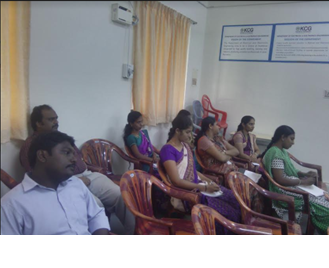
The post lunch session commenced with real time image processing techniques using external camera interface and various Simulink models with automatic tuning features. This was followed by a demonstration of external controller interface like ARDUINO UNO with MATLAB, wherein the device was controlled through MATLAB simulation. In addition, the M File that was generated in MATLAB was converted to an executable C file for further usage. Another important feature of MATLAB 2017b version was automatic generation of a report and power point presentation from an M File or a Simulink model on successful compilation of the programme. The session came to an end with IoT based MATLAB techniques at 4.10 pm. The participants in their feedback expressed that the entire session was effective and interactive to enable them to continue their research work with MATLAB advanced tool boxes.
Coordinator
Mr.M. Baskar
Assistant Professor-Selection Grade
Department of Information Technology
KCG College of Technology
Resource Person
Mr. T. Rajendran
Assistant Professor-Selection Grade
Department of Computer Science and Engineering
GRT Institute of Engineering and Technology
About Workshop
Photoshop is a tool which has taken pivotal position in everyone’s life now a day. A fair bit of knowledge about the software is quintessential. The department of Information Technology has taken the pioneering step in conducting a programme on the Photoshop which will enable the attendees to address different issues ranging from photo editing to brochure designing.
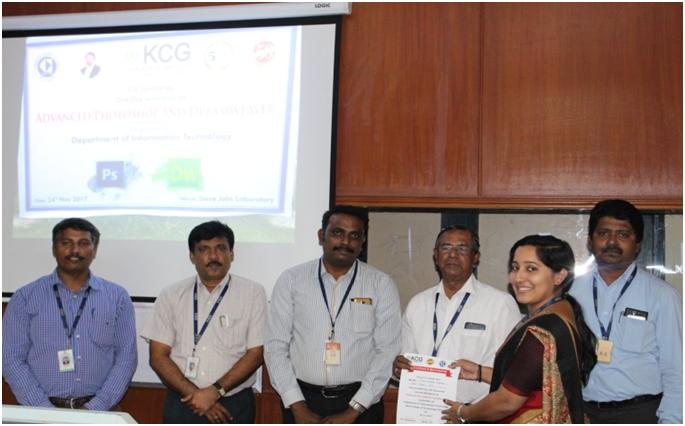
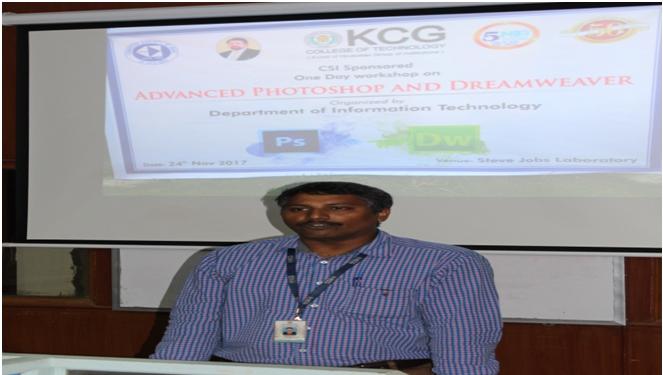
The program started with the inaugural function at 9.00 A.M . Dr. Sumathi Poobal, Vice Principal, KCG College of Technology was the chief guest. She appreciated the Department for organizing such a workshop, which was indeed the need of the hour. The Head of Department, Dr. J. Frank Vijay underscored on the importance of such a programme and suggested that the idea for such a workshop came from the dependency the faculty members are showing on the students even for simplest editing jobs like designing brochures and other related items for departmental programmes and activities. He insisted the resource person to conduct the workshop in such a way where hands on experience is imparted, and inevitably after the completion of the workshop, all the faculty members who have attended the programme should be able to design a brochure by themselves.
The training session started by 9:30 A.M. Mr. Rajendran, an expert in Photoshop and Dreamweaver, and having years of vital experience set the ball rolling. His technical know-how and software prowess impressed the attendees and evidently underscored the fact in ever one’s mind that he is the right person to lead the workshop. The Photoshop section was covered in the morning session and was followed by the session on Dreamweaver in the afternoon. The portions covered broadly include:
Topics Covered
PHOTOSHOP
- Photoshop Workspace
- Photoshop Basics
- Selections in Photoshop: Isolating Editing
- Painting and Retouching
- Color Manipulation
- Working with Layers
DREAMWEAVER
- Dreamweaver Workspace
- Working With Flash Menus and Buttons
- Design and Publish a Web Page
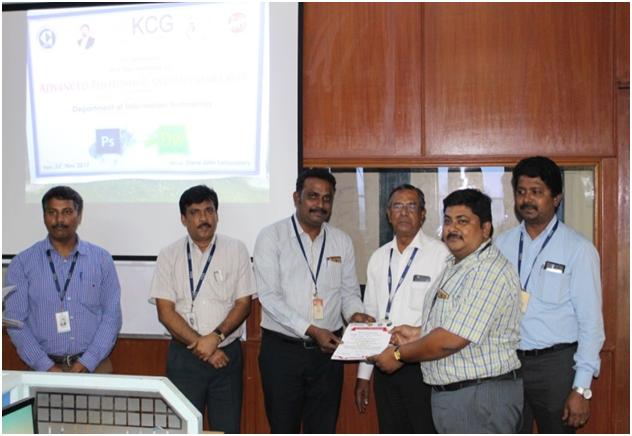
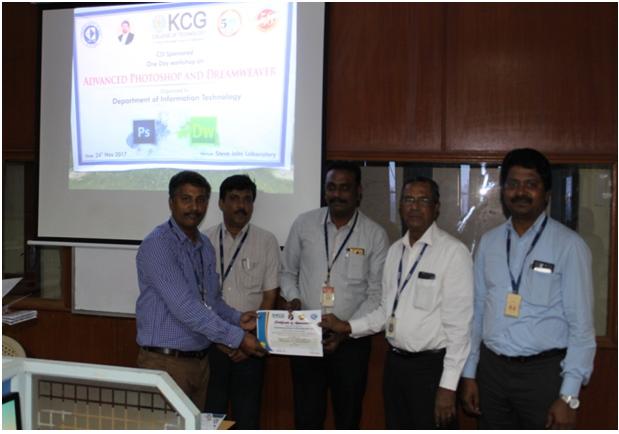
The workshop was really interesting and informative. The 28 faculty members from other departments including the heads of other departments also attended the workshop. The workshop came to an end with the valedictory function. The certificates for all the participants were distributed, marking the end to another successful programme by the department of Information Technology. Finally, Vote of Thanks is given by the program coordinator Mr.M.Baskar, Assistant Professor –Selection Grade, Dept. of IT.