
Dec
11
Mon
NSDC Certified Training of Trainer (ToT) Programme on Solar Power Generation
Dec 11 @ 10:30 am – Dec 15 @ 1:30 pm

Coordinators:

Mr. Arpit Sharma & Mr. Sudhir, Skill Council for Green Jobs


Skill Council for Green Jobs in collaboration with National Skill Development Corporation has organized a NSDC certified Five Day Training of Trainer (ToT) Programme on Solar Power Generation” during 11-15, December 2017 for its Affiliated Training Partner at Central Institute of Rural Electrification (CIRE), Hyderabad. This programme is aimed to provide Training of Trainer in Solar energy in India. Being a Certified NSDC-SCGJ partner, two faculty members, Mr. K. Karthikeyan and Ms. M. Ramya of Department of Electrical and Electronics Engineering from KCG College of Technology were selected to attend this training programme.


The first day of the Training (11.12.2017), started with the registration and inauguration.  Mr. Sudhir/CIRE welcomed Master Trainer Mr. Vamsi Krishna and all the participants who came from several parts of India. The Training started at 10.am. After introduction the master trainer highlighted the importance of solar power generation and the availability of green jobs in future.


Mr. Vamsi Krishna in his first day (11.12.2017) after stating the objectives and significance of the programme, discussed the following Qualification Packs:


  • Rooftop Photo Voltaic Entrepreneur – SGJ/Q0104
  • Rooftop Solar Grid Engineer – SGJ/Q0106

Day 2 (12.12.2017) started with review of previous day sessions and discussion on the following two more Qualification Packs:

  • Solar PV Designer             – SGJ/Q0110
  • Solar PV Project Manager (E&C) – SGJ/Q0114


On day 3 (13.12.2017), participants expressed their knowledge and experience, and questioned few areas as doubts to the master trainer. The Master Trainer discussed on government policies and programmes. He also gave an insight to various solar programmes by MNRE, SECI, NSDC-SCGJ and NISE. Video demos also helped the delegates to gain more knowledge in solar PV systems. At end of the day, all the participants were assigned to prepare power point presentation of particular title for next day presentation which covered all four Qualification Packs (QP) mentioned above.


The fourth day (14.12.2017) started with presentation by each one of the delegates.


The presentation covered the following topics:

  • SGJ/N0108: Carry out market research and prepare a cost estimate for a Rooftop Solar Photovoltaic plant
  • SGJ/N0109: Prepare site feasibility report
  • SGJ/N0110: Manage Solar PV project lifecycle
  • SGJ/N0111: Entrepreneurship skills
  • SGJ/N0106: Maintain Personal Health & Safety at project site
  • SGJ/N0118: Pre-Commissioning Inspection of the Grid Connected Rooftop Solar PV Power Plant
  • SGJ/N0119: Post Commissioning Testing of the Grid Connected Rooftop Solar PV Power Plant
  • SGJ/N0128: Review the structural design of solar PV power plant
  • SGJ/N0129: Review the electrical design of solar PV power plant and the energy simulation report
  • SGJ/N0120: Work effectively with others
  • SGJ/ N0136: Manage installation of solar PV power plant


On the final day (15.12.2017), assessments were conducted for all four Qualification Packs along with personal Skill test for Trainer by NSDC people. Post lunch, Group photos were taken and The ToT programme was ended with a discussion and feedback session.

Dec
13
Wed
SEVEN DAYS FACULTY DEVELOPMENT TRAINING PROGRAMME (FDTP)
Dec 13 @ 9:00 am – Dec 19 @ 2:00 pm

ME 6401 KINEMATICS OF MACHINERY

(13th to 19th December 2017)


A Faculty Development Training Programme on “ME 6401 – Kinematics of Machinery” approved by Anna University, Chennai was organized by the Department of Mechanical Engineering, KCG College of Technology, Chennai. This seven days FDTP programme was scheduled from 13th to 19th Dec 2017 with both internal and external participants from the affiliated colleges of Anna University, Chennai.


The aim of this FDTP was to provide an opportunity to the faculty members to enrich their teaching skills in the field of machines and mechanisms in order to provide outcome based education and to meet the need of the society.


The inauguration welcome address was delivered by Dr. S. Ramesh, Professor & Head, Department of Mechanical Engineering, KCG College of Technology, Chennai. The presidential address was delivered by Dr.Sumathi Poobal, Vice Principal, KCG College of Technology, Chennai. The programme was inaugurated by the Chief Guest Dr. V. Sundareswaran, Professor, Retd. – Engineering Design Division, Anna University, Chennai. Also he delivered a lecture during the first session by introducing the basic concepts and inversions of mechanisms. Vote of thanks was delivered by Dr. N. Pragadish, Programme Coordinator, and Dr. Chinnaraj, Registrar; KCG College presented a memento to the chief guest.


There were other informative sessions heldby eminent faculty members. One such session was conducted by Prof. Dr. Krishnakumari, Professor, Department of Mechanical Engineering, Hindustan University, Chennai. She elaborated the various types and applications of gears.

Dr. Ravikumar Solomon, Head of Mechanical Engineering department, Hindustan University, Chennai delivered a lecture on gear trains. Various types of gear trains along with their applications were discussed in detail. Also problems on complex gear trains were solved during the tutorial session.


Mr. Silambarasan, Assistant Professor, Department of Mechanical Engineering, Velammal Engineering College Delivered a lecture on Cams, their applications and profiles. Cam Profiles of Knife edge follower, Roller follower & Reciprocating follower were discussed in detail.


Few technical lectures were delivered by internal faculty members. They were;


Sl. No Name of the Faculty Title of Lecture
1 Dr. S. Ramesh Cam Profiles
2 Dr. D. Easu Velocity & acceleration analysis
3 Dr. N. Pragadish Instantaneous Centre method
4 Mr. S. Jesudass Thomas Friction in Machine Elements
5 Mr. L. Prince Jeya Lal Concepts and laws of Friction


On the last day the valedictory address was given by Dr. Elango Natarajan, Faculty of Engineering, UCSI University, Kuala Lumpur, Malaysia.


Dec
14
Thu
GUEST LECTURE ON ELECTROMAGNETIC THEORY
Dec 14 @ 6:25 am – 7:25 am

The Department of Electrical and Electronics Engineering, KCG College of Technology organized a guest lecture on the Electromagnetic Theory course on 7.9.2017 for the second year students. Dr.R. AZHAGUMURUGAN, Associate Professor, Department of EEE, Sri Sai Ram Engineering College was the resource person. Dr. P. S. Mayurappriyan introduced about the speaker to the audience.

He started the lecture asking the students about the sources of electromagnetic fields. Students actively responded to the questions asked by him. He explained about the five units of the course. Starting with the first Unit, he explained about sources and effects of electromagnetic fields, Coulomb’s Law, Gauss’s law and its applications.  In Unit II, he explained about the electric field and equipotential plots, uniform and non-uniform fields, utilization factor – electric field in free space, conductors, dielectric polarization, dielectric strength – electric field in multiple dielectrics , Boundary conditions, Poisson’s and Laplace’s equations,  applications. He gave an overview of Lorentz force, Biot–Savart’s Law, Ampere’s Circuit Law, infinite sheet of current, magnetic flux density (B) – B in free space, conductor, magnetic materials – magnetization, Poisson’s equation. He also highlighted the significance Faraday’s law, Maxwell’s equation (differential and integral form) from Unit IV. He also illustrated about electromagnetic wave generation and equations – wave parameters; velocity, intrinsic impedance, propagation constant, conductors- skin depth – Poynting vector – plane wave reflection and refraction – standing wave – Applications.

Finally he gave some tips to study all the five units of this course effectively.

The lecture was over at 12 noon.

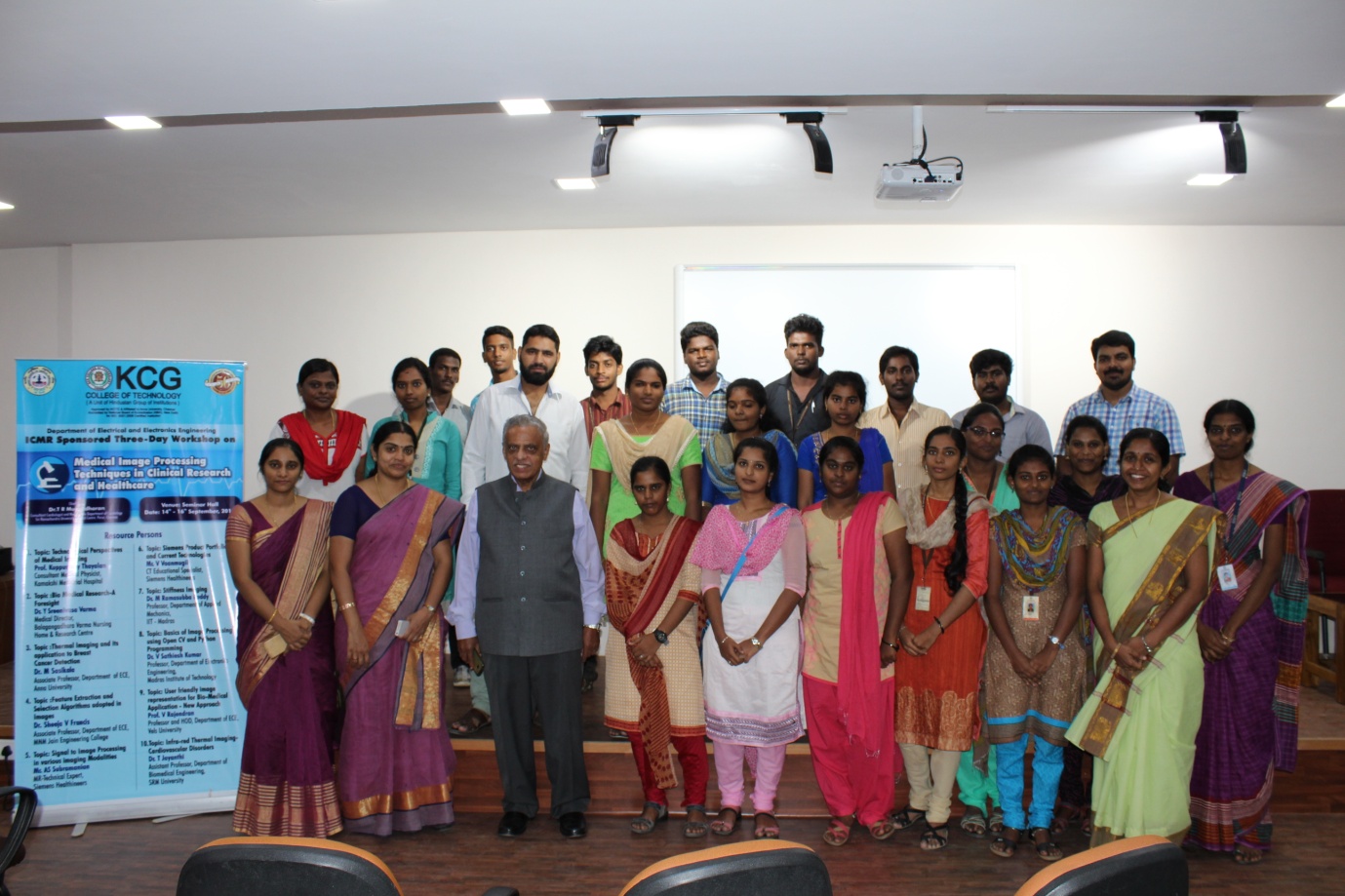
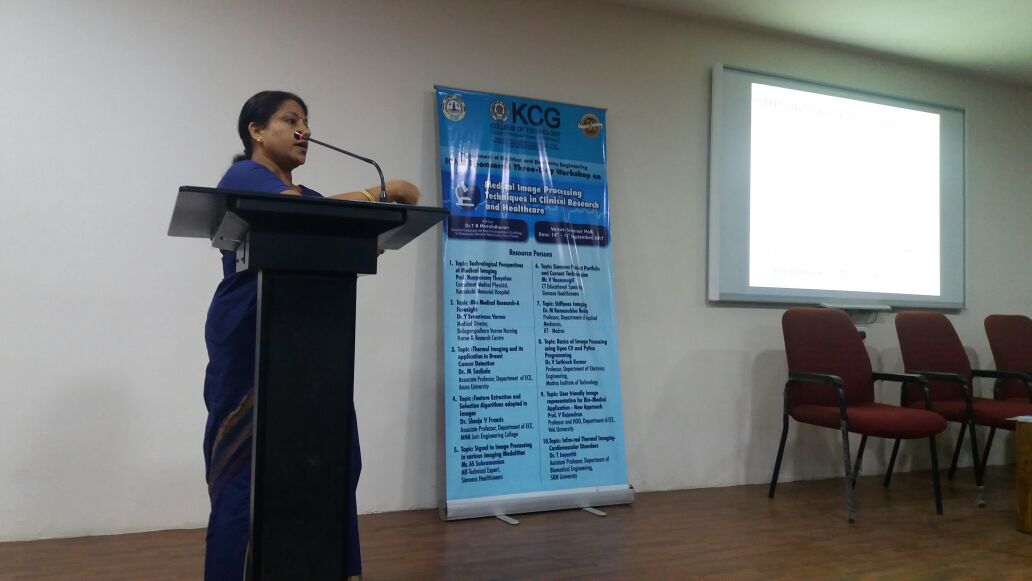
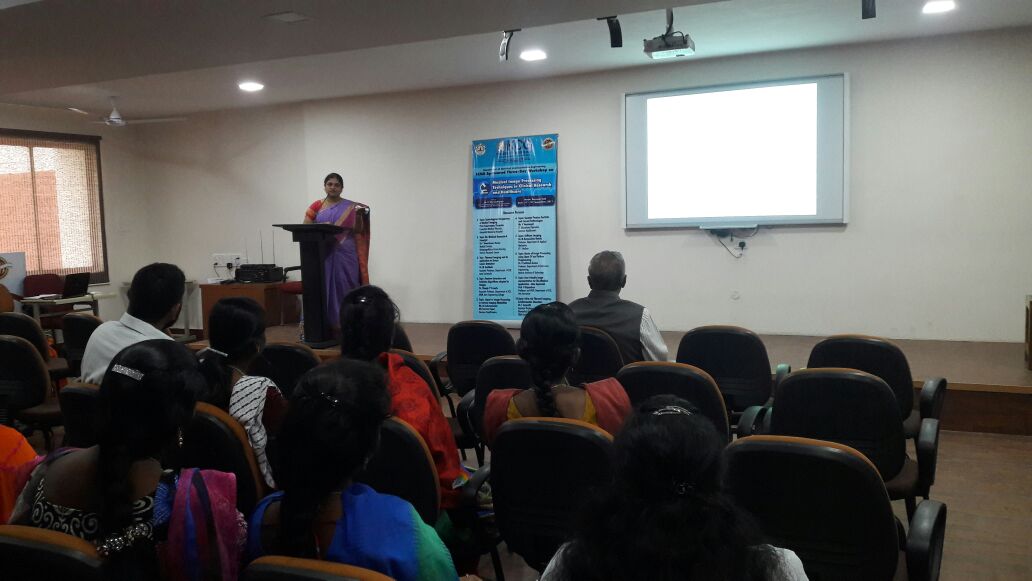
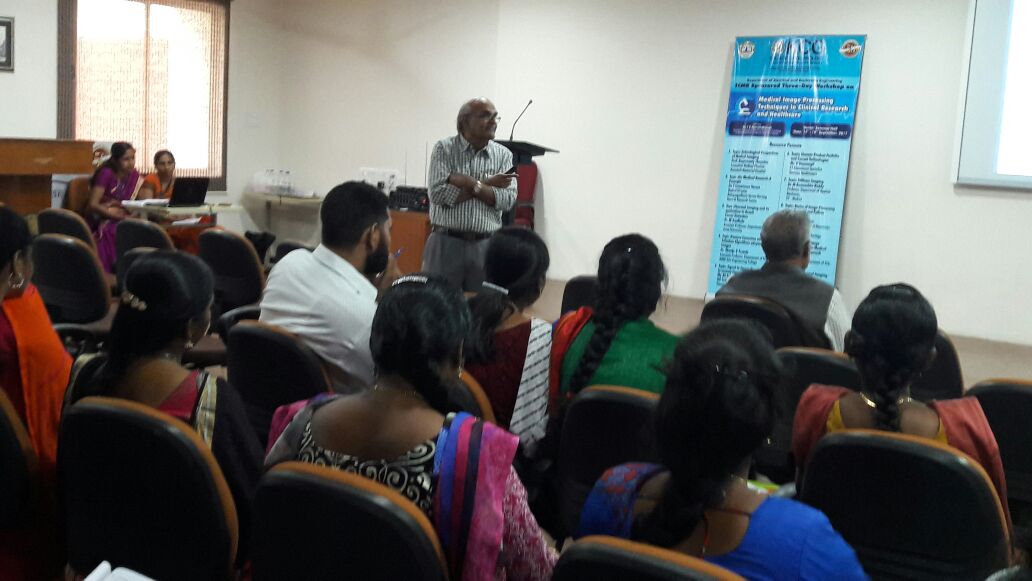
ICMR SPONSORED THREE DAY WORKSHOP ON “MEDICAL IMAGE PROCESSING TECHNIQUES IN CLINICAL RESEARCH AND HEALTH CARE”
Dec 14 @ 7:12 am – 8:12 am

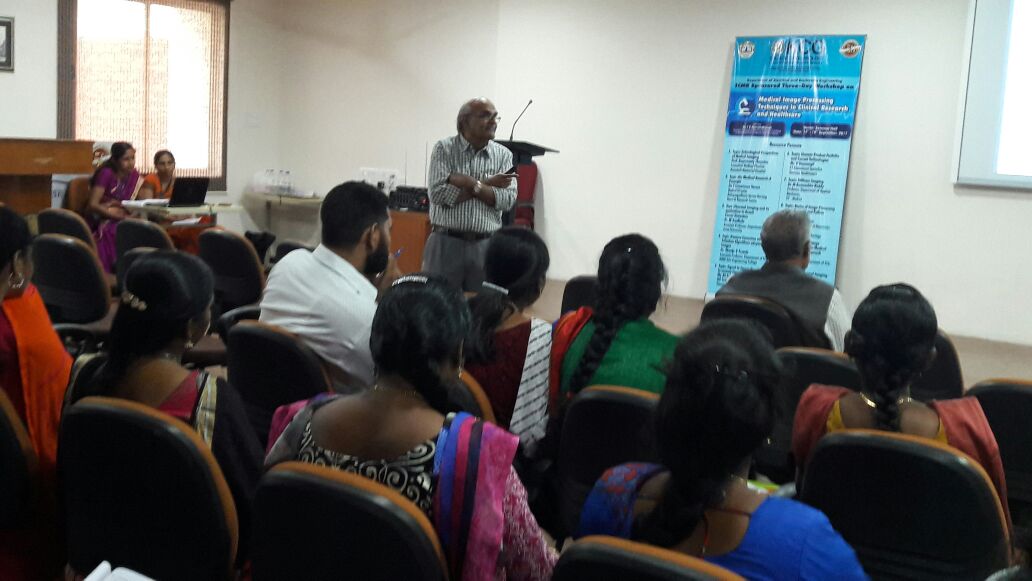
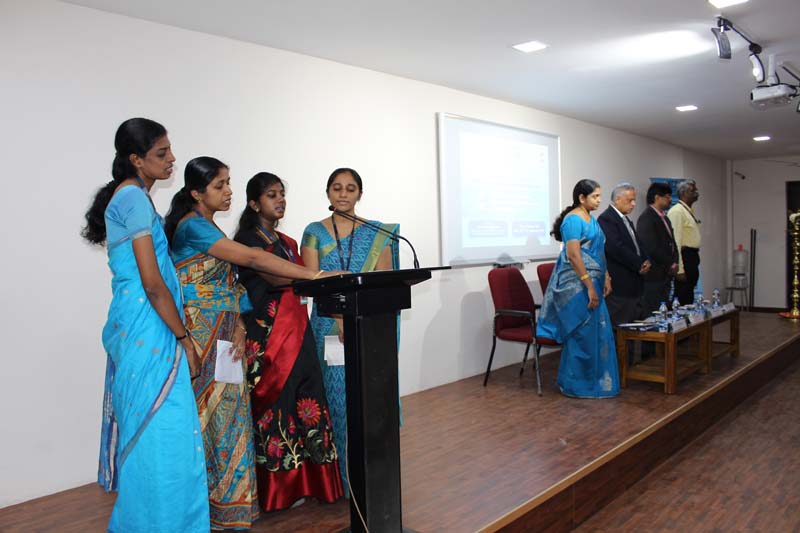
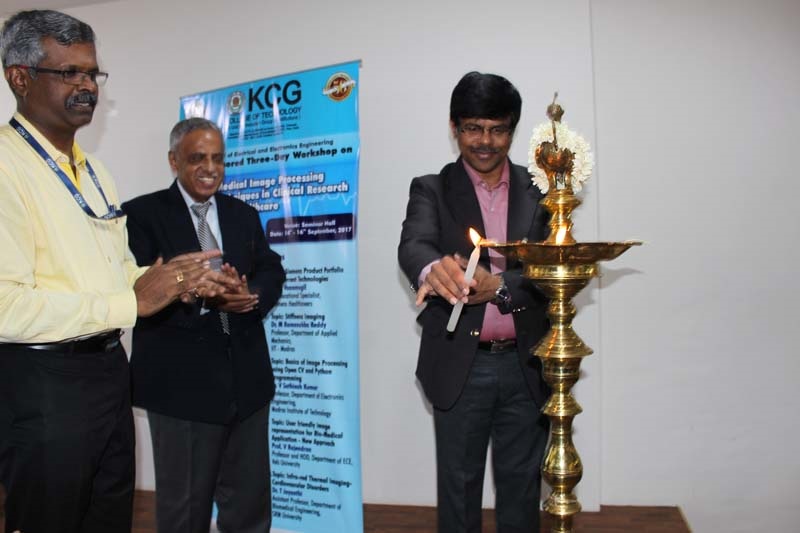
The Department of Electrical and Electronics Engineering, KCG College of Technology organized   ICMR sponsored Three Day Workshop on “MEDICAL IMAGE PROCESSING TECHNIQUES IN CLINICAL RESEARCH AND HEALTH CARE” from 14th – 16th September 2017. The inaugural function commenced at 9.30 am in Seminar Hall-I. The meeting was presided over by Dr. G. Prabhakaran, Principal and inaugurated by the Chief Guest, Dr. T. R. Muralidharan, Senior Consultant and Head, Department of Cardiology, Sri Ramachandra University. The meeting formally begun with an invocation and the invited guests were welcomed by Dr. P. Deiva Sundari, Professor & Head, Department of EEE. . Dr. G. Prabhakaran, Principal and Dr. G. Sambandan, Advisor – Electrical Sciences offered felicitations. Around 25 participants registered for the programme. Most of the participants were Faculty from academic Institutions, Research Scholars, PG and UG students. The Chief Guest shared his views in the field of medical image processing and current research methodologies available.

The detailed report of the sessions are as follows:

Day 1 – Session 1

Ms. Prof. Kuppusamy Thayalan, Consultant Medical Physicist – Kamakshi Memorial Hospital

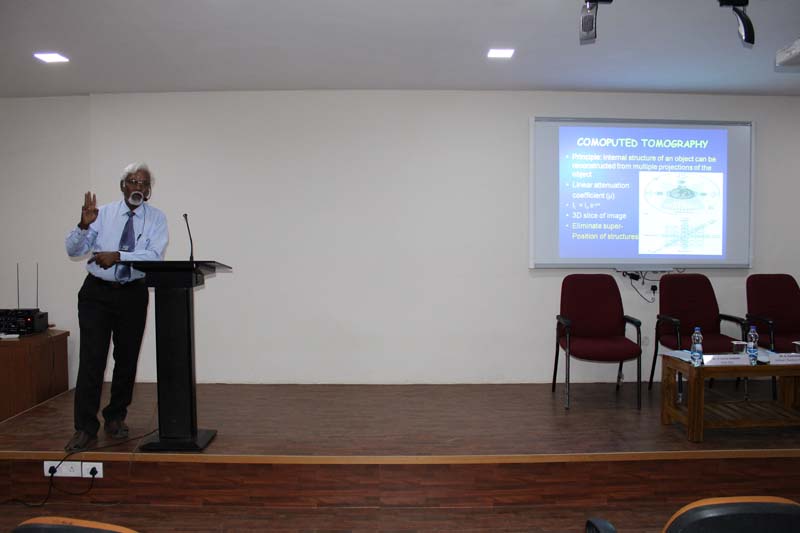
He introduced the technological perspectives of Medical Imaging. The development of modern radiographic imaging, the basic physical principles behind common approaches to imaging, including Computed Tomography (CT), Ultrasound, and Magnetic Resonance Imaging (MRI), and the pros and cons of each technique were explained by him. Students consider the broader picture behind bringing imaging into clinical use, such as animal testing, human trials, costs, and the requirement of training technicians. Medical imaging in general is rich with applications of engineering and physics because the instrumentation is technically complex. Many of the body’s systems and functions can be modelled, controlled, and investigated using engineering principles and methods. The instrumentation that is used to deliver health care is also very technical and rapidly evolving. As a result, engineering is becoming an increasingly important field of study in both biomedical research and medical delivery at all levels of the health-care system.

Session II

Dr. Y. Sreenivasa Varma, Medical Director, Balagangadhara Varma Nursing Home and Research Centre

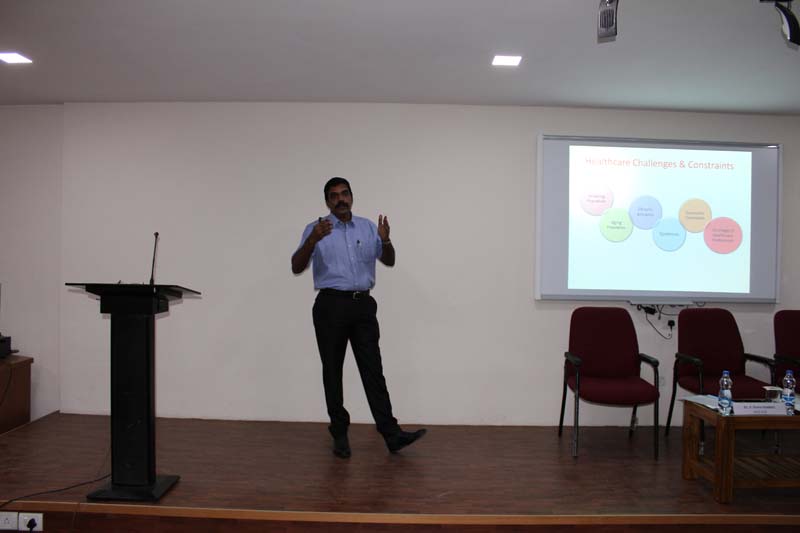
He started the session by stating the definition of health, health care challenges and constraints. He emphasized that technology is driving a new paradigm to create better healthcare. He focussed on the basic two approaches in medical innovation: Linear and Technology adoption approaches. He also focussed on the basic two approaches to medicine: Clinical and Molecular approaches. He mentioned that technology helps doctors’ to have better decision making, improving patient and provider interaction and integrating preventive health care tools as clinical reminders. He explained about the top trends in the areas of medical research like image and signal processing, bio medical sensors, IOT and Big data analytics, Artificial Intelligence, Genomics, stem cell therapy and tissue engineering. He explained the advancements in imaging techniques, bio sensors, bio sensing wearables, health care big data challenges.

Session III

Dr. M. Sasikala, Associate Professor, Department of ECE, Anna University

She gave an idea about Thermal Imaging and its Applications to Breast Cancer Detection. Body temperature is a natural criterion for the diagnosis of diseases. Thermal imaging (thermograph) applies infrared method which is fast, non-invasive, and non-contact and flexible to monitor the temperature of the human body.  Historically, temperature is a very good health indicator. Body produces heat and body temperature may be different from the surrounding temperature.  The core temperature is maintained within a narrow range of about 33°C to 42°C. Abnormal thermal patterns can be easily detected by thermal imaging. The results of thermal measurement in general compared with other clinical findings to assess the possible correlation. Although the method is non-specific and environment can affect its results, there are several reasons which have caused thermal imaging to be accepted widely among the medical community. First of all, thermal imaging is noncontact, non-invasive method and can be used from far way.

She explained about the different image processing techniques used in thermo graphic images for breast cancer detection. The different thermo graphic image patterns for the normal and abnormal portion of the body were shown. The features to identify the abnormality were also clearly explained.

Session IV

Dr. Sheeja V Francis, Associate Professor, Department of ECE, MNM Jain Engineering College.

Her topic was Feature Extraction and Selection Algorithms adopted in Images. She summarised various ways of performing dimensionality reduction on high-dimensional microarray data. Many different feature selection and feature extraction methods exist and they are being widely used in clinical and health care systems. All these methods aim to remove redundant and irrelevant features so that classification of new instances will be more accurate. A popular source of data is microarrays, a biological platform for gathering gene expressions. Analysing microarrays can be difficult due to the size of the data they provide. In addition the complicated relations among the different genes make analysis more difficult and removing excess features can improve the quality of the results. She presented some of the most popular methods for selecting significant features and provides a comparison between them. Their advantages and disadvantages are outlined in order to provide a clearer idea of when to use each one of them for saving computational time and resources.

Day –II

Session V:       Prof. V. Rajendran, Professor and Head, Department of ECE, Vels University

He addressed the importance of detecting the presence of solid deposit of calcium radicals grouped in certain way in breast tissue. He explained the principles of digital images and analysis of digital imaging processing operation. He explained a case study done titled automated simulation model using CAD techniques, Analysis on cyst using sonomammogram. He explained novel automated algorithm using CAD Technique to find 3D pattern recognition of lesion part using physical characteristics.


Session VI: Dr. T. Jayanthi, Assistant Professor, Department of Bio Medical Engineering, SRM University

She explained about Infra-Red Thermal Imaging for cardio vascular disorders. She discussed in detail about the following:

  1. Prevalence of CVD
  2. Standard Diagnostic Methods
  3. Infrared thermal imaging
  4. Potential of IR in diagnosing CVD
  5. Static thermal imaging
  6. Dynamic thermal imaging
  7. IR and hypertension
  8. IR and its scope for research


Session VII & VIII: 

Mr. AS Subramanian & Mr. V. Vaanmugil, Siemens Healthineers

Mr.AS Subramanian explained about the different imaging equipments available from the earlier days to the recent ones. He also gave a detailed idea about how these equipments are used.


Mr.Vaanmugil explained about the company portfolio and the recent equipments that are available with them.


Day –III

Session IX: Dr V Sathiesh Kumar Professor, Department of Electronics Engineering, Madras Institute of Technology

Basics of Imaging Processing using open CV and PYTHON Programming

It was a Tutorial Session from 9 am to 12 noon on the basics of computer vision in Python programming. It included an introduction to Open CV, tutorial on image basics, drawing, basic operations on image resizing, masking, merging, kernels etc. and how it is been used in the image processing field.


Session X:  Dr. M. Ramasubba Reddy Professor, Department of Applied Mechanics, IIT Madras.

He gave a presentation related to Ultrasound Stiffness Imaging Techniques. He emphasized on basics of ultrasound imaging process. He explained with respect to diagnosis of lesions using ARFI Imaging. He explained about Manual palpation and method of Elastography. A detailed analysis of steps in Elastography was presented. He presented a case study with results from an experiment obtained from a tissue mimicking phantom. He briefed about the breast cancer diagnostic technique (X- Ray mammography) comparison of Elastography with ultrasound process.


ICMR workshop photo9 ICMR workshop photo8 ICMR workshop photo5 ICMR workshop photo4 ICMR workshop photo3 ICMR workshop photo7 ICMR workshop photo6 ICMR workshop photo2 ICMR workshop photo 1

Dec
19
Tue
GUEST LECTURE ON SOFT ACTUATORS FOR ROBOTIC APPLICATIONS
Dec 19 @ 10:00 am – 3:00 pm

ABOUT RESOURCE PERSON:
Dr. Elango Natarajan is a Chartered Mechanical Engineer (CEng.) who specialises in Mechanical Engineering Design and Soft Robotics. He has been teaching Engineering courses since 1999, he has gained extensive knowledge and experience in engineering design, soft robotics relevant to soft actuator and soft robot hand. He was working as a Post doctoral research fellow for a year in Malaysia. He is a co-researcher of two funded grants under Ministry of Higher Education (MOHE), Malaysia, both in Soft robotics. He has published about 10 research papers in ISI/Scopus journals. He has been involved in curriculum development, accreditation, professional membership etc. His membership details as follows
• Member of Institution of Engineering and Technology, UK (MIET, No. 1100248974).
• Member of IEEE society, (No.92273161).
• Life member of Association for Machines and Mechanisms, India. (A20110033).
• Senior Member of International Association of Computer Science and Information Technology (IACSIT), (No. 80337165).
• Senior Member of Singapore Institute of Electronics (SIE), (No. 80090014).
• Life member of Indian Society for Technical Education (ISTE), India (No. 38366)
Report;
The department of Mechanical engineering conducted a guest lecture on SOFT ACTUATORS FOR ROBOTIC APPLICATIONS by Dr. ELANGO NATARAJAN, Asst. Professor, Faculty of Engineering, UCSI University, Kuala Lumpur, Malaysia. on 19.12.2017. The lecture covered the topic of soft actuators for different robotic applications which clearlely explained types of soft actuators and how the soft actuators are fabricated and used suitably in the appropriate applications.

Dec
20
Wed
Workshop in Robotics
Dec 20 @ 10:00 am – 4:00 pm

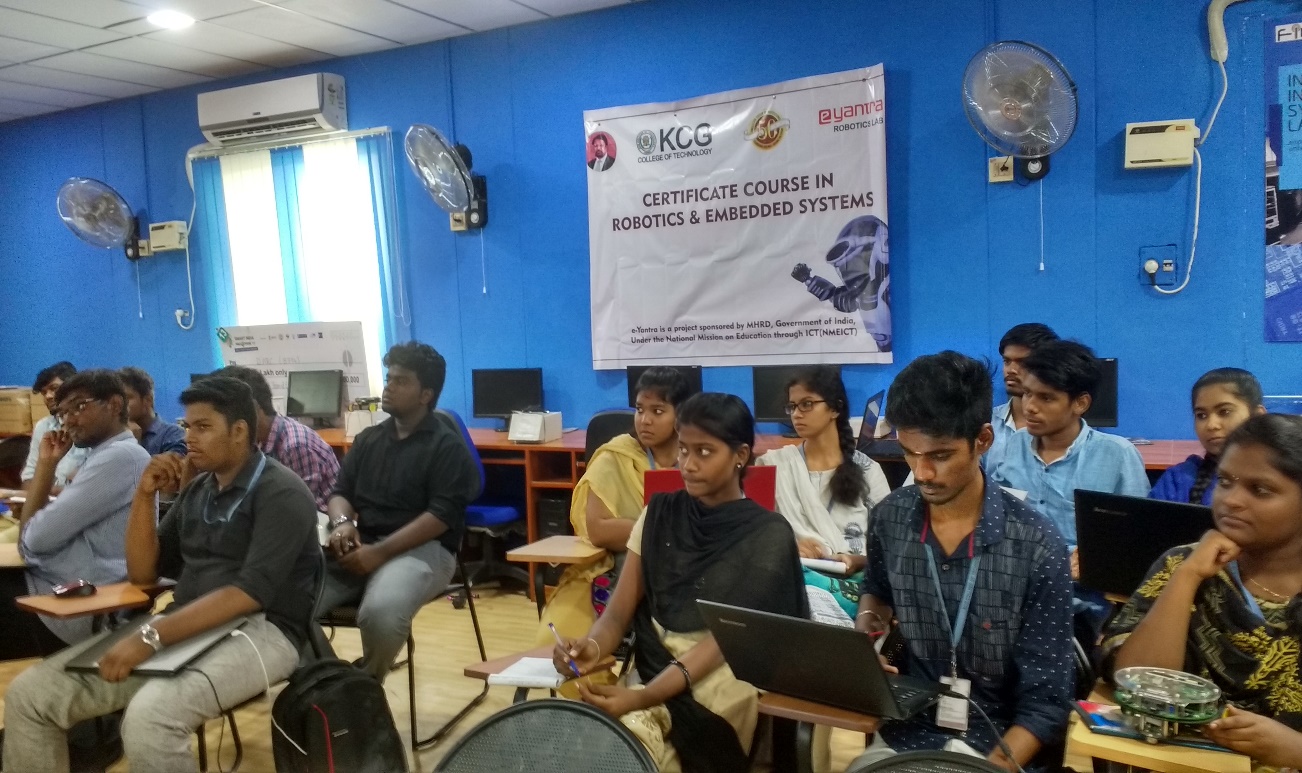
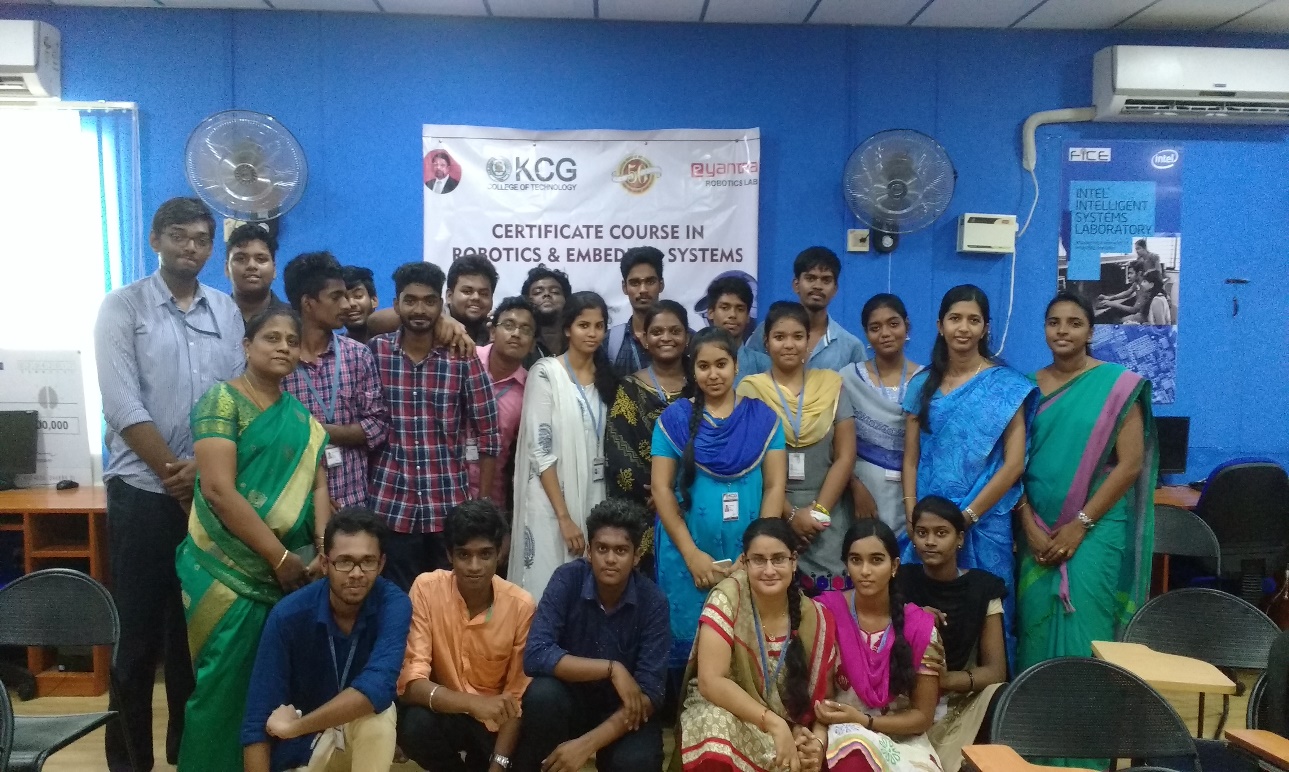
Project e-Yantra is an initiative to spread education in embedded systems and Robotics by IIT Bombay sponsored by Ministry of Human Resource Development through the National Mission on Education through ICT (NMEICT). The objective of e-Yantra is to provide hands-on learning to engineering students, creating the next generation of engineers in India with a practical outlook to take on challenging problems and provide solutions.

KCG College of Technology is a member of e-Yantra and has set up a state of the art laboratory under the e-Yantra Lab Set-up Initiative (eLSI).The KCG e-Yantra Robotics Lab trains students in embedded systems and micro-controller programming by engaging them through the Project Based Learning (PBL) mode.

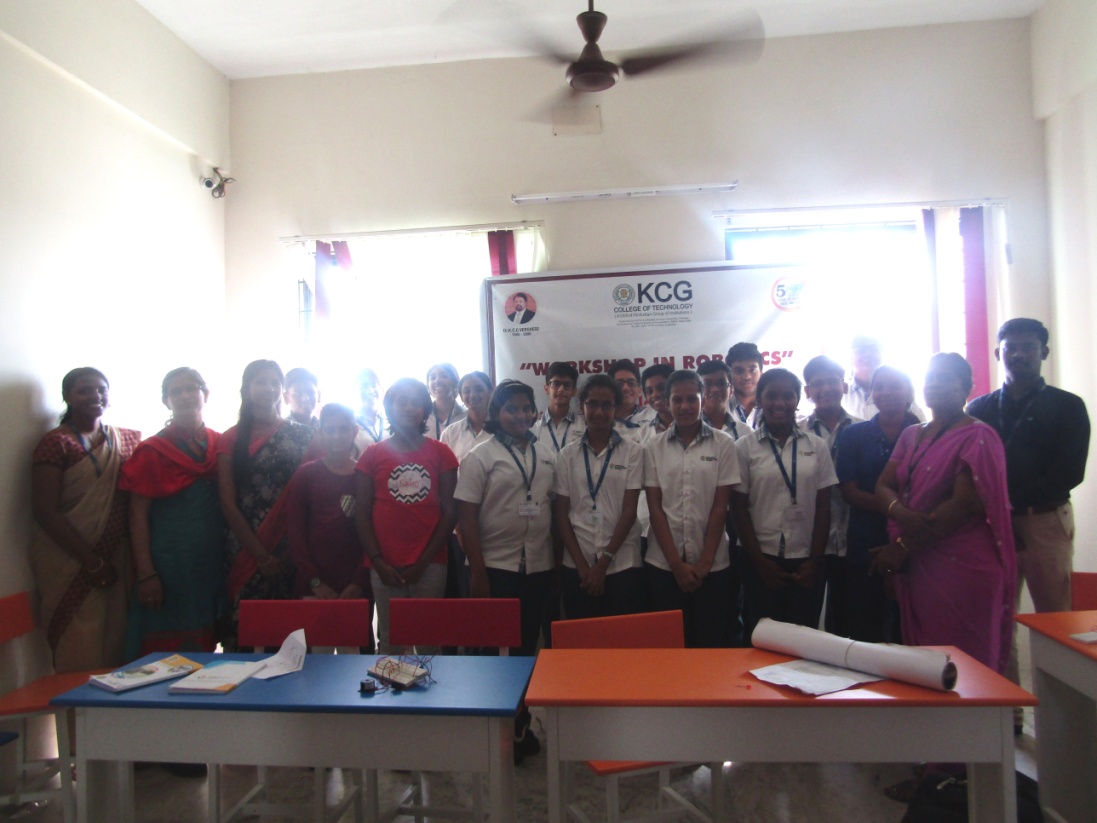
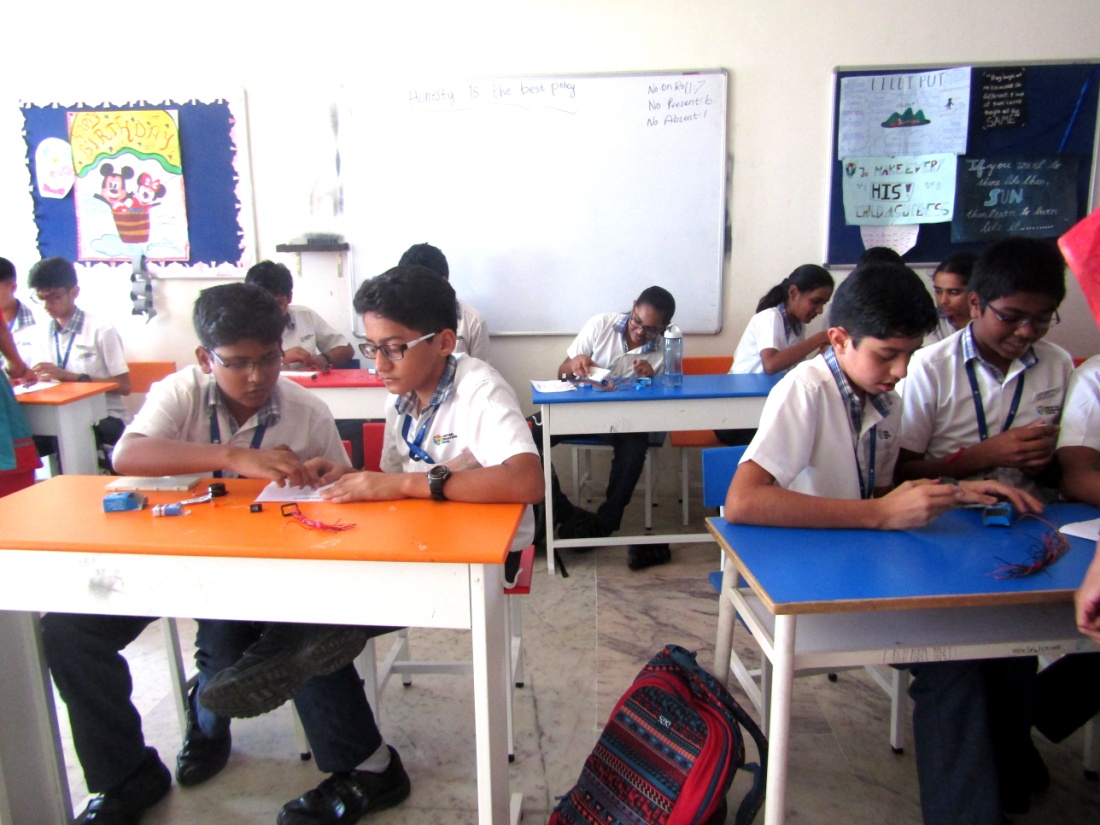
A Workshop in Robotics was conducted for the pupils of Hindustan International School, Karapakkam. The children were of different age group ranging from Grade 6 to Grade 9. It was conducted on 20 December 2017 for a session of 2 hours for 23 pupils. They showed immense pleasure in learning about Robots. A presentation on Robots and their varieties including its working were given. A few videos on the recent trends of Robots were played. A live demonstration on Firebird V was shown. Finally the children experienced a hands-on session of an LED glowing and a Buzzer beeping though Bread board connection.

The workshop was conducted by Aida Jones (Asst. Professor, ECE), Renganayaki G (Assoc. Professor, ECE),  S. Subash Chandra Bharathi (Asst. Professor, EEE) and Feba Sosa Abraham (Asst. Professor, ECE).
eyantra4 eyantra3 EYANTRA2 EYANTRA1

Dec
21
Thu
TWO DAY FDP ON OBE AND ACCREDITATION
Dec 21 @ 10:00 am – 3:30 pm

A Two day faculty development programme on OBE and Accreditation was conducted on 20th and 21st December 2017. A Pamphlet was prepared and sent through post to 150 technical institutions who are involved in the process of applying for accreditation. Also, an online registration facility has been made in the college website. Around 400+ e-mail communications were sent to other engineering colleges and a total of 9 faculty inclusive of internal participants did participate in the programme and the conference room in the EEE department was the venue. The programme started with an inauguration by the Principal Dr. G.Prabhakaran. The programme included 8 sessions handled by the programme coordinators of the accredited departments. The sessions were very well received by all the participants and were found very useful. All the sessions were highly interactive and helped the participantsin clarifying their doubts from ground level. The NBA coordinators of Civil, Aero and EIE departments had a good start to face the accreditation process confidently. The external participants greatly appreciated the entire team and gave a positive feedback. They also invited us to their campuses to give invited talks about OBE and Accreditation process. The schedule summary is given below for reference.

Day 1 Session Time Events Resource Person I 9.30 am to 10.30 am Inauguration Dr. G. Prabhakaran, Principal and Dr. P. Deiva Sundari, Convenor II 10.45 am to 12.15 pm Introduction to OBE Writing Vision, Mission, PEOs, COs, Definition, Dissemination, Mapping; Programming Curriculum Grouping, Gap Identification and Analysis, Teaching Learning Process Mr. Praveen Joe I R, Associate Professor, CSE Mr. Sadasivam S, Assistant Professor – ECE III 1.15 pm to 2.45 pm Measuring POs and COs, Attainment and Action Taken Mr. Sadasivam S, Assistant Professor – ECE & Ms. Nirmala Devi, Assistant Professor, ECE


Day 2 V 9.30 am to 10.30 am Faculty Contributions and SFR Calculation Dr. Mayurappriyan P S, Professor – EEE VI 10.45 am to 12.15 pm First Year Academics, Student Support Systems, Governance and Financial Resources Ms. Sumathi R, Assistant Professor, Mathematics VII 1.15 pm to 2.45 pm Institution Level Criteria SAR Preparation and Files Presentation Dr. P.Deiva Sundari, HoD – EEE & Convenor, Accreditation Process, KCG College of Technology VIII 3.00 pm to 4.00 pm Discussion / Q&A Session Dr. P.Deiva Sundari

Dec
22
Fri
Two day Workshop – ARDUINO Workshop
Dec 22 @ 10:00 am – Dec 23 @ 1:53 pm

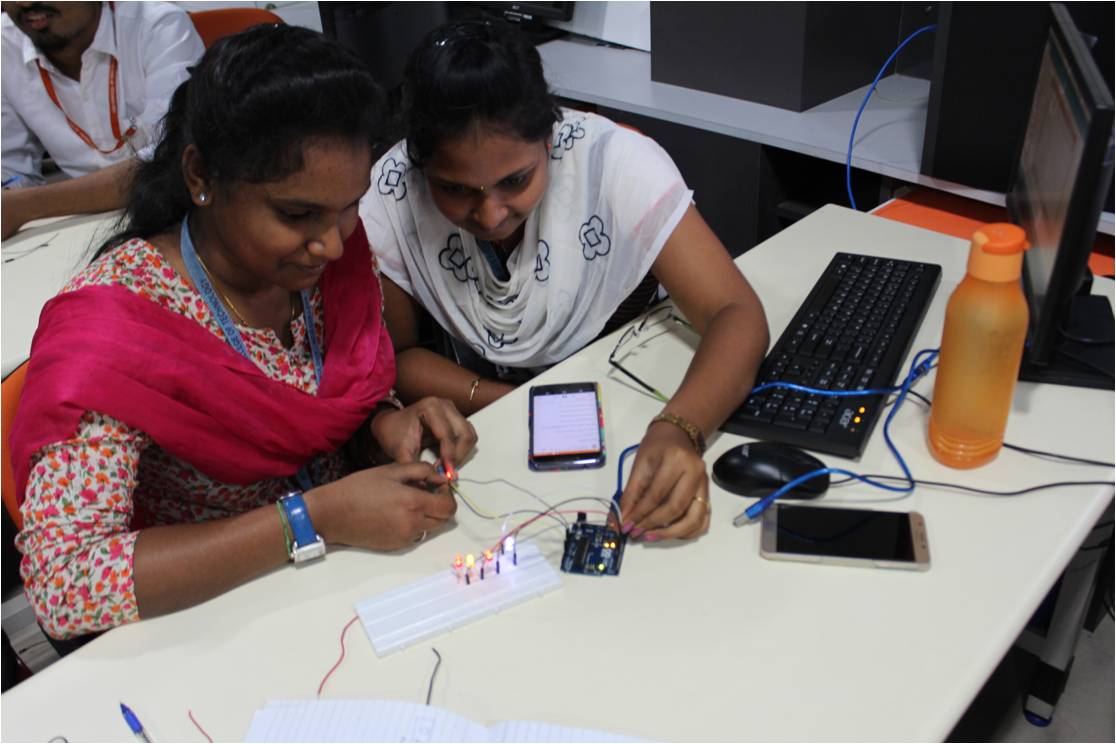
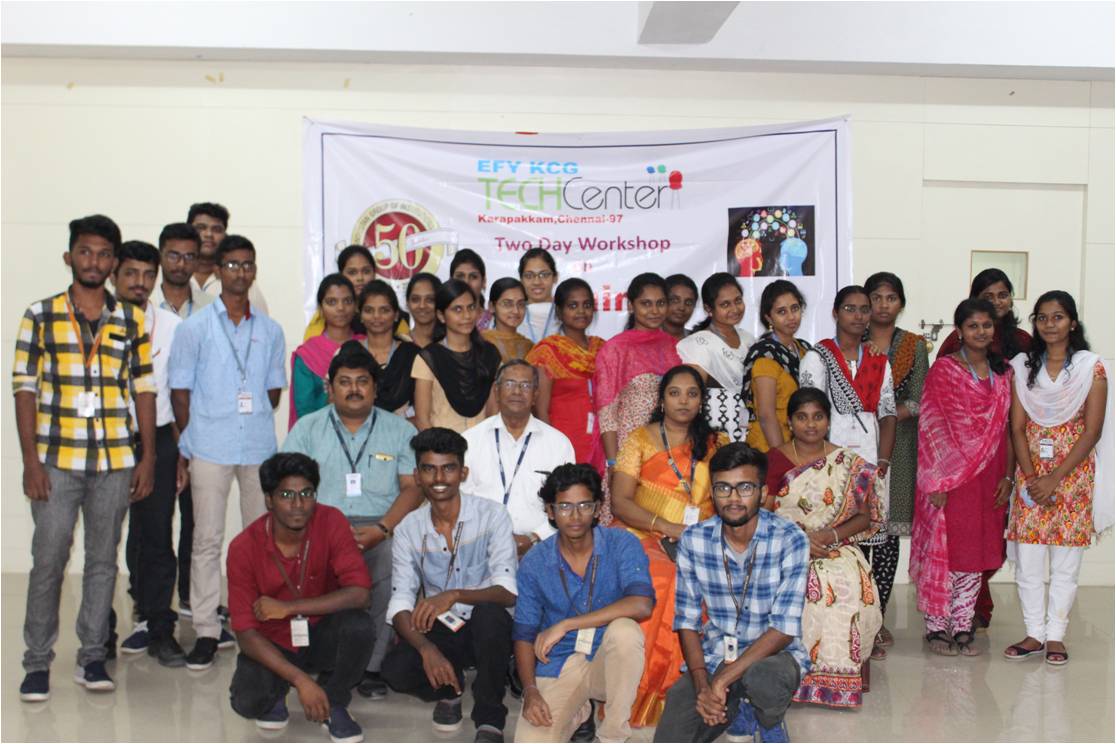
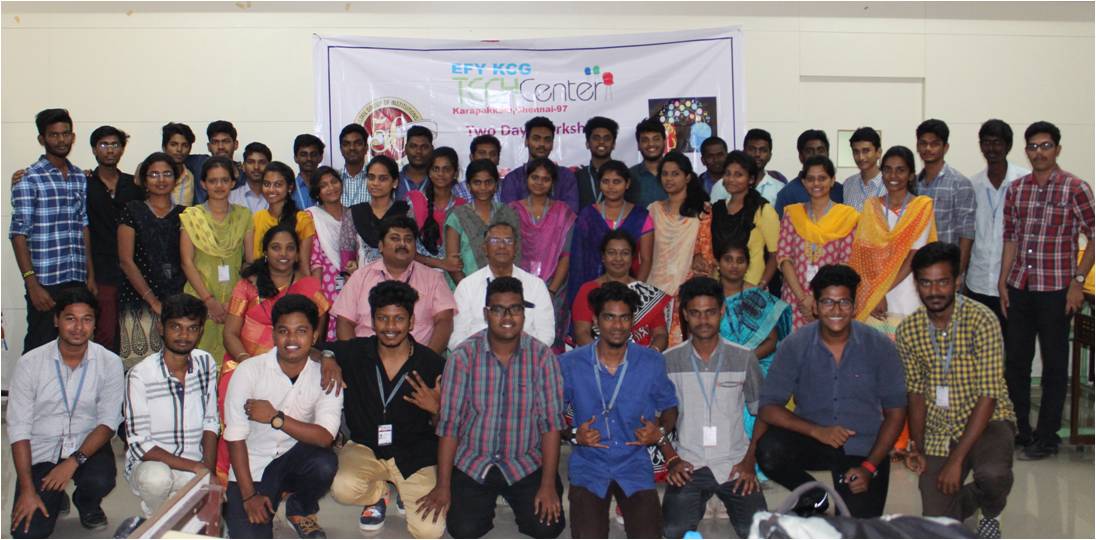
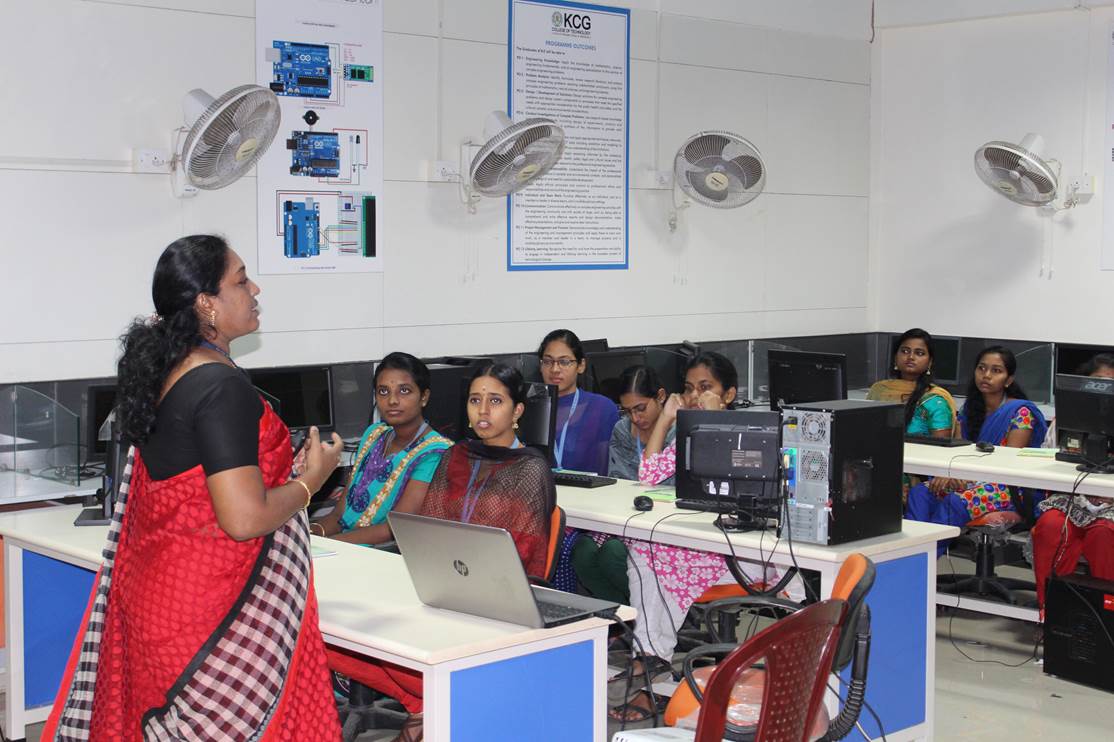
A two day workshop on ARDUINO was conducted by the core team of EFY KCG Tech center exclusively for students of ECE department on Thursday, 22 Dec 2017 and Friday, 23 Dec 2017.The program commenced at 9.00 am at the EFY LAB, Room No T61. The Chief Resource Person was Dr.V.Subbaroyan, Professor, ECE Department and he was well supported by the core team members of EFY KCG Tech Center, Ms.B.Thyla, Mr.T.Thomas Leonid and Ms.Jaraline Kirubavathy.  24 students attended the Program.Out of which 12 students were from EEE, 3 students from E&I,7 students from CSE and 2 students from IT department.

First session was introduction to the Arduino and how to start up with the tools. Arduino is and inexpensive, cross platform, simple and clear programming environment. After the Tea break at 10.40 am the next sessions on few sketches like LED blink and sequence of LED blink was outlined. Participants found few programs like LCD display, seven segment display and Bluetooth module very interesting and got involved in doing further programs. Many other fun filled projects were done by the participants in the afternoon session.

This workshop was organized to facilitate the student to effectively use ARDUINO software to undertake projects and research work. The sessions were completely hands on, increasing the confidence of the participants in using the tools and the trainers were adept at clarifying the questions that arose during the session relating theory concepts studied to practical issues.
efy5 efy10 efy12 efy13

Dec
26
Tue
NSDC Certified Training on Rooftop Solar Grid Engineer
Dec 26 @ 10:00 am – Dec 29 @ 4:00 pm

Coordinators:
Mr. K. Karthikeyan, Associate Professor, Department of EEE
Mr. S.Balaji, Assistant Professor, Department of EEE
Ms. M.Ramya, Teaching Assistant, Department of EEE
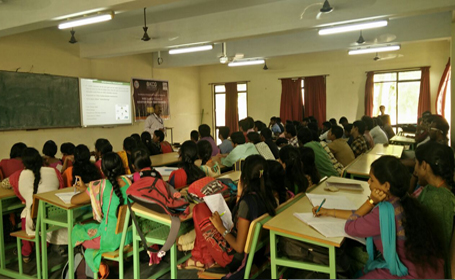
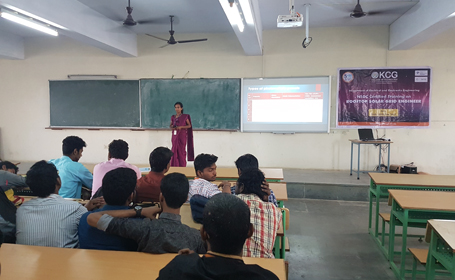
The Department of Electrical and Electronics Engineering of KCG College of Technology has organized a NSDC certified Four Day Training on Rooftop Solar Grid Engineer” during -26-29, Dec 2017 for the Third year students at EEE Class Room G01.  The training was conducted by combining both A and B Sections. The training was aimed to create awareness on the Solar Energy in India. Being a Certified NSDC-SCGJ partner, this training helped students to familiarise with Solar PV system installation.

Dr. P. Deiva Sundari, HOD/EEE welcomed and inaugurated the workshop at 8.45 am. She also highlighted the importance of NSDC solar training and the availability of green jobs in future.

Mr. K. Karthikeyan, Associate Professor/EEE in the first session of day 1 (26.12.2017) after stating the objectives and significance of the programme discussed the following topics:

  • Course overview
  • Scenario of Renewable Energy Technologies
  • Basics of Solar PV System

Post lunch, Mr. S. Balaji, Assistant Professor/EEE gave an outline about Standards and Regulation Procedures for Rooftop Solar PV System.
On day 2 (27.12.2017), during first Session (from 8.30 am to 11.00 am) Mr. S. Balaji discussed about overview and selection criteria for Solar PV Modules and its Components. After a small Tea Break Ms. M. Ramya discussed about the different types of Rooftop Solar PV Power Plants and their operating principle.
Afternoon session was handled by Mr. K. Karthikeyan who elaborated the Mechanical and Electrical Design System for ON/OFF Grid Solar PV Systems.
Day 3 (28.12.2017) started with the lecture on installation of Solar PV system.
The following topics were dealt in detail:

  • Civil, Structural and Mechanical installations
  • Electrical connections
  • Electrical safety
  • Installation of Inverters and Charge Controllers

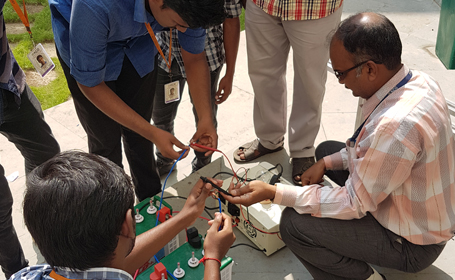
After small Tea break, the session started with hands on practice in Solar PV installations. The students were split into batches with 10 students per batch and asked to install Rooftop PV System. They were guided by Trainers (Coordinators). The Trainers gave an insight to various solar programmes by MNRE, SECI, NSDC-SCGJ and NISE.

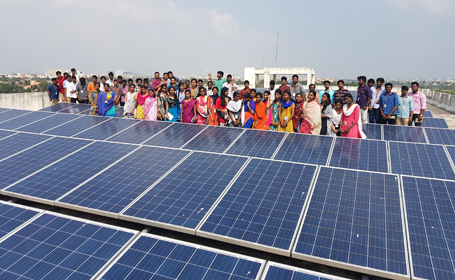
On day 4 (29.12.2017), Ms. M. Ramya briefed about the importance of Health and Safety in Project Site with the aid of a video demonstration. This helped the students to gain more knowledge about the safety in Solar PV Systems. Then, the students visited the 100 kW Solar Power Plant located on the terrace of Aeronautical building. The students were explained with the string connections, inverter and ACDB connections. Finally, the students were evaluated by oral test.

The NSDC training was concluded with a discussion and feedback session by the students. The student gave an impressive feedback about the training. They also stated that this training gave them the basic knowledge and confidence in Solar PV Systems.
so_grid5  so_grid4

so_grid3  so_grid2

so_grid1  so_grid

Dec
27
Wed
Fdp on Automotive Electronics
Dec 27 @ 9:00 am – 3:00 pm

Department of Mechanical Engineering conducted a faculty development program on Automotive Electronics in Seminar Hall F-14, KCG college of Technology on 27th December 2017. The main objective of the program was to dissipate the latest information about the future technologies in automotive electronics industry.
The program started at 9:30 am, the resource persons, the dignitaries and participants were introduced and welcomed by the Mr. P. Jagwant. Later Our Principal Dr. G Prabakaran delivered the presidential address and welcomed Mr. Anand P. R , Assistant General Manager, Delphi-TVS to deliver first session of the FDP.
Mr. Anand took an interesting session about vehicle connectivity and its growing scope in the near future, he illustrated about the futuristic features vehicle will be possessing and why it will become the minimum requirement to ride the vehicle in road. Next session was delivered Mr. K. Balasubramanian, Head-operation & Technical Services, Migatronic, India. He took an engaging session about robotic welding and its function in the future production centres and how production centre can run with minimum man power and skilled labours. Later Mr. P. S Sreenivasan, Senior purchasing manager, Ford Motors India delivered a session about Future of automotive industry, capturing the future trend. The session was fascinating as he gave glimpse of Ford Motor’s perspective about the future, how they are going to change themselves to adapt to deliver the consumer needs in the future.
The Program was concluded by the valedictory delivered by Mr. M. Siva Shankar, Asst. Professor, KCG College of Technology. Around 40 members attended and got benefited from this program. The program was successful. It delivered the objectives as clear as possible.