
MATLAB Programming (An Ubiquitous Tool for Practicing Engineers)
Coordinators:
Dr. P.S. Mayurappriyan, Professor, Department of EEE
Dr. S. Solai Manohar, Professor, Department of EEE
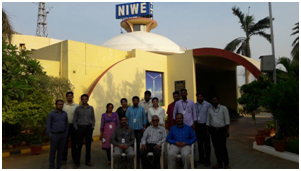
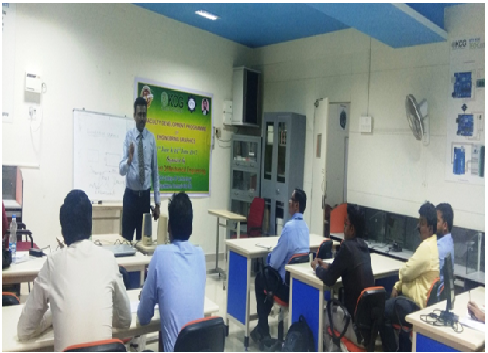
The Department of Electrical and Electronic Engineering of KCG College of Technology has organized a Three Day Workshop on “MATLAB Programming (An Ubiquitous Tool for Practicing Engineers)” during 16-18, May 2017 (Tuesday – Wednesday) for the Officials of Solar Radiation Resource Assessment, National Institute of Wind Energy (NIWE) at their Conference Hall. About 15 Engineers with Electrical, Electronics and Mechanical Engineering backgrounds attended the programme and got benefited. The Workshop is aimed to create awareness on the basics and fundamentals of MATLAB Programming. Being the first of its kind in this Workshop series, a wholesome lecture with hands on training to familiarise the MATLAB software techniques in the analysis of basic problems is provided.
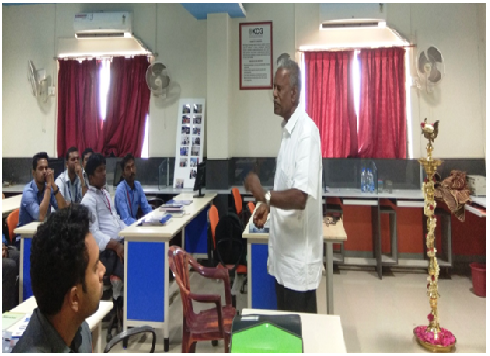
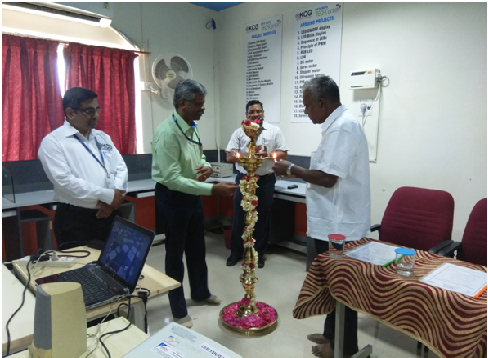
Dr. G. Giridhar, Deputy Director General / Head (SRRA), GoI, MNRE, NIWE welcomed and inaugurated the workshop at 9.30 am. Dr. G. Sambandan / Advisor / Electrical Sciences and Dr. P. DeivaSundari, HOD / EEE of KCG College of Technology rendered their felicitations.
Dr. P. S. Mayurappriyan, Professor / EEE started his session after stating the objectives and significance of the programme. The contents of the programme are as follows:
- Introduction to MATLAB Programming
- Basic MATLAB Concepts
- Variables, Expressions and Statements
- Strings and File I/O
- Numbers and Arithmetic Operations
- Mathematical Built-in Functions
- Matrix Operations
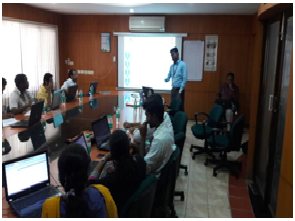

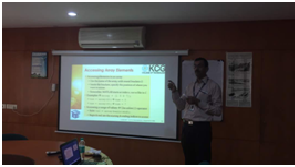
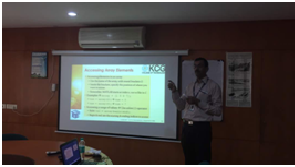
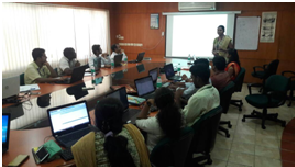
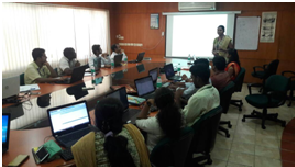
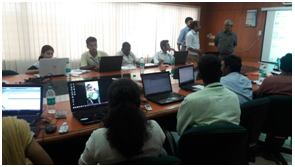
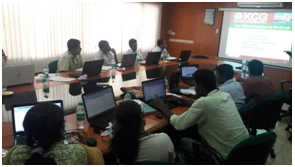
The above session gave an outline about the fundamentals of MATLAB programming and the participants started working with the basic commands on command prompt.
The second session was handled by Mr. S. Balaji, Assistant Professor, Department of EEE with the following topics:
- M-Files and Workspace
- Path Browser
- User Defined function
- Array Operators
- Vector and Matrix Manipulations
After lunch break, the session was shared by Ms. J. Annes and Ms. M. AmmalDhanalakshmi, Assistant Professors of EEE Department to highlight the following topics:
- Relational and Logical Operations
- Control Flow (For Loops, While Loops, If-Else-End Construction)
- Solving Systems of Linear Equations
- Mathematical and Statistical Operations
Parallel Tutorials on selective topics with examples were conducted so that the participants gained hands on experience in programming techniques.
The second day (17.05.2017) started with a session on Plots and Graphics by Mr. S. Subash Chandra Bharathi, Assistant Professor of EEE Department with following topics:
- Plotting of Graphs
- 2 Dimensional Plotting
- Time Series Plotting
- Plotting a Function
- Plotting Tools
- GUI Development Environment
- 3D Graphics
The post lunch session handled by Dr. P.S. Mayurappriyan, Professor of EEE Department dealt with Importing / Exporting Data to / from Text files, EXCEL files, Clip Board Images, CSV files with examples. He also explained the Techniques of Debugging with functions and examples.
The next session was handled by Dr. S. Solai Manohar, Professor of EEE Department on the Introduction to Artificial Neural Networks (ANN) and its applications. He gave a brief presentation on the various architectures of ANN.
The entire forenoon session of Day 3 (18.05.2017) was dedicated to ANN application with MATLAB alongwith tutorials which was handled by Dr. S. Solai Manohar, Professor of EEE Department. The various doubts raised by the delegates have been cleared by him and some coding exercises were given to enhance their knowledge in this domain.
The afternoon session dealt with Tutorials and hands on experience in all the topics covered during the workshop and was handled by Dr. P.S. Mayurappriyan, Professor of EEE Department. The entire session was very interactive and the delegates have been demonstrated with various programs related to mathematical, logical, relational and statistical operations. The tutorial session created an interested in learning this software and they have been given an assignment that comprises of a set of creative questions for continuous learning process.
The workshop was ended with a feedback session by the delegates. In that they have expressed their interest and willingness in attending the next workshop of this series on SIMULINK and Model Based Design. They also stated that this Workshop gave them the basic knowledge and confidence in starting and programming MATLAB with script files for various operations. Dr. G. Giridhar thanked the KCG team for organising such a useful work in short intimation and expressed his interest in further academic and research collaborations. A group photo session has been arranged at the end before bidding farewell.
PROGRAMME SCHEDULE
Venue: NIWE Conference Room 16thMay, 2017
| Time | Schedule | |
| 9.30 am – 10:00 am | Inaugural Session
Dr. G. Giridhar, Deputy Director General / Head (SRRA), NIWE Dr. G. Sambandan, Advisor – Electrical Sciences, KCG College of Technology Dr. P. DeivaSundari, Professor & Head, EEE, KCG College of Technology |
|
| 10:00 am – 11:00 am | v Introduction to MATLAB Programming
v Basic MATLAB Concepts v Variables, Expressions and Statements v Strings and File I/O v Numbers and Arithmetic Operations v Mathematical Built-in Functions v Matrix Operations |
Dr. P.S. Mayurappriyan |
| 11.00 am – 11.30 am | Coffee Break | |
| 11:30 am – 1:00 pm | v M-Files and Workspace
v Path Browser v User Defined function v Array Operators v Vector and Matrix Manipulations |
Mr.S.Balaji |
| 1.00 pm – 2.00 pm | Lunch Break | |
| 2.00pm – 3:30 pm | v Relational and Logical Operations
v Control Flow (For Loops, While Loops, If-Else-End Construction) v Solving Systems of Linear Equations v Mathematical and Statistical Operations |
Ms.AmmalDhanalakshmi&
Ms. J. Annes |
| 3.30 pm – 4.30 pm | v Tutorials | |
Venue: NIWE Conference Room 17th May, 2017
| Time | Schedule | |
| 9.30 am – 11:00 am | MATLAB Graphics
v Plotting of Graphs v 2 Dimensional Plotting v Time Series Plotting v Plotting a Function v Plotting Tools v GUI Development Environment v 3D Graphics |
Mr.S.Subash |
| 11.00 am – 11.30 am | Coffee Break | |
| 11:30 am – 1:00 pm | MATLAB in Artificial Neural Network
v Introduction to ANN v Architecture of ANN |
Dr. S. Solai Manohar |
| 1.00 pm – 2.00 pm | Lunch Break | |
| 2.00 pm – 3:30 pm | Data Import and Export
v Spreadsheet Link v MATLAB Functions in Microsoft Excel v Text files v Clip Board Images v CSV files Debugging Techniques v Functions v Examples |
Dr. P.S. Mayurappriyan |
| 3.30 pm – 4.30 pm | v Tutorials | |
Venue: NIWE Conference Room 18th May, 2017
| Time | Schedule | |
| 9.30 am – 11:00 am | MATLAB in Artificial Neural Network
v Neural Network Tool Box v Examples |
Dr. S. Solai Manohar |
| 11.00 am – 11.30 am | Coffee Break | |
| 11:30 am – 1:00 pm | MATLAB in Artificial Neural Network
v Tutorials |
Dr. S. Solai Manohar |
| 1.00 pm – 2.00 pm | Lunch Break | |
| 2.00 pm – 4:30 pm | v Tutorials | Dr. P.S. Mayurappriyan |
| 4.30 pm – 4.30 pm | v Panel Discussion
v Closing Ceremony |
|
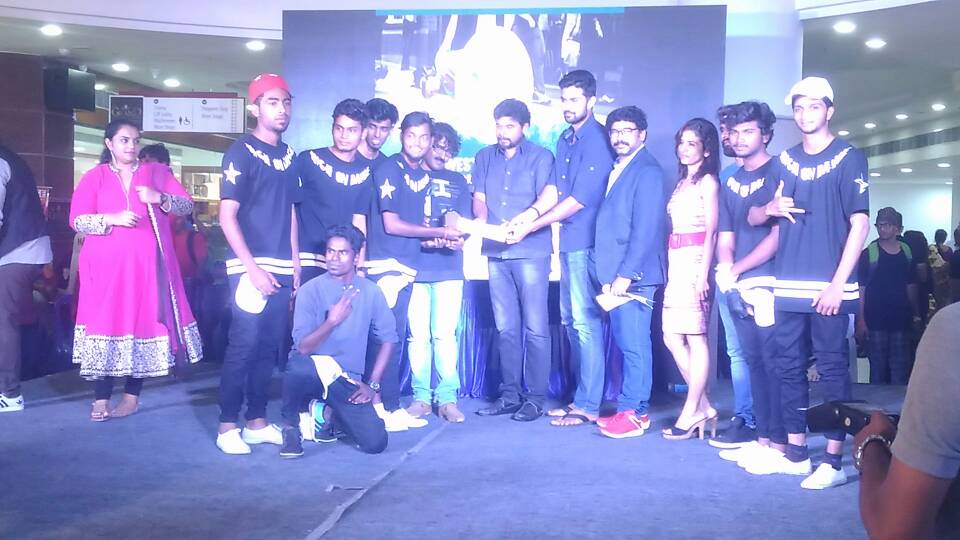
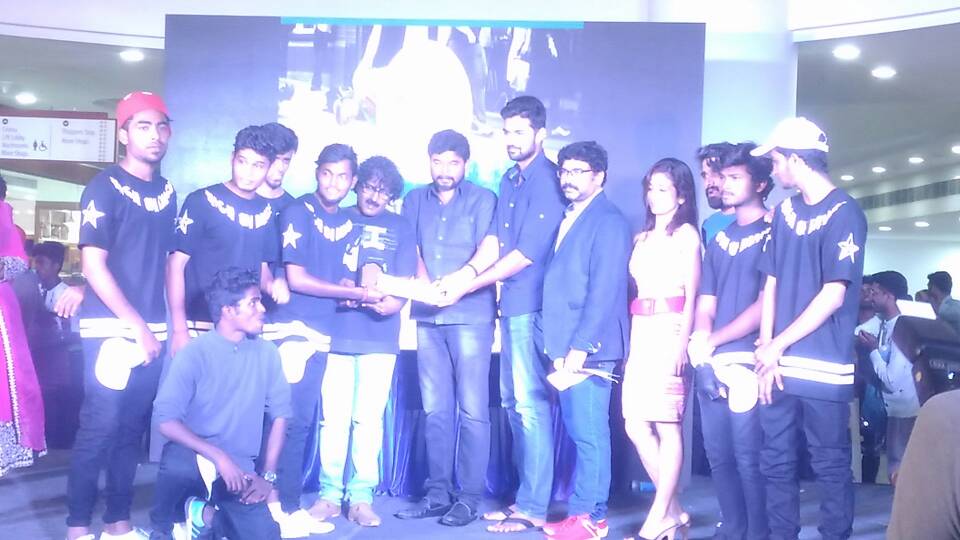
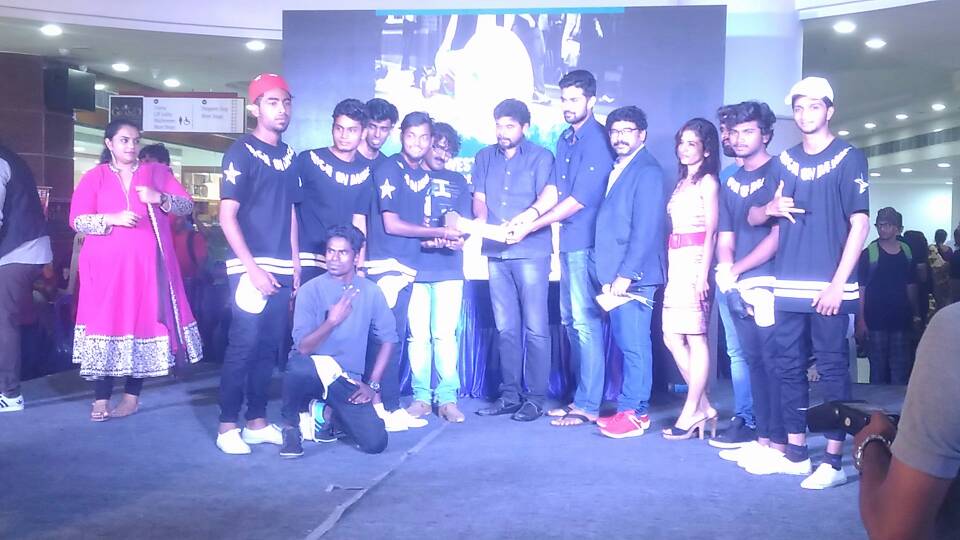
TamilNadu dance fest a professional western dance competition was held at Grand mall,velachery. It was a three weeks event.The first week was the auditions. In the second week the semi finals was conducted. And the last week was the finals.Mr.Nagendra Prasad a kollywood cine artiste who acts and choreographs for films was the chief guest for the evening.Top teams from all over tamilnadu participated in various categories like solo, dual, and group dance.Our college team The Immortalz went through to the finals and won the first prize in the group dance category.Cash prize of Rs.25000 was awarded with a trophy.It is to be noted that this is the seventh victory for our college dance team in this year.
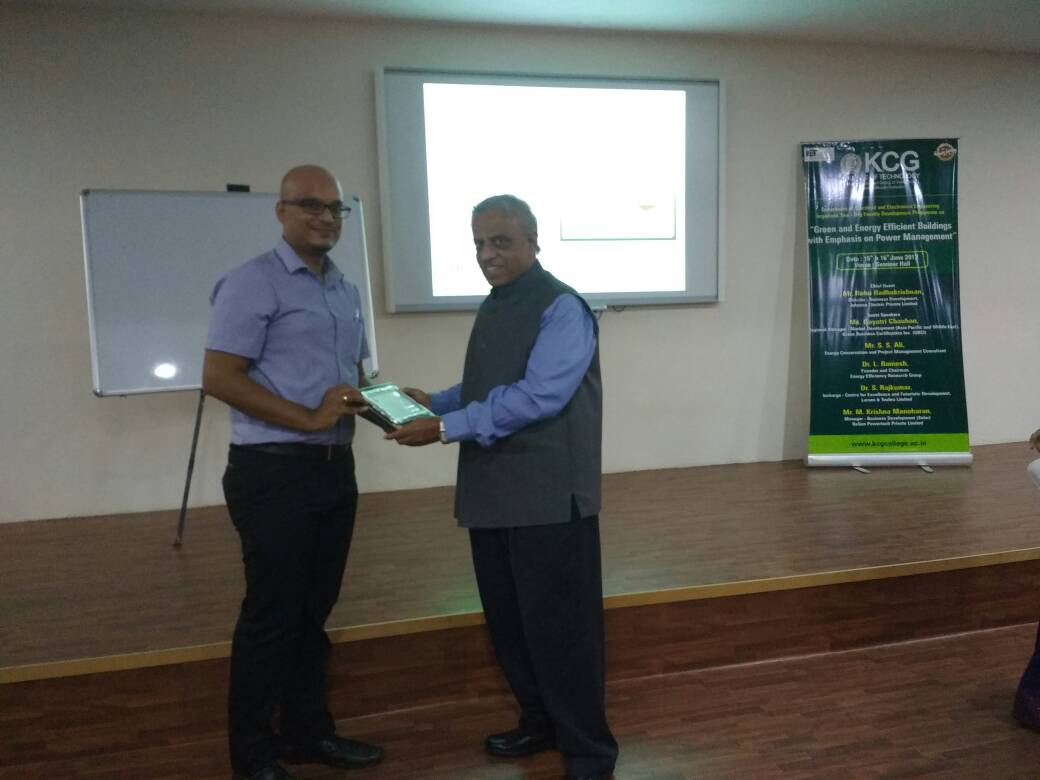
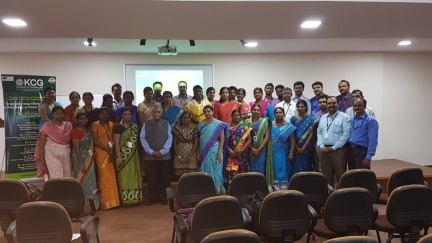
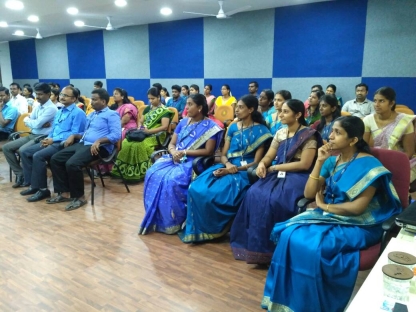
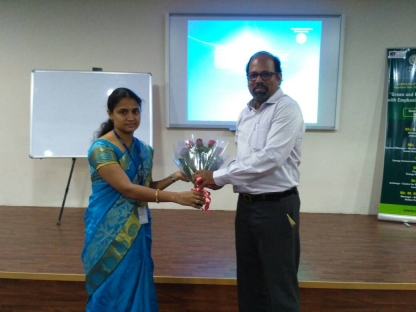
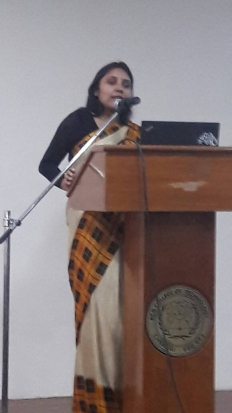
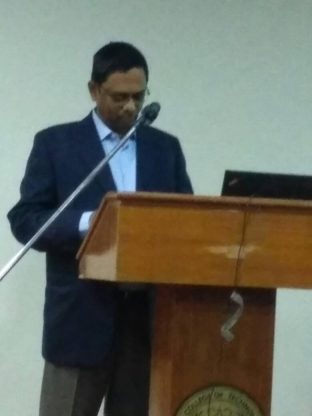
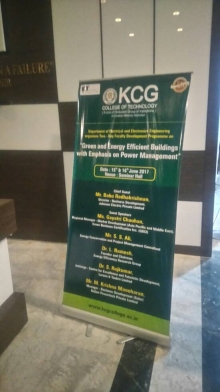
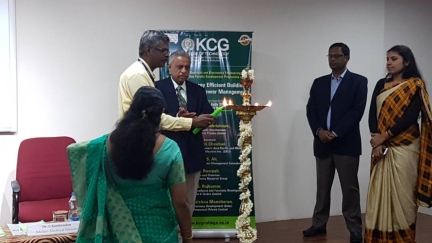
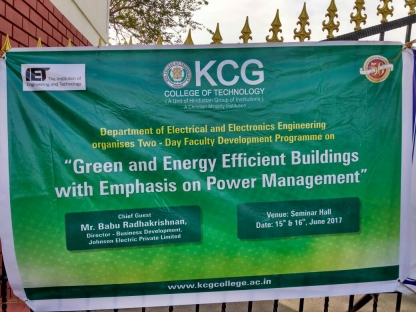
The Department of Electrical and Electronics, KCG College of Technology organized an IET sponsored TWO-DAY FACULTY DEVELOPMENT PROGRAMME ON “GREEN AND ENERGY EFFICIENT BUILDINGS WITH EMPHASIS ON POWER MANAGEMENT” on June 15 & 16, 2017. The inaugural function commenced at 9.30 am in Seminar Hall-I. The meeting was presided by Dr.G.Prabhakaran – Principal, Dr.P.Deiva Sundari – Head of the Department/EEE, Dr.G.Sambandan – Advisor/Electrical Sciences. The FDP began with an invocation and the invited guests were welcomed by Head of the Department/EEE. The Principal and the Advisor gave the felicitation address. Around 42 external participants from industries like CDM Smith Global Services, L&T, CMRL etc, Research Scholars and faculty from other Institutions attended the programme. All the faculty from EEE Department also attended the programme. The programme was inaugurated by the Chief Guest, Mr Babu Radhakrishnan, Director – Business Development, Johnson Electric Private Limited, Chennai. He shared his views regarding concepts on Green Building citing its importance in future. He also enlightened the gathering with information regarding Engine cooling fan motors, Window lift motors, Door lock motors and Head lamp levelling motors to Indian customers manufactured by Johnson Electric Private Limited.
 |
 |
 |
 |
 |
 |
 |
 |
 |
 |
 |
|
Day 1 – Session 1
Ms. Gayatri Chauhan, Regional Manager – Market Development (Asia Pacific and Middle East), Green Business Certification Inc.(GBCI), Bengaluru
She introduced us to the architectural concepts of Green Building. She made us aware of LEED certification. LEED certification provides independent verification of a building or neighbourhood’s green features, allowing for the design, construction, operations and maintenance of resource-efficient, high-performing, healthy, cost-effective buildings. LEED is the triple bottom line in action, benefiting people, planet and profit. She stressed on the importance of LEED certification, which leads to healthier more productive places and reduced stress on the environment by encouraging energy and resource-efficient buildings. The certification also emphasised on the savings from increased building value, higher lease rates and decreased utility costs. With ARC, LEED-certified buildings can benchmark against themselves and other similar buildings locally and globally. Spaces without certification can use ARC to make improvements in sustainability and human health and take steps toward earning LEED certification. Ultimately, ARC will eliminate complexities and barriers and enables us to make smarter decisions.
Session II
Mr. S.S. Ali, Consultant – Energy Conservation and Project Management, Chennai.
He gave an insight about the Efficient Management of Electrical Energy. He explained on power quality, harmonic mitigation, energy conservation, energy efficient lighting and maintenance management systems.
Session III
Dr. L. Ramesh, Founder and Chairman, Energy Efficiency Research Group (Green9), Chennai, Director – MGR Vision 100MW.
He introduced the concepts of energy efficiency and emphasised on how to manage energy efficiently in residential buildings. He gave an overview of the methodology and different opportunities for reducing energy use in buildings without sacrificing comfort levels. He explained the various mechanisms for financing energy efficiency measures in buildings. He explained about his Energy Conservation Initiative – Vision 100 MW. He also demonstrated various case studies on Power Management in Residential Feeder and Residential Flats.
DAY II – Session IV
Dr. S. Raj Kumar, In charge – Centre for Excellence and Futuristic Development, Larsen & Toubro Limited, Chennai.
He explained that the concept of Green Building concentrates mainly on two points: Increasing the efficiency with which buildings use energy, water and materials and Reducing building impacts on human health and the environment, through better site selection, design, construction, operation, maintenance, and removal throughout the complete life cycle. The key concepts in designing a Green Building lies in its Sustainable Site Selection, Material Resources and Water Efficiency. Green Building standards also contain certain guidelines for the waste management. First of all, it seeks to generate minimum amount of waste possible during construction. Generally during construction, a large amount of waste material generated is dumped to landfills; this waste needs to be reduced. A building constructed with proper designing and following Green architecture standards produce less amount of waste as compared to other buildings. Indoor Environment Quality is a very important parameter to be considered for Green Buildings. It directly affects the health of occupants, which says that in buildings with good environmental quality, proper heating and cooling system ensures adequate ventilation, fresh air with in duct filtration system should be installed to improve the quality of indoor environment.
He also emphasized on the fact that Ventilation is a very important factor in maintaining healthy indoor air quality as it is responsible for air exchange which supports the health and comfort of building occupants. Effective design and planning for ventilation is necessary to reduce the requirement of artificial ventilation. Automated Building System techniques like HVAC (Heating, Ventilation and Air Conditioning) systems regulates the heating equipment and air conditioners on the basis of their sensor based network. The sensors control the equipments on the basis of indoor environmental conditions. Similar to this, sensor controlled lighting system which monitors the lighting appliances based on the availability of natural light are also used.
Session V
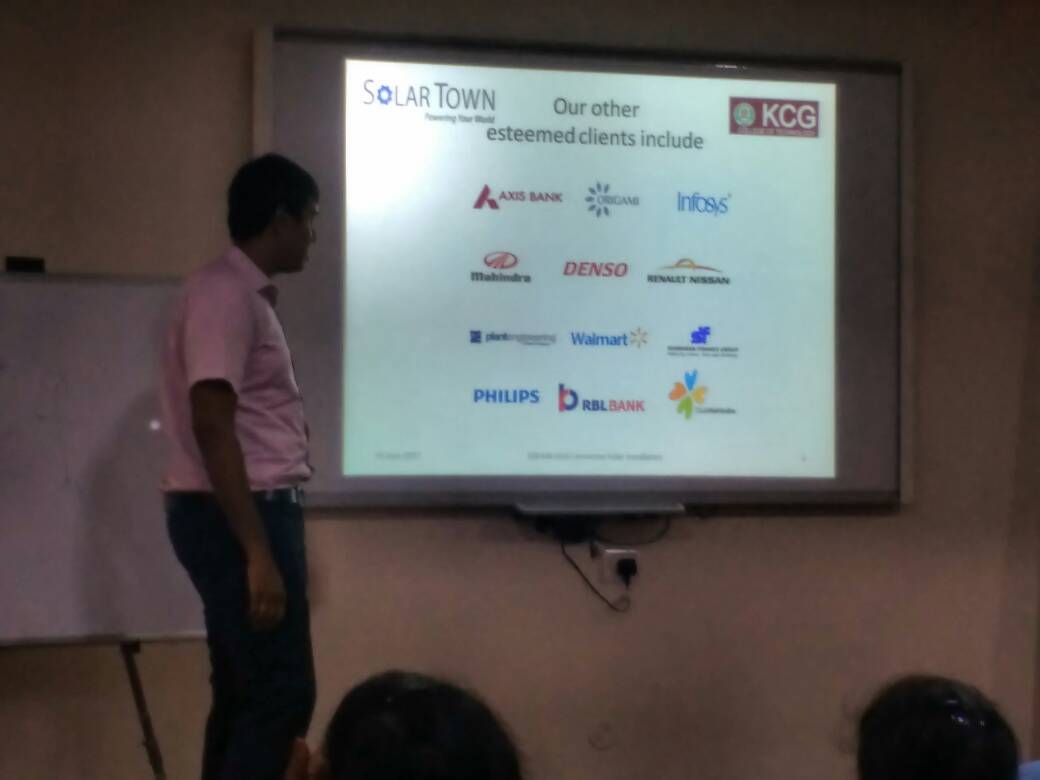
Mr. Vignesh Sundaram, Head – Construction, SolarTown Energy Solutions Private Ltd.
He explained the design and installation of the solar plant at KCG campus. A visit was arranged for the participants to the 100kW Solar plant at KCG College of Technology.
Session VI
Mr. M. Krishna Manoharan, Head – Business Manager (Solar), ReGen Powertech Pvt. Ltd., Chennai.
He emphasized on concepts of Rooftop Solar Generation. He explained the installation methods of the solar rooftop panels. He showed a case study of the comparison of electricity bills before and after installation of panels. He explained about the Solar -Wind Hybrid projects of Regen Powertech at Vagarai. He mentioned about the advantages of a True Hybrid System – two largely independent generation systems located in close-proximity to each other in order to share larger transmission equipment and broader transmission infrastructure.
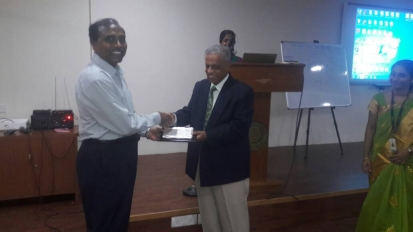
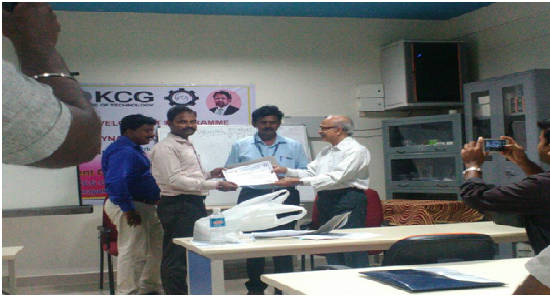
The programme concluded with feedback from the participants and certificate distribution by the invited speaker Mr. Krishna Manoharan.
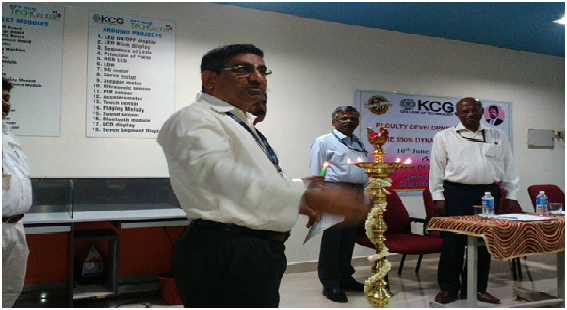
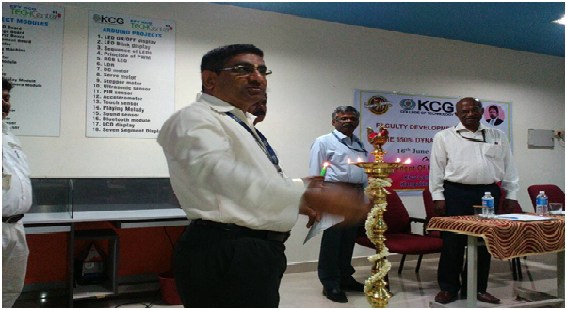
FDP On ME 6505- DYNAMICS OF MACHINES
A two day faculty development programme on “ME 6505-DYNAMICS OF MACHINES”
was held at the Department of Mechanical Engineering, of KCG College of Technology,
under the patronage of KCG Management from 16th June to 17th June, 2017.The FDP aims to
provide opportunities to faculty members, & research scholars to enrich their teaching skill and research in the field of Dynamic of Machine and Vibration. The Programme also intends to develop the knowledge of participants for with advanced software in the relevant field for inculcating learning values in students and guiding and monitoring their progress.
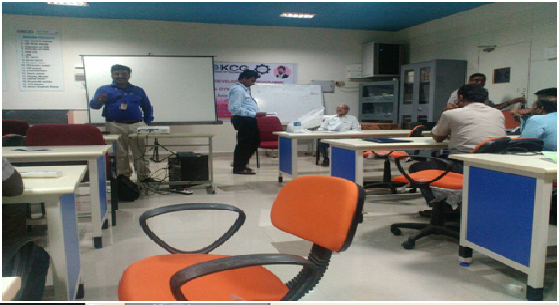
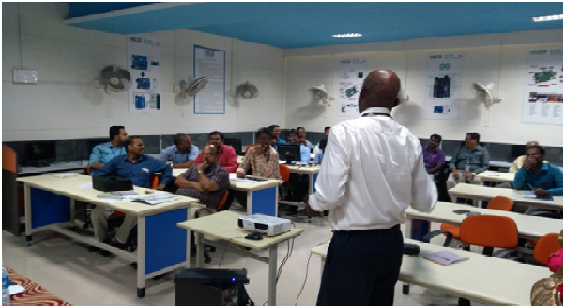
The FDP was attended by 30 participants from faculty members of MECH from External Colleges and Internal Faculty Included.
INAUGURAL SESSION:
The esteemed personalities present on the inauguration of the programme:
• Dr. G.Prabhakaran, Principal of KCG College of Technology
• Dr.S.Ramesh, FDP Convener, Head of Mechanical Engineering, KCG College of Technology
• Dr. C.Jebaraj, Chief Guest senior Professor, VIT University, Chennai
• Dr .S.Balaguru, Associate Professor, FDP Co-ordinator, KCG College of Technology
• Mr.K.Mahesh Kumar, Assistant Professor, KCG College of Technology
 |
 |
 |
 |
 |
 |
 |
 |
 |
 |
TECHNICAL SESSIONS:
1st Day (16/06/17) Session I:
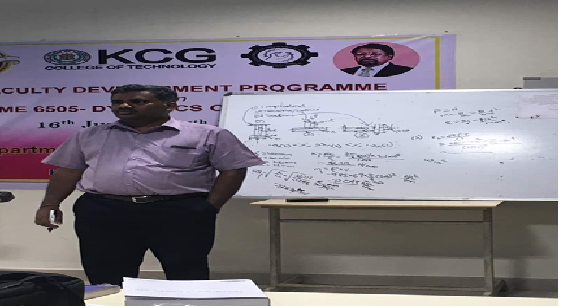
Prof. (Dr.) C.Jebaraj, Former Director,AU-FRG Institute for CAD/CAM, Anna University & senior Professor, VIT University, Chennai, has delivered keynote address on “Overview of Dynamics of Machines”. In this session participants were learned the application of effective Teaching Methodology in order to get the best results of this critical Course from the students.
1st Day (16/06/17) Session II:
Dr.D. Sathia Narayanan, Scientist-E Grade, NIOT, Chennai, has delivered an interactive lecture on
“Chatter Vibrations and Its Suppression”. In this session participants were learned the Vibration Topic in different Perspective from the Viewpoint of Ocean & Offshore Technology. He dwelt on the significance of the parametrically excited vibration and Catastrophic effects of self excited vibrations.
1st Day (16/06/17) Session III:
An informative lecture on “Free Vibration & Forced Vibration” was discussed by Dr.K.Malar Mohan, Deputy Director, Centre for Academic Courses, Anna University. In this session, participants were learned the Course from Engineering point of view and from practical standpoint. He discussed on the some real-time Case studies related to Vibration and how to interpret the numerical values obtained from Vibration analysis. He also explained about how to choose appropriate measurement unit of Vibration like displacement, Velocity and acceleration depending upon the application and severity.
1st Day (16/06/17) Session IV:
Mr.K.Mahesh Kumar, Assistant Professor, KCG Tech has illuminated on “Turning Moment Diagram & Flywheel”. In this session participants were gained with the knowledge of the real time Mechanical system and its power requirement demand.. He inspired the participants to work on Problems related to TMD and Flywheel and its design and its impact on the overall efficiency of the machine dynamics. He elaborated on the two different commonly encountered situation in Mechanical Engineering for Flywheel application and it use. He also solved numerical problems in Turning moment diagram and Flywheel Design..
2nd Day (17/06/17) Session I:
Prof. S.Kannan, Assistant Professor, VIT University, Chennai, has focused on “BALANCING OF MASSES”. In this session participants were familiar with theoretical and practical aspect of finding out the unbalance in a machine component and machinery. He enlightened on single plane balancing and Double plane balancing with real time examples. He solved numerical problems in balancing of rotating masses with both graphical and analytical approach and narrated about dynamic balancing machine used in Industry.
2nd Day (17/06/17) Session II:
Dr.S.Balaguru has explained “GYROCOPIC COUPLE AND ITS EFFECT ”.In this session participants realized the significance of understanding the concept of Gyroscopic effect in design.
2nd Day (17/06/17) session III:
Prof G.Maikandan, Adjunct Professor, KCG College of TECHNOLOGY stressed upon the importance of taking notice of some critical design elements and hidden facts.
VALEDICTORY SESSION:
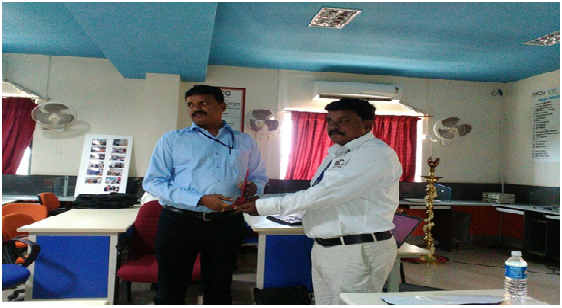
The honorable personalities present in this occasion were Dr.S.Ramesh, Prof G.Maikandan, Dr.S.Balaguru, Mr.K.Mahesh Kumar summarized the program. All the personalities appreciated the department for organising the FDP. The program was ended with vote of thanks by Mr. K.Mahesh Kumar, Asst. Prof., MECH Dept., KCTech & Coordinator of the FDP.
OUTCOME :
All the sessions were very much informative. The discussed areas are of great benefit for the participants as the topics match with the current working domain. Participants were enlightened with the most widely used advance technologies in this domain. This in turn will help in research activity and placement opportunity.
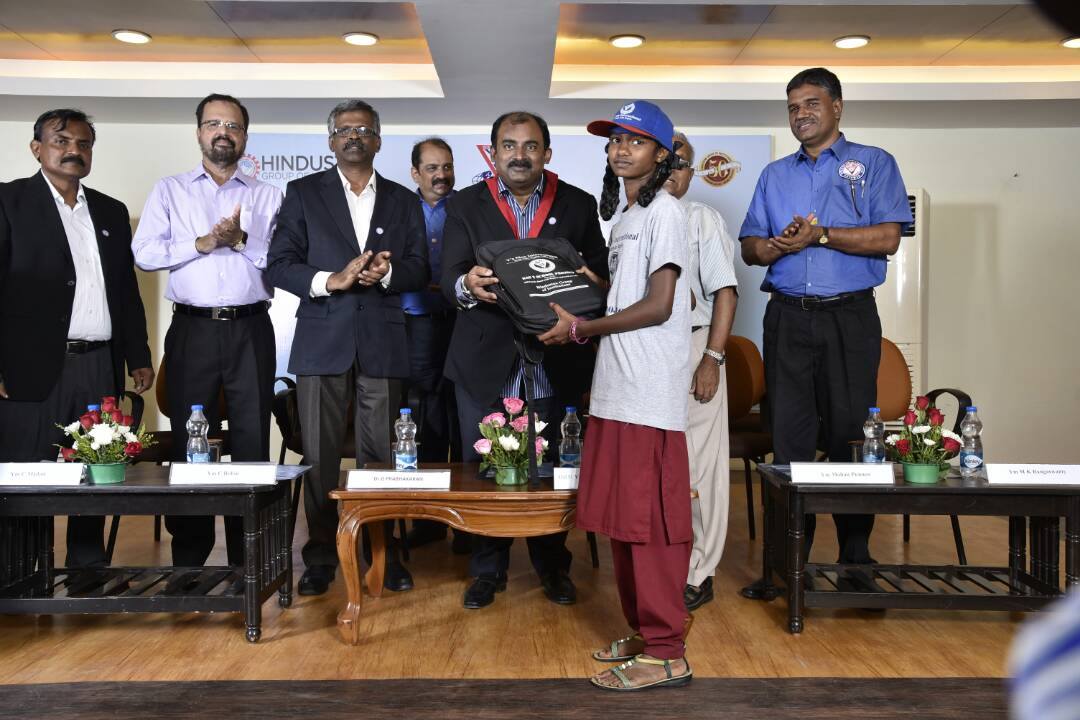
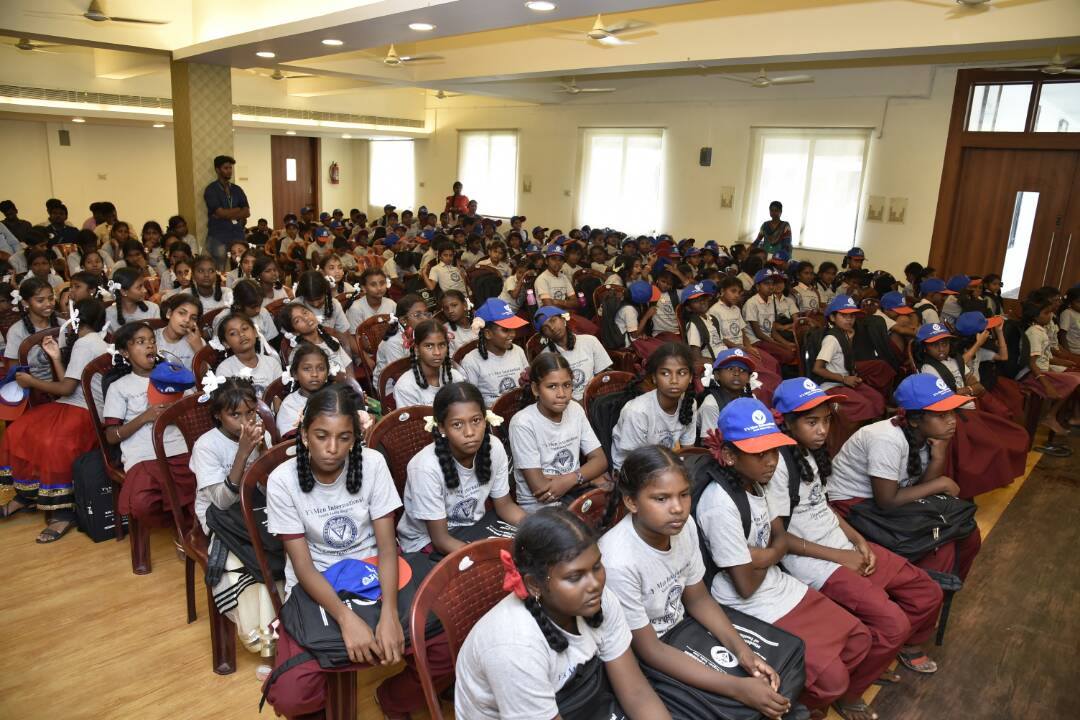
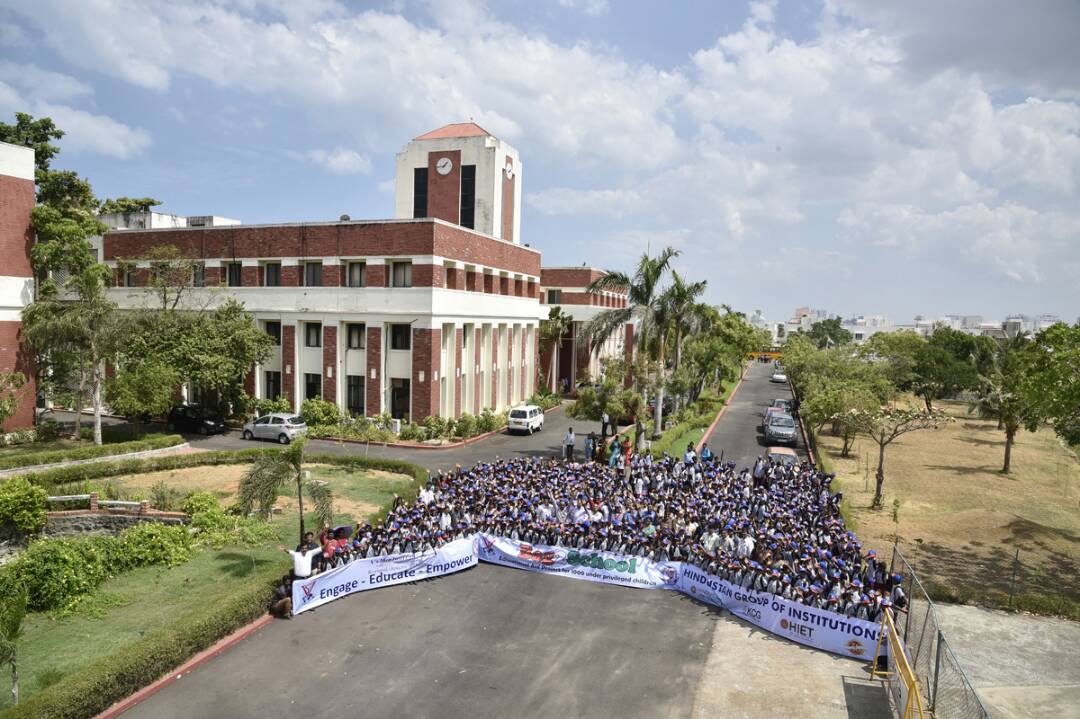
Y’s men International, South India region and Hindustan group of institutions jointly organized ‘Bag 2 school’ project on 17/6/17 at KCG College of Technology, Karapakkam. Education Kits which included a school bag, T-Shirt, Cap and a LIFCO Dictionary were distributed to 1000 underprivileged students studying in various government schools. HRM Y’sm Dr. Anand Jacob Verghese, Regional Director, Y’s men International South India region launched the programme in the afternoon around 2.00 pm and presided over the event. Earlier the children were served lunch in the college premises. An aero-modeling show and a campus trip was arranged and the children enjoyed it thoroughly. HRM Y’sm Prof. C. Robin, Regional Secretary, Y’sm. M.K.Rangaswamy, Regional Treasurer, Y’sm. Mohan Punnen, Past Regional Director & Advisor and Y’sm. George Thomas, Past Regional Director & Advisor were present for the programme. The school teachers who accompanied the children thanked the organizers by bestowing a shawl on the regional director.The programme came to an end with the distribution of snacks to the children in the evening. Later Dr.Anand Jacob Verghese addressed the press and media personnel who gathered in the college campus for a coverage.
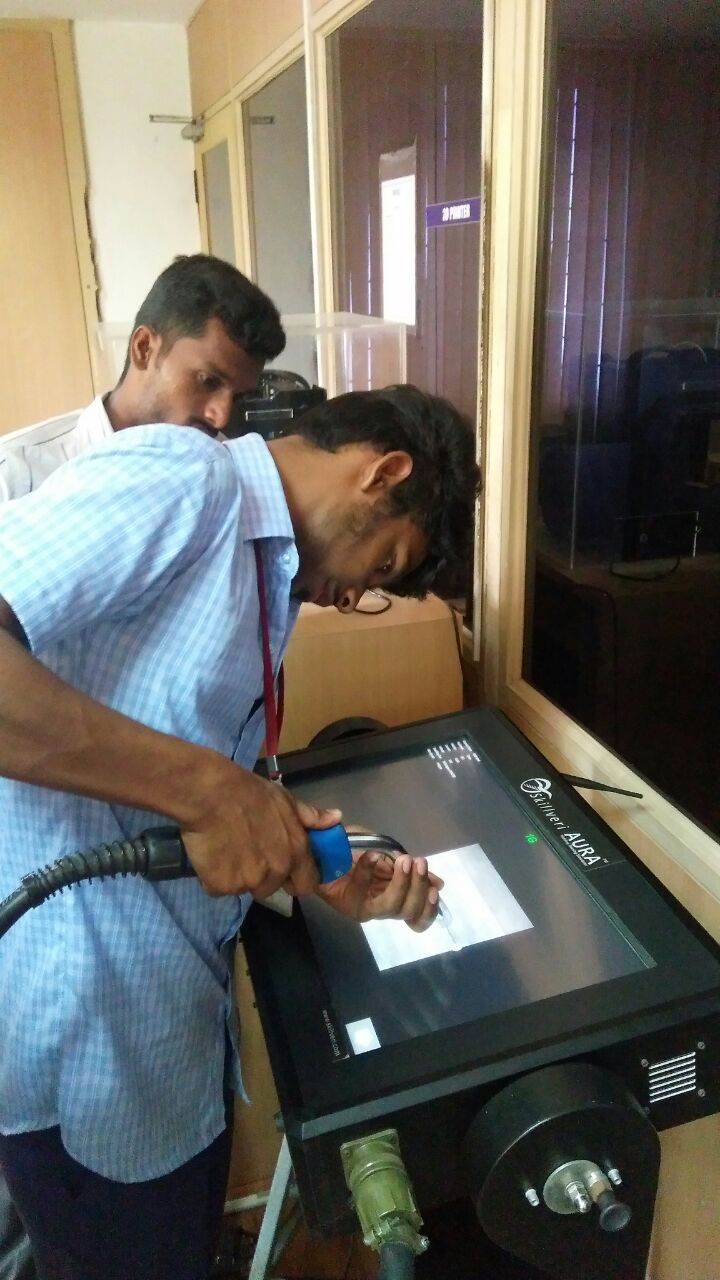
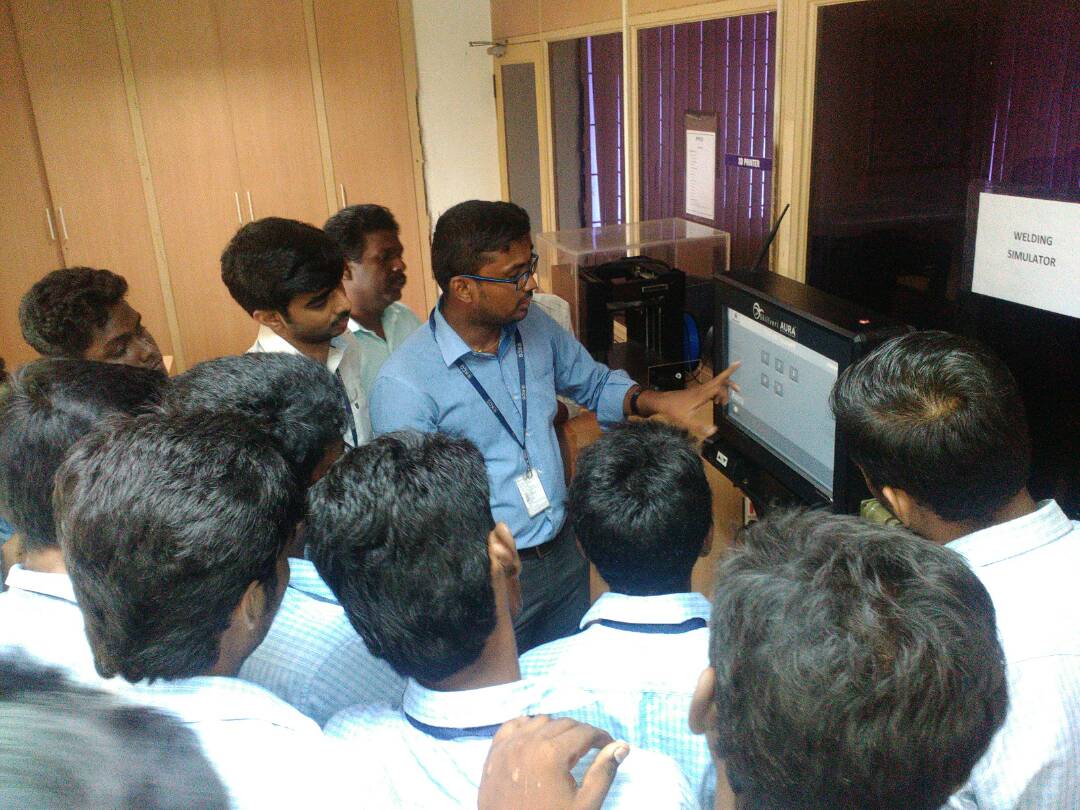
The Department of Mechanical Engineering has Organised a “One Day Skill Development Program in Gas Welding” exclusively for Final Year Mech./Automobile Engg., Polytechnic students at our campus. The Welding Simulator Facility, available in our Department enabled students to rapidly refine basic welding skills, learn proper welding technique and explore welding career paths in a safe, virtual environment. This Program provided an opportunity for the polytechnic students to receive both theoretical and practical knowledge and skill in Welding. The Program was conducted for twenty meritorious final year Mech./Automobile Engg., students per day from Polytechnic Colleges from 19/06/2017 to 21/06/2017.
Power Point Presentation about our College and about our Department was given by Dr.D.Easu, Associate Professor & Mr. S.Jesudass Thomas, Associate Professor. Power Point Presentation on Basic Theory related to Gas Welding was presented by Mr. Rajesh Kannan, Asst. Prof. & Mr. M. Vignesh Kumaar, Asst. Prof. Welding Simulator Training was given by Mr. Rajesh Kannan, Asst. Prof., Mr. M. Vignesh Kumaar, Asst. Prof. along with Mr.Sajji Kuriakose, Workshop Supdt., Mr.Santhosh Kumar, Instructor, Mr. Y .Anand, Instructor & Mr. A.Jayakumar, Instructor. Gas Welding Practices were also given to the students by the other Lab Instructors of Department of Mechanical Engineering.
| S.No. | Date | Name of the Polytechnic College | No. of Students
Participated |
Remarks |
| 1. | 19/06/2017 | Meenakshi Krishnan Polytechnic College, Pammal, Chennai – 600 075. | 21 | Conducted |
| 2. | 20/06/2017 | HIET Polytechnic College, Padappai | 20 | Conducted |
| 3. | 21/06/2017 | HIET Polytechnic College, Padappai | 20 | Conducted |
| 4. | 08/07/2017 | AMK Technological Polytechnic College, Chennai | 20 | Planned |
| 5. | 22/07/2017 | AMK Technological Polytechnic College, Chennai | 20 | Planned |

Engineering Graphics FDP
A Two day Faculty Development Programme (FDP) on Engineering Graphics was conducted by the department of Mechanical Engineering, KCG College of Technology on 21st & 22nd June 2017. Twenty four faculties participated in this FDP. Nine faculties from other colleges and fifteen internal faculties attended the FDP. The participants gained knowledge on efficient delivery techniques of Engineering Graphics subject to the student community.
The FDP was organized by Dr. N. Pragadish, Associate Professor and Mr. I Manikandan, Assistant Professor of Mechanical Engineering department. Dr. G. Prabhakaran, Principal, KCG College of Technology, Dr.S. Ramesh, HoD – Mechanical Engineering department and Dr. N. Pragadish, Associate Professor – Mechanical Engineering department inaugurated the FDP on 21st June 2017 by 9.00 am. The programme was conducted for two days, two sessions per day.All the sessions were handled by well experienced faculty members. Two sessions were handled by external resource persons, who are well known for their publications on “Engineering Graphics” books. The remaining sessions were handled by internal faculties. The details of the topics covered in each session are given below.
 |
 |
 |
 |
S. No Date Session Resource Person Topic Covered
1 21.06.2017 FN Prof. K.V.Natarajan • Introduction of Engineering Graphics
• Standards in Engineering drawing
• Conics, scales, conversion of pictorial
drawings to orthographic drawings
• Projections of Straight Lines
• Projection of planes.
• Projection of solids.
2 AN Dr. S. Ramesh • Development of Surfaces
3
22.06.2017
FN Dr. T. Jeyapoovan • Projection of solids.
• Tricks to find the initial position of the objects in projection of planes and solids.
• Section of solids
• Isometric Projection
4 AN Dr. N. Pragadish • Perspective projection
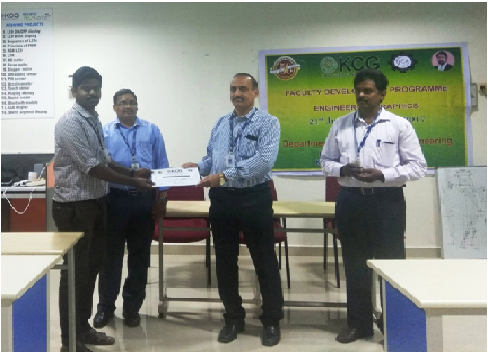
The valedictory function was conducted at 3.15 pm on 22nd June 2017. Dr.C.Chinnaraj, Registrar – KCG College of Technology honoured the occasion and distributed the certificates to the participants.
TWO DAY FDP ON “POWER SYSTEM ANALYSIS – USING ETAP”
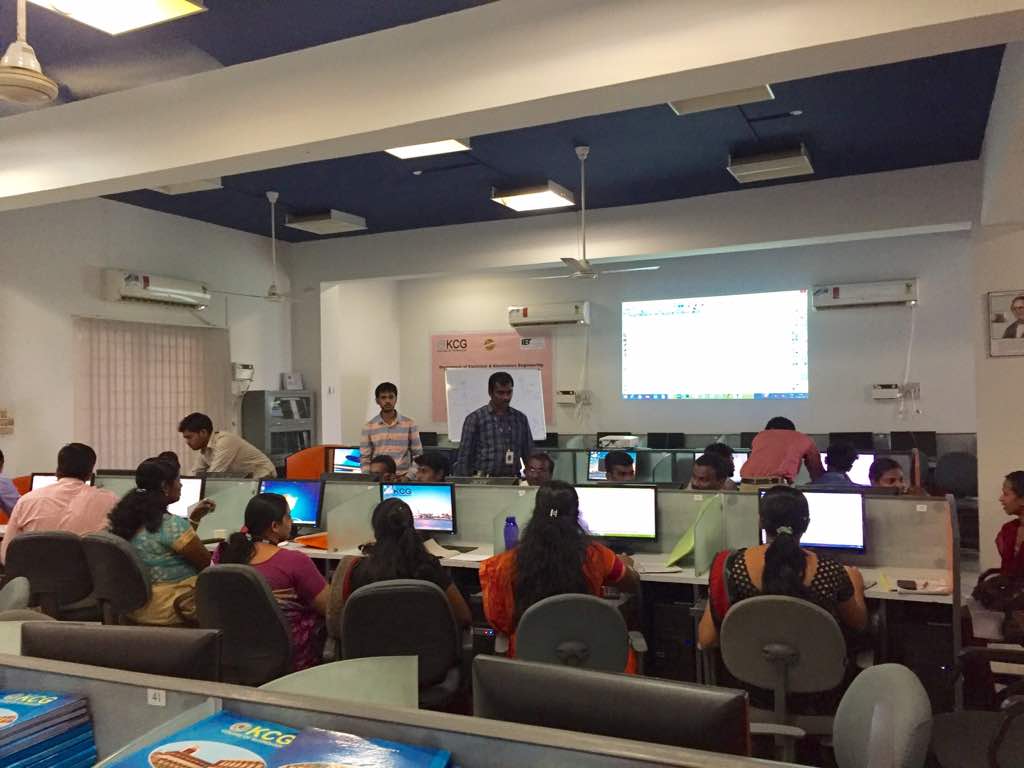
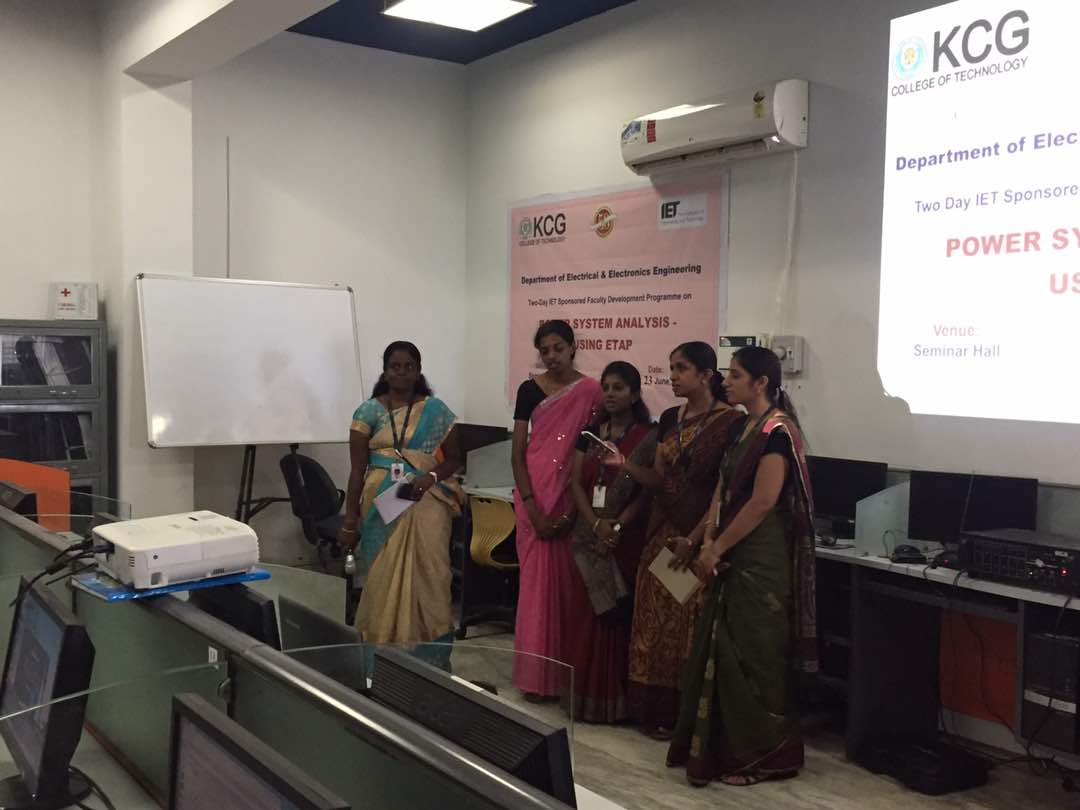
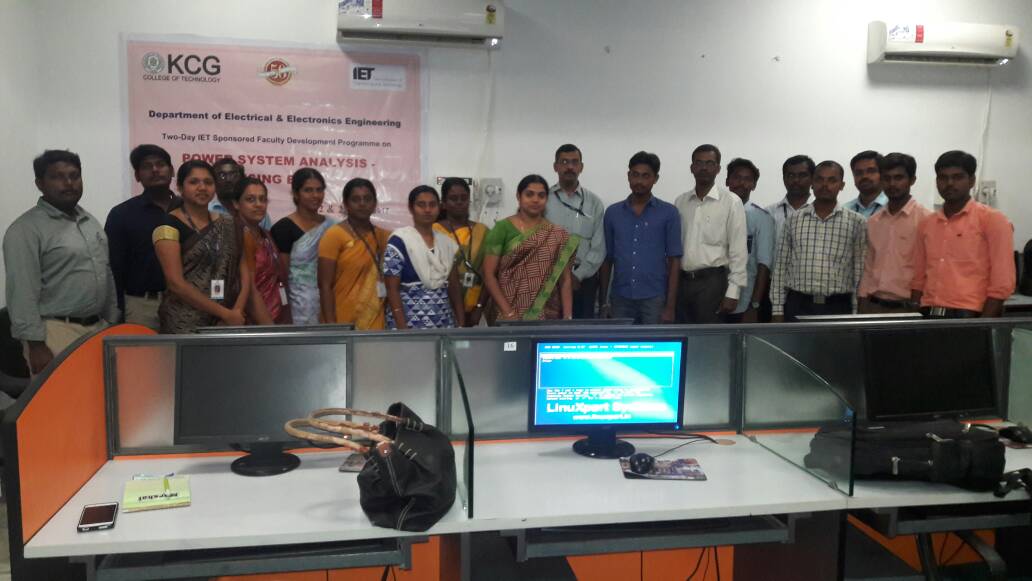
The Department of Electrical and Electronics, KCG College of Technology organized an IET sponsored TWO-DAY FACULTY DEVELOPMENT PROGRAMME ON “POWER SYSTEM ANALYSIS – USING ETAP” on June 22nd & 23rd, 2017. The inaugural function commenced at 9.30 am in MCA LAB. The meeting was formally begun with an invocation and the invited guests were welcomed by Dr. P.Deiva Sundari, Head of the Department/EEE. Around 42 participants registered for the programme.
Day 1 – Session 1
Mr.Gandhirajan, Petro6Engineering & Construction Pvt. Ltd, Chennai
Topic: Load Flow Analysis – Case Study & Hands-on for Industrial System
He started the session saying about the (Electrical Transient Analyzer Programme) ETAP software and its purpose. He elaborated how ETAP is used to perform load flow analysis, short circuits, transient instabilities, harmonics, relay coordination, arc flash, optimal power flow and battery sizing. He explained the load flow analysis using ETAP with a case study.
Day 1 – Session 2
Mr.Prasanth, PowerProjects, Chennai
Topic: Case Study & Hands-on – Utility System – Ferranti Effect, Shunt & Series Compensation, Power Factor Correction
He introduced the concepts of Ferranti effect and skin effect. He also explained how the receiving end voltage is greater than sending end voltage in long, High Voltage and Extra High Voltage transmission lines, during light loads or no load condition, because of the presence of shunt capacitance. He also explained how to prepare the reports using ETAP Software.
Day 1 – Session 3
Mr.Emmanuel, Voltech Engineers Pvt ltd, Chennai
Topic: Generator Modeling, Control Mode, Emergency Diesel Generator
He explained about dependent machine and network models using full frequency, cold-state starting of generators under normal and emergency conditions. The entire generator start-up process includes automatic control relay simulation and dynamic behaviors of exciters-AVR, governor, turbine /engine, and Power System Stabilizers (PSS). He showed how ETAP can be utilized to simulate detailed dynamic responses of the starting generator, test emergency loads including motors, MOV and others connected to the generator before it reaches the synchronous speed and rated voltage.
Day 2 – Session 1
Mr.Gandhirajan, Petro6Engineering & Construction Pvt. Ltd, Chennai
Topic: Short Circuit Studies – Balanced and Unbalanced Faults, Modeling of Circuit Breakers, Transformers
He explained about the concept of short circuit studies due to balanced and unbalanced faults. He also explained with a sample model using ETAP software.
Day 2 – Session 2
Mr.Prasanth, PowerProjects, Chennai
Topic: X/R Ratio, Case Study & Hands-on for Power Plant, Selection of Transformer Impedance
He gave an insight about the X/R ratio. The major points discussed were:
In short circuit studies, the X/R ratio should not be ignored because it determines the peak asymmetrical fault current. When comparing the short circuit current from the studies against circuit breaker name plate, one should know at what X/R ratio the circuit breaker was tested. The following rule of thumb can be used to determine if circuit breaker is properly rated:
- Symmetrical short circuit current is less than symmetrical rating of the circuit breaker, and
- X/R of the circuit is less than circuit breaker test X/R ratio
If the first item is met but the second is not, then the process of circuit breaker evaluation requires further calculation.
Day 2 – Session 3
Mr.Berwin, PowerProjects, Chennai
Topic: Introduction to Transient Stability Studies, Generator Relative Angle Generator outage Modeling of AVR & Governor
He explained about the transient stability studies for a sample system shown below. Transient stability studies include identifying critical fault clearing time, checking generator rotor angle stability, assessing system stability margin, evaluating motor dynamic acceleration and re-acceleration impact, preparing and testing load shedding schedule, computing fast bus transfer timing, calibrating and evaluating relay setting and simulating generator start-up.
Day 2 – Session 4
Mr.Tamil, PowerProjects, Chennai
Topic: Harmonic Analysis – IEEE519, Modeling of Non-linear Loads, Filter Sizing Relay Coordination with examples
He explained about transient stability studies for a sample system with the harmonic analysis module and the following points were discussed:
- Simulate harmonic current and voltage sources, identify harmonic problems, reduce nuisance trips, design and test filters, and report harmonic voltage and current distortion limit violations.
- Comprehensive load flow and frequency scan calculations and power system component frequency models.
- Results were shown graphically, including harmonic order, harmonic spectrum plots, and harmonic waveform plots.
The programme concluded with feedback from the participants and certificate distribution by the Dr. P. Deiva Sundari, HOD/EEE, KCG College of Technology.
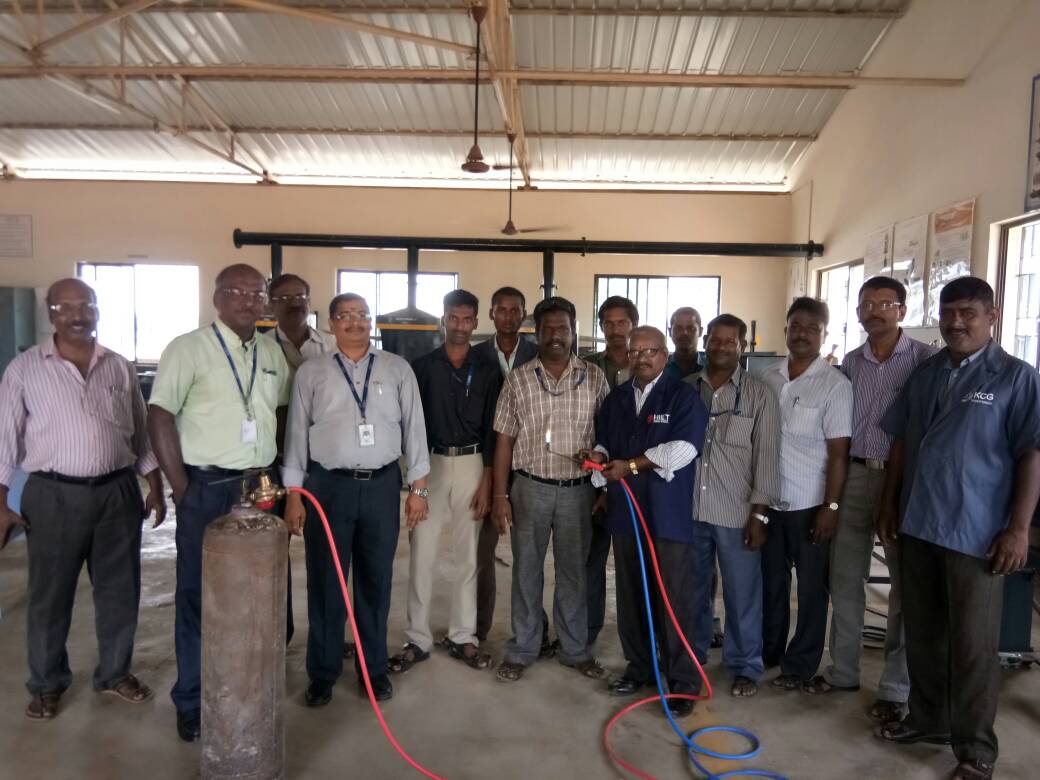
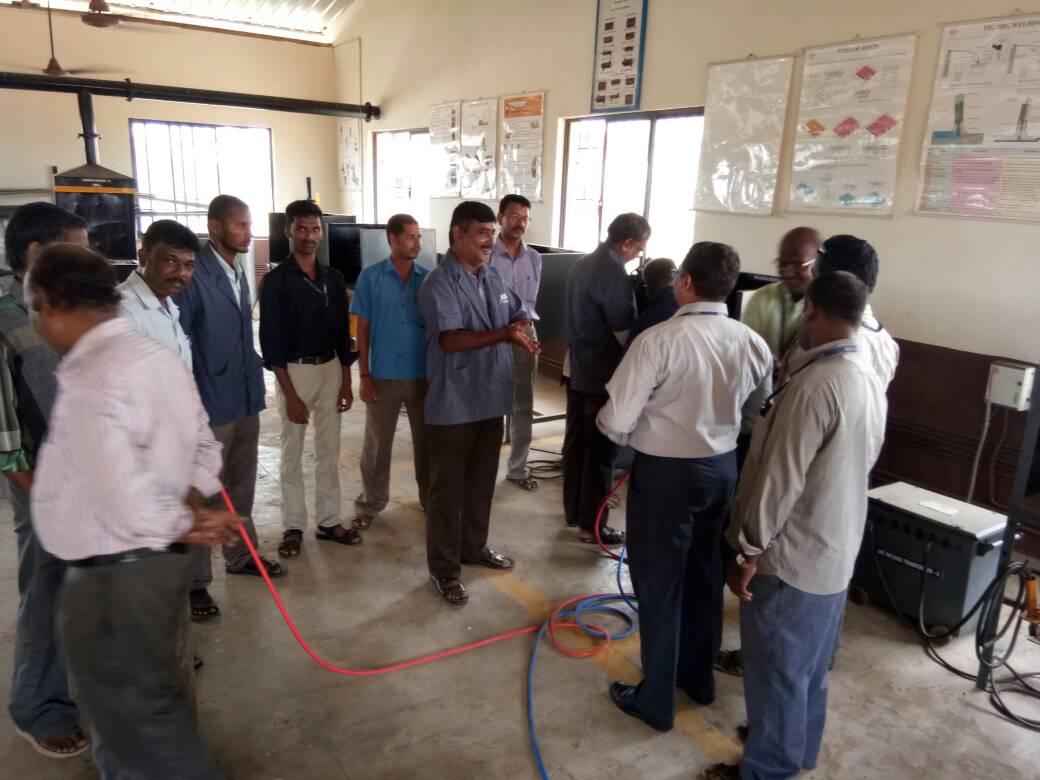
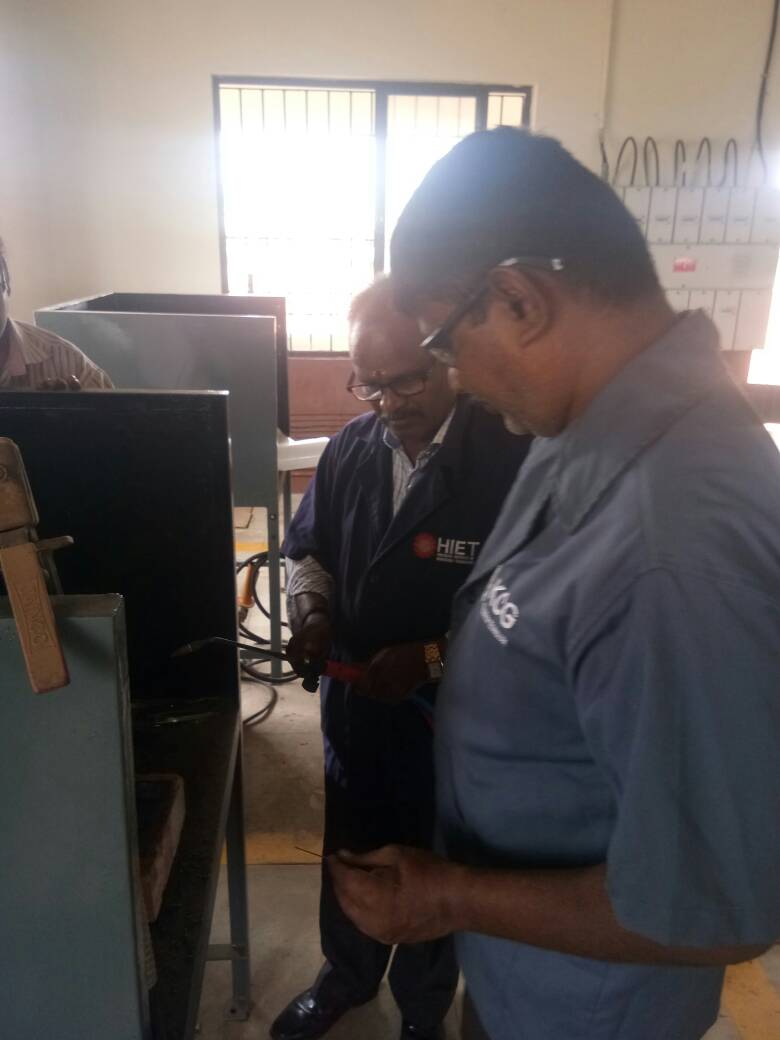
The following Non-Teaching Staffs were given Training to develop their skill in Gas Welding by Mr.Yoganathan, Welding Instructor deputed from HIET Polytechnic College for 4 days from 23/05/2017 to 26/05/2017 at our Basic Workshop Laboratory.
- Mr. Sajji .V. Kuriakose, Workshop Supdt.
- Mr.Santhosh Kumar, Instructor
- Mr.Y. Anand, Instructor
- Mr. M.Sivaji, Instructor
- Mr.Karthikeyan, Instructor
- Mr.V.Sabu, Instructor
- Mr. A.Jayakumar, Instructor
- Mr A.Charles, Instructor
- Mr.H. Balaraman, Instructor
- Mr.S. Nagaraj, Instructor
- Mr.D.Arul, Instructor
- Mr. Ganesh, Instructor